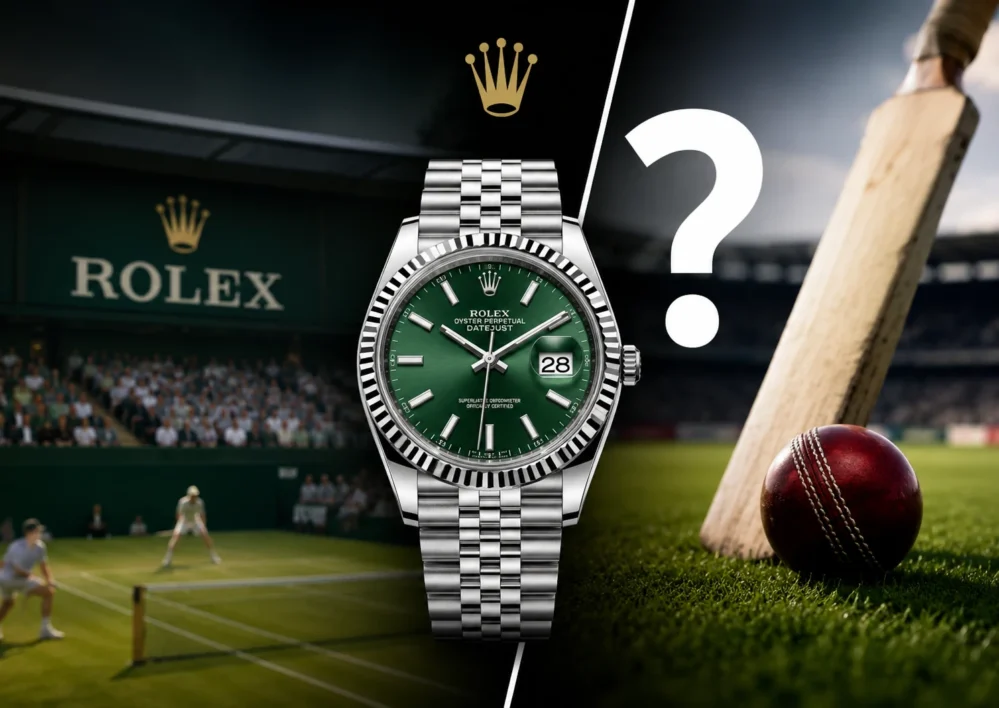
Rolex is one of the most recognizable luxury watch brands in the world. You see its logo at Wimbledon, Formula One races, prestigious golf tournaments, sailing championships, and elite equestrian events. Yet there is one major sport where the brand is almost invisible—cricket.
For many fans, this raises an interesting question: Why Rolex doesn’t advertise in cricket? After all, cricket attracts billions of viewers across countries like India, Australia, England, Pakistan, South Africa, and New Zealand. Major tournaments such as the ICC Cricket World Cup and the IPL generate enormous television audiences.
So why would a luxury brand skip one of the world’s most-followed sports?
The answer has less to do with cricket itself and more to do with Rolex’s marketing strategy, brand positioning, target audience, and long-term sponsorship philosophy. Rather than chasing the biggest audience, Rolex carefully selects sporting events that reinforce its premium image.
In this article, we’ll explain why Rolex doesn’t sponsor cricket, how its luxury marketing strategy works, and whether that approach could ever change.
Why Rolex Doesn’t Advertise in Cricket
The simple answer is that Rolex has never built its global identity around cricket.
Instead, the company invests in sports that closely reflect the values it wants customers to associate with its watches. Precision, heritage, excellence, tradition, craftsmanship, and timeless performance are themes that appear consistently across Rolex’s partnerships.
That is why Rolex sponsors events such as Wimbledon, Formula One, The Open Championship, prestigious sailing regattas, and international equestrian competitions. These sports have become part of the brand’s identity over several decades.
Cricket, despite its massive popularity, has never been part of that long-term strategy.
It is important to understand that this is not a criticism of cricket. From a marketing perspective, every luxury brand defines its own audience before choosing where to spend its sponsorship budget.
Rolex appears to prioritize alignment over reach.
Think of it this way: if audience size were the only goal, every luxury brand would advertise during every major sporting event. Instead, brands spend millions finding environments that strengthen their image, not just increase visibility.
That philosophy explains much of Rolex’s sports sponsorship strategy.
Rolex’s Luxury Brand Positioning
Rolex is more than a watch manufacturer. It sells craftsmanship, history, reliability, and prestige.
Since its founding in 1905, Rolex has positioned itself as a premium watch brand built on technical excellence rather than seasonal trends. The company invests heavily in product quality, innovation, and carefully selected partnerships instead of mass advertising.
Its marketing rarely asks consumers to “buy now.”
Instead, Rolex focuses on building aspiration.
This approach is often called prestige marketing or aspirational branding. Rather than appearing everywhere, the brand chooses moments where excellence is already expected.
That strategy supports several important goals:
- Maintain brand exclusivity.
- Strengthen premium brand perception.
- Reach affluent audiences.
- Reinforce long-term trust.
- Associate the brand with world-class performance.
Luxury consumers often value scarcity and reputation as much as the product itself. Rolex understands this dynamic exceptionally well.
As many marketing experts note, luxury brands generally avoid appearing in environments that could dilute their carefully built image. Maintaining exclusivity often matters more than maximizing impressions.



Rolex Marketing Strategy: Quality Over Quantity
Many companies measure success by the number of people who see an advertisement.
Rolex measures success differently.
Its advertising strategy focuses on reaching the right audience rather than the largest audience.
That distinction matters.
A cricket tournament may deliver hundreds of millions of viewers, but Rolex looks beyond audience size. It considers factors such as purchasing power, global consistency, brand fit, media environment, hospitality opportunities, and long-term partnership value.
For example, a spectator attending Wimbledon or a Formula One Grand Prix often represents the type of affluent consumer that luxury brands actively target. These events also attract business leaders, executives, entrepreneurs, celebrities, and international media.
That doesn’t mean every tennis fan or Formula One viewer buys a Rolex.
It means those events consistently place the brand in premium environments that support its luxury positioning.
This strategy also creates stronger sponsorship ROI. Instead of spreading its budget across dozens of sporting events, Rolex builds decades-long relationships with a smaller number of elite competitions.
The result is remarkable consistency.
When people think of precision timing in tennis, golf, or motorsport, Rolex naturally enters the conversation. That type of association cannot be built overnight.
Why Rolex Chooses Tennis, Golf and Formula One
One of the biggest reasons behind Rolex’s sports sponsorship choices is heritage.
Rolex has partnered with Wimbledon since 1978, becoming the tournament’s Official Timekeeper. The partnership connects the brand with one of the world’s oldest and most respected sporting events.
Similarly, Rolex became Global Partner and Official Timepiece of Formula One for many years, reinforcing themes of engineering excellence, precision timing, and elite performance before that partnership concluded at the end of the 2024 season.
Golf tells a similar story.
Rolex supports major championships, legendary players, and prestigious tournaments that reflect consistency, patience, discipline, and tradition.
Notice the common thread?
Every partnership reinforces the same brand values.
There are no mixed signals, and that consistency has become one of Rolex’s greatest marketing strengths.
Does Cricket Match Rolex’s Target Audience?
This is where the discussion becomes more nuanced.
Cricket is one of the world’s most popular sports. According to the International Cricket Council (ICC), global tournaments attract audiences in the billions, particularly across India, Australia, England, Pakistan, Bangladesh, South Africa, New Zealand, and Sri Lanka.
From a pure reach perspective, cricket offers enormous exposure.
However, Rolex has never built its marketing around reaching the largest possible audience.
Instead, the brand focuses on reaching the right audience.
Rolex’s target audience primarily includes:
- High-net-worth individuals
- Successful professionals
- Business owners
- Collectors of luxury timepieces
- Luxury consumers who value craftsmanship and heritage
These buyers often purchase a Rolex as a milestone rather than an impulse buy. The company therefore places its marketing where it believes these customers are more likely to engage with the brand.
That does not mean cricket fans cannot afford Rolex watches. Many certainly can.
Instead, Rolex appears to believe that other sporting environments align more closely with its long-term luxury positioning.
Luxury marketing is rarely about saying, “This audience isn’t good enough.”
It is about asking a different question:
“Does this event strengthen our brand image?”
For Rolex, the answer has consistently been yes for tennis, golf, sailing, equestrian sports, and historically Formula One.


Why Doesn’t Rolex Sponsor the IPL?
The Indian Premier League (IPL) is one of the biggest sporting leagues in the world.
It generates massive television ratings, attracts global sponsors, and features some of cricket’s biggest stars.
So why doesn’t Rolex sponsor the IPL?
The company has never publicly explained this decision.
However, marketing experts generally point to three practical reasons.
1. Rolex Prefers Long-Term Heritage Partnerships
Rolex typically partners with sporting institutions that have decades—or even centuries—of history.
Examples include:
- Wimbledon
- The Open Championship
- The US Open (Tennis)
- Major equestrian competitions
- Prestigious sailing events
These partnerships reflect tradition, consistency, and legacy.
While the IPL has become a global sporting powerhouse, its identity differs from the historic sporting institutions Rolex has traditionally supported.
2. Premium Positioning Comes First
Rolex carefully controls where its logo appears.
Luxury brands often avoid placing themselves in environments crowded with dozens of commercial sponsors because maintaining exclusivity supports long-term brand perception.
This doesn’t mean the IPL lacks prestige.
It simply reflects a different marketing philosophy.
3. Rolex Doesn’t Need Maximum Visibility
Many companies sponsor sporting events because they want more brand awareness.
Rolex already enjoys extraordinary global recognition.
According to multiple global brand rankings, Rolex consistently ranks among the world’s most valuable luxury brands.
Instead of increasing awareness, Rolex focuses on protecting its reputation.
That difference shapes almost every sponsorship decision the company makes.
How Rolex Uses Sponsorship Instead of Traditional Advertising
Rolex certainly advertises, but it does so differently from many consumer brands.
Rather than flooding television, social media, or sporting events with promotions, Rolex invests heavily in carefully selected sponsorships.
Its approach combines several elements.
Event Partnerships
Rolex becomes associated with prestigious competitions where excellence already exists.
This creates positive brand associations without relying on aggressive advertising.
Brand Ambassadors
The Rolex ambassador strategy includes accomplished athletes, artists, explorers, and innovators who reflect the brand’s values.
One of the most recognizable examples is Roger Federer, whose long-standing partnership with Rolex has become closely associated with elegance, consistency, and sporting excellence.
Instead of choosing influencers based solely on popularity, Rolex typically works with individuals who have achieved lasting success.
Storytelling Over Sales
A Rolex advertisement rarely focuses on discounts or limited-time offers.
Instead, campaigns highlight achievement, craftsmanship, precision, and legacy.
This style reinforces the company’s premium branding while avoiding overly promotional messaging.
Consistency Across Every Market
Whether someone sees Rolex branding in London, Melbourne, Dubai, New York, or Geneva, the message remains remarkably consistent.
That consistency strengthens brand trust over time.
Could Rolex Sponsor Cricket in the Future?
Nothing prevents Rolex from entering cricket sponsorship in the future.
Marketing strategies evolve as consumer behavior changes.
Luxury brands also reassess sponsorship opportunities as sports expand into new markets.
If Rolex believed cricket offered the right combination of:
- Brand alignment
- Global visibility
- Premium audience
- Long-term strategic value
then a future partnership would certainly be possible.
However, there is currently no official indication that Rolex plans to sponsor the ICC, the IPL, or any major international cricket competition.
Until Rolex announces such a partnership, any prediction would remain speculation.


Frequently Asked Questions
Does Rolex sponsor cricket?
As of now, Rolex is not an official sponsor of the ICC, the IPL, or other major international cricket tournaments.
Which sports does Rolex sponsor?
Rolex supports several prestigious sports and events, including tennis, golf, sailing, equestrian competitions, endurance racing, and it maintained a long-running partnership with Formula One through the 2024 season.
Why does Rolex sponsor Wimbledon?
Wimbledon reflects many of Rolex’s core values, including tradition, precision, excellence, and global prestige. Rolex has served as the tournament’s Official Timekeeper since 1978.
Why is Rolex associated with tennis?
Tennis offers worldwide visibility while reinforcing the elegance, discipline, and consistency that Rolex wants consumers to associate with its brand.
Why doesn’t Rolex sponsor the IPL?
Rolex has never publicly explained its decision. Based on its broader sponsorship strategy, the company appears to prioritize long-standing partnerships with sporting institutions that closely match its premium brand positioning.
Does Rolex sponsor Virat Kohli?
No. There is no official announcement confirming that Virat Kohli is a Rolex ambassador.
What is Rolex’s advertising strategy?
Rolex emphasizes selective sponsorships, premium storytelling, long-term partnerships, and carefully chosen ambassadors instead of relying on large-scale mass-market advertising.
Final Thoughts
The question isn’t really “Why doesn’t Rolex advertise in cricket?”
A better question is:
“Why does Rolex choose certain sports over others?”
The answer lies in the company’s long-term marketing philosophy.
Rolex has spent decades building one of the strongest luxury brands in the world through careful brand positioning, selective sponsorships, and consistent storytelling.
Instead of pursuing every opportunity with the biggest audience, Rolex focuses on environments that reinforce precision, heritage, excellence, and prestige.
That strategy explains why the brand has become closely associated with Wimbledon, The Open Championship, elite sailing competitions, and historically Formula One, while remaining largely absent from cricket.
Cricket continues to grow worldwide and attracts millions of passionate fans.
Rolex simply follows a different marketing playbook—one built on exclusivity rather than ubiquity.
Sometimes, saying “no” is just as important as saying “yes.”
For Rolex, that disciplined approach has helped make the crown logo one of the most recognizable symbols in luxury.
Sources
- Rolex – Official Partnerships and Brand Information
- Wimbledon – Official History and Partnerships
- Formula One – Official Partner History
- International Cricket Council (ICC)
- Interbrand – Best Global Brands Reports