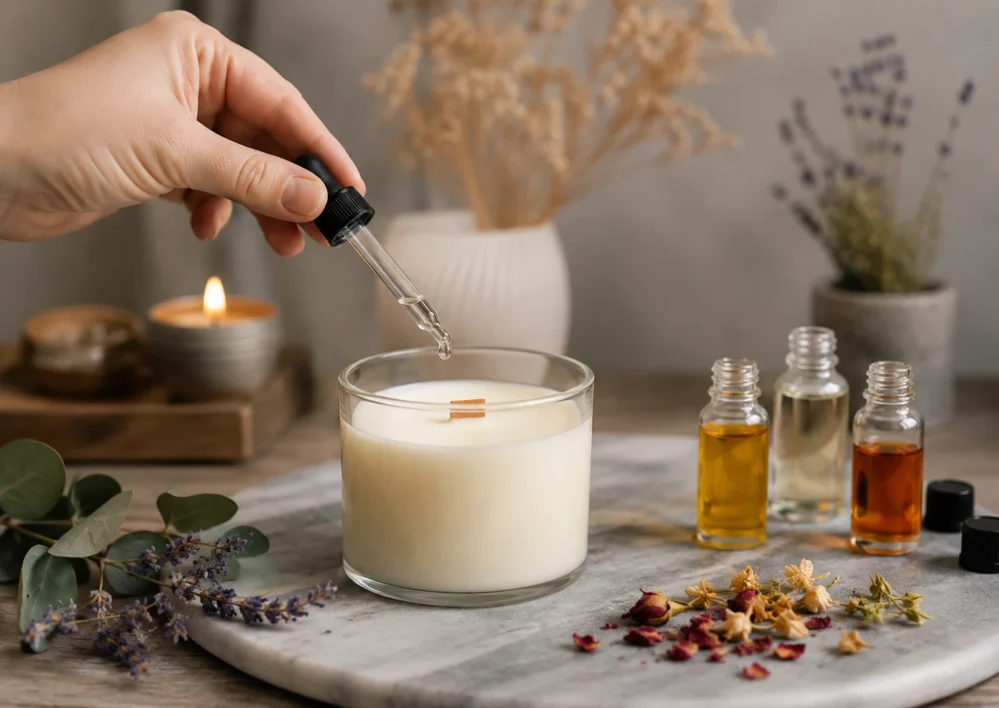
A scented candle should do more than smell nice. It should create an experience. The best candles often reveal different scents as they burn, making the fragrance feel richer and more memorable. That is exactly what fragrance layering for candles helps you achieve.
Whether you’re making candles for your home, gifting them to friends, or building a candle business, learning how to layer fragrances for a unique scented candle can help your creations stand out. Instead of relying on a single fragrance oil, you combine complementary scent notes that unfold over time. The result is a balanced candle with depth, personality, and a signature aroma.
Professional candle makers rarely rely on guesswork. They understand fragrance notes, test different combinations, and adjust fragrance ratios until they achieve the desired scent profile. The good news is that beginners can follow the same process with patience and careful testing.
In this guide, you’ll learn the basics of fragrance blending for candles, understand how fragrance notes work together, and discover practical techniques for creating balanced, custom scents.
What Does Fragrance Layering Mean?
Candle scent layering is the process of combining two or more fragrance oils that complement one another. Instead of producing a flat scent, the candle releases different fragrance notes as the wax melts and the fragrance evaporates.
Think of it like building a playlist instead of listening to a single song on repeat. Every note has its moment, yet they work together to create one complete experience.
Unlike perfumes, candles don’t always release fragrance in the exact order of top, middle, and base notes because heat, wax type, and fragrance chemistry all influence the scent. However, understanding the fragrance pyramid still helps you create more balanced blends.
Many successful candle brands use this approach to develop custom candle scents that customers instantly recognize.
Why Layer Fragrance Oils Instead of Using Just One?
Using a single fragrance oil can produce a pleasant candle, but blending fragrances opens far more creative possibilities.
Some of the biggest advantages include:
- Create a signature scent that feels unique.
- Balance strong or overpowering fragrance oils.
- Add depth and complexity to simple scents.
- Build seasonal or themed candle collections.
- Experiment with endless candle scent combinations.
For example, vanilla smells warm on its own. Pair it with sandalwood, and it becomes richer. Add a hint of bergamot, and the blend gains brightness without losing warmth.
That’s why many premium candle makers prefer layering fragrance oils for candles instead of using one fragrance alone.


Understanding Top, Middle, and Base Notes
Before learning how to blend candle fragrance oils, you need to understand fragrance structure.
Perfumers often describe fragrances using a fragrance pyramid, which includes three layers.
Top Notes
Top notes are the first scents people notice when they smell a candle. These notes are usually fresh, bright, and light.
Common top notes include:
- Bergamot
- Lemon
- Orange
- Grapefruit
- Mint
These fragrances create a strong first impression but fade relatively quickly.
Middle Notes (Heart Notes)
Middle notes form the heart of the fragrance. Once the lighter notes soften, these scents become more noticeable and define the candle’s character.
Popular heart notes include:
- Lavender
- Rose
- Jasmine
- Cinnamon
- Clove
Heart notes help connect fresh top notes with richer base notes.
Base Notes
Base notes provide depth, warmth, and lasting character. They remain noticeable throughout the candle’s burn and support the overall fragrance blend.
Popular base notes include:
- Sandalwood
- Cedarwood
- Amber
- Musk
- Vanilla
- Patchouli
Without strong base notes, some candles may smell pleasant at first but lack staying power.
Fragrance Families Explained
Understanding fragrance families makes it much easier to create balanced blends.
Here are some of the most common categories used in candle making.
| Fragrance Family | Common Examples |
|---|---|
| Floral | Rose, Lavender, Jasmine |
| Citrus | Lemon, Orange, Bergamot |
| Woody | Cedarwood, Sandalwood, Pine |
| Gourmand | Vanilla, Caramel, Coffee |
| Fresh | Cotton, Rain, Marine |
| Fruity | Apple, Pear, Peach |
| Herbal | Sage, Basil, Rosemary |
| Spicy | Cinnamon, Nutmeg, Clove |
| Amber | Amber, Tonka Bean, Resin |
A simple rule works surprisingly well:
- Floral pairs well with citrus.
- Woody blends beautifully with vanilla and amber.
- Fresh scents balance sweet gourmand fragrances.
- Herbal notes often complement citrus and woody aromas.
These combinations create more natural candle scent profiles than mixing unrelated fragrances.
How to Layer Fragrances for a Unique Scented Candle
If you’re wondering how to layer fragrance oils in candles, follow a simple, structured process instead of mixing oils randomly.
Step 1: Choose a Main Fragrance
Start with the scent you want people to remember most.
This could be:
- Vanilla
- Lavender
- Sandalwood
- Cedarwood
- Pumpkin Spice
Your primary fragrance should make up most of the blend.
Step 2: Add a Supporting Fragrance
Now select another fragrance that enhances your primary scent without overpowering it.
Examples include:
- Lavender + Vanilla
- Cedarwood + Bergamot
- Orange + Cinnamon
- Coconut + Lime
- Rose + Sandalwood
These classic fragrance oil combinations for candles work because the scent families naturally complement one another.
Step 3: Keep the Blend Simple
Many beginners believe more fragrance oils create a better candle.
Usually, the opposite is true.
Start with two fragrances. Once you’re comfortable, experiment with three carefully selected oils. Adding too many scents often creates a confusing aroma instead of a pleasant one.
Professional candle makers frequently recommend limiting blends to two or three fragrance oils, especially during product development.


Candle Fragrance Mixing Ratios
One of the most common questions is:
What is the best ratio for blending fragrance oils?
There isn’t a universal formula because every fragrance oil performs differently. However, many candle makers begin with a dominant fragrance supported by one or two complementary scents.
A practical starting point looks like this:
- 70% primary fragrance
- 30% supporting fragrance
For three-oil blends, you can often begin with:
- 60% main fragrance
- 25% secondary fragrance
- 15% accent fragrance
Treat these as starting points rather than fixed rules. Always test small batches before producing multiple candles, since wax type, fragrance composition, and fragrance load can all influence the final result.
Best Fragrance Oil Combinations for Candles
Choosing the right fragrance pairing is often the difference between an average candle and one people remember. While creativity matters, many successful blends follow well-established fragrance principles used in perfumery and candle making.
Here are some popular candle scent combinations that work well together.
| Main Fragrance | Supporting Fragrance | Scent Profile |
|---|---|---|
| Vanilla | Sandalwood | Warm, cozy, luxurious |
| Lavender | Bergamot | Fresh, relaxing, spa-like |
| Orange | Cinnamon | Bright, festive, inviting |
| Cedarwood | Amber | Rich, earthy, elegant |
| Coconut | Lime | Tropical, clean, refreshing |
| Rose | Vanilla | Soft, romantic, balanced |
| Eucalyptus | Mint | Crisp, cooling, refreshing |
| Apple | Cinnamon | Sweet, comforting, autumn-inspired |
| Jasmine | Musk | Floral with depth |
| Sea Salt | Sage | Fresh, modern, coastal |
These combinations provide a reliable starting point for DIY scented candle fragrance blends. Once you understand how each fragrance behaves, you can adjust the proportions to suit your style.
Best Fragrance Combinations for Soy Candles
Soy wax is popular because it burns cleanly and delivers excellent scent quality when paired with compatible fragrance oils. However, its scent throw can differ from paraffin or coconut wax, making fragrance selection especially important.
Some of the best fragrance combinations for soy candles include:
- Vanilla + Sandalwood
- Lavender + Chamomile
- Lemon + Rosemary
- Cedarwood + Amber
- Coconut + Vanilla
- Bergamot + Black Tea
- Fig + Cedarwood
- Orange + Clove
Always verify the manufacturer’s recommended fragrance load for your specific soy wax. Exceeding that limit won’t necessarily make the candle smell stronger and can affect burn performance.
How to Create a Signature Scented Candle
Many successful candle brands are recognized by a fragrance customers instantly associate with them. Developing that kind of scent takes experimentation rather than luck.
If you’re wondering how to create a signature scented candle, follow this process:
Start with a Mood
Think about the feeling you want the candle to create.
Examples include:
- Calm morning
- Luxury hotel lobby
- Fresh coastal breeze
- Cozy winter evening
- Spring garden
- Coffee shop atmosphere
Your chosen mood helps narrow the fragrance families that naturally fit together.
Build Around One Hero Note
Select one fragrance that leads the blend. Then choose one or two supporting scents that enhance it instead of competing with it.
Keep Detailed Notes
Every test batch should include:
- Wax type
- Fragrance oils used
- Mixing percentages
- Pour temperature
- Cure time
- Cold throw observations
- Hot throw observations
Good records make it much easier to recreate successful blends later.
Testing Hot Throw and Cold Throw
Even a beautifully blended candle needs testing before you consider it finished.
Cold Throw
Cold throw describes how a candle smells before it’s lit.
A strong cold throw often attracts customers because they can smell the fragrance immediately when they remove the lid or walk past the candle.
Hot Throw
Hot throw refers to the fragrance released while the candle is burning.
Many fragrance oils become more balanced once heated, while others grow stronger or reveal different scent notes.
For the most reliable results:
- Allow candles to cure according to your wax supplier’s guidance before testing.
- Burn the candle long enough to establish a full melt pool.
- Test in rooms of similar size.
- Record your observations after each test.
Consistent testing is one reason experienced candle makers achieve dependable results.
Common Fragrance Blending Mistakes
Even experienced makers occasionally create blends that don’t work. Fortunately, most mistakes are easy to avoid.
Mixing Too Many Fragrances
Using four or five oils might sound exciting, but complex blends often lose clarity.
Two or three carefully chosen oils usually create a cleaner scent profile.
Ignoring Fragrance Families
Not every fragrance belongs together.
For example, combining heavy gourmand scents with sharp marine fragrances may produce an unbalanced result.
Skipping Small Test Batches
Never mix large quantities without testing first.
A small sample saves both materials and frustration if the blend needs adjustment.
Using Too Much Fragrance Oil
More fragrance doesn’t always mean more scent.
Always stay within the recommended fragrance load provided by your wax manufacturer to maintain safe and consistent candle performance.
DIY Candle Fragrance Recipes for Beginners
If you’re looking for custom candle fragrance blend ideas, these beginner-friendly recipes offer a great place to start.
Cozy Evening
- Vanilla
- Sandalwood
- Amber
Warm, comforting, and perfect for bedrooms or reading spaces.
Fresh Morning
- Bergamot
- Lemon
- Sage
Bright and clean with a refreshing finish.
Autumn Kitchen
- Apple
- Cinnamon
- Clove
A classic seasonal blend that feels welcoming without becoming overpowering.
Relaxing Spa
- Lavender
- Eucalyptus
- Mint
Fresh herbal notes that suit bathrooms, meditation rooms, or self-care spaces.
Remember that every fragrance oil supplier uses different formulations, so the exact aroma may vary slightly between brands.
Seasonal Candle Fragrance Ideas
Refreshing your collection throughout the year keeps your candle lineup interesting.
Spring
- Lavender + Lemon
- Peony + Pear
- Fresh Linen + Cotton
Summer
- Coconut + Lime
- Sea Salt + Sage
- Watermelon + Mint
Autumn
- Pumpkin + Vanilla
- Apple + Cinnamon
- Cedarwood + Clove
Winter
- Pine + Cedarwood
- Orange + Cinnamon
- Vanilla + Amber
Seasonal blends often reflect familiar experiences, making them popular choices for gifts and home décor.
Frequently Asked Questions
How do you layer fragrances in a scented candle?
Layer fragrances by choosing a dominant fragrance oil and pairing it with one or two complementary scents. Use the fragrance pyramid—top, middle, and base notes—to create a balanced blend, then test small batches before making larger quantities.
Can you mix two fragrance oils in one candle?
Yes. Mixing two fragrance oils is a common candle-making technique. Choose scents from complementary fragrance families, such as vanilla and sandalwood or lavender and bergamot, for a balanced aroma.
What fragrances blend well together in candles?
Popular candle fragrance combinations include:
– Vanilla + Sandalwood
– Lavender + Bergamot
– Orange + Cinnamon
– Cedarwood + Amber
– Coconut + Lime
– Apple + Cinnamon
– Rose + Vanilla
– Sea Salt + Sage
How do professional candle makers create unique scents?
Professional candle makers build fragrances using top, middle, and base notes, test multiple fragrance combinations, document each recipe, and evaluate both hot throw and cold throw before finalizing a blend.
Can you combine essential oils and fragrance oils?
Yes, but compatibility depends on the specific oils and wax. Essential oils and fragrance oils can be blended, provided they are suitable for candle making and used within the recommended fragrance load.
How do you create a signature scented candle?
Create a signature candle by selecting one primary fragrance, adding complementary supporting notes, keeping detailed blending records, and testing the candle’s hot throw and cold throw until you achieve the desired scent.
Final Thoughts
Learning how to layer fragrances for a unique scented candle is both a creative process and a technical skill. Understanding candle fragrance notes, selecting compatible fragrance families, and testing your blends carefully will help you create candles with depth and personality.
Don’t feel pressured to invent a masterpiece on your first attempt. Even experienced candle makers refine their blends through repeated testing. Start with simple fragrance oil combinations for candles, keep accurate notes, and let each batch teach you something new.
Over time, you’ll build confidence, develop your own custom scented candle recipes, and perhaps even create the signature scent people remember long after the flame goes out.
Trusted Sources
The guidance in this article is based on established candle-making and fragrance resources, including:
- National Candle Association (NCA) – Best practices for candle use and performance.
- International Fragrance Association (IFRA) – Global standards for the safe use of fragrance ingredients.
- CandleScience Learning Center – Educational resources on fragrance blending, wax selection, scent throw, and candle testing.
- The Flaming Candle – Practical guides for fragrance oil selection, blending techniques, and candle formulation.
These organizations and suppliers provide reliable information for hobbyists, small businesses, and professional candle makers alike.