You just said yes. The ring is stunning. And now someone asks, “So, which finger does the wedding band go on?” Suddenly, a moment of pure joy turns into a mild panic. Don’t worry, you’re not alone. Learning how to wear an engagement ring and wedding band the right way is something most people Google at least once before their big day. And honestly, it makes sense to get it right since you’ll be wearing these rings every single day for the rest of your life.
This guide covers everything from the engagement ring and wedding band order to stacking ideas, etiquette, and what actually feels comfortable on your hand. Let’s sort it out.
Why Does Ring Placement Even Matter?
Here’s the thing: it matters more than most people expect. The way you wear your bridal ring set affects how the rings look together, how comfortable they feel, and even how much wear and tear they go through over time.
Beyond the practical stuff, ring placement also carries a lot of tradition and meaning. Cultures across the world have different customs around this, and knowing yours (or choosing to break it) is part of the whole experience.
It’s your hand, your rings, your rules. But it helps to know the options first.
What Is the Traditional Engagement Ring and Wedding Band Order?
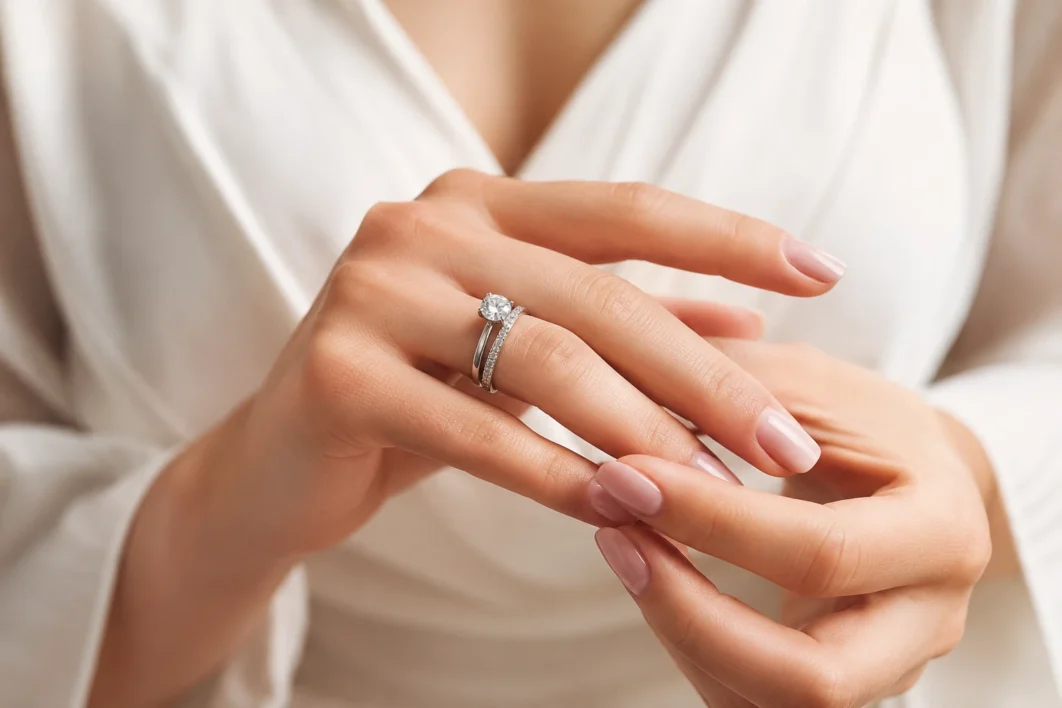
Traditionally, the wedding band sits closest to the heart, meaning it goes on the bottom, closest to your palm. The engagement ring then sits on top of it.
This custom comes from an ancient Roman belief in the “Vena Amoris” or the “vein of love,” which was thought to run directly from the ring finger of the left hand straight to the heart. While modern anatomy has since proven otherwise (every finger has veins, as it turns out), the tradition stuck around. Romantic myths have a long shelf life.
So in terms of proper engagement ring and wedding band order: wedding band first, engagement ring second, stacked on top.


Which Hand Do You Wear Your Wedding Rings On?
In most Western countries, including the US, UK, Canada, and Australia, both rings are worn on the left ring finger. That’s the fourth finger on your left hand.
However, in many European countries such as Germany, Spain, Norway, and India, wedding rings are traditionally worn on the right hand. Orthodox Christians and some Jewish traditions also favor the right hand.
If you’re unsure, follow what feels culturally right to you. There’s no universal law here, just tradition.
How to Wear Your Engagement Ring on Your Wedding Day
This is where most people get a little confused. You’ve been wearing your engagement ring for months, and now there’s a ceremony happening. What do you do with it?
There are two common approaches:
Option 1: Switch fingers before the ceremony. Move your engagement ring to your right hand before the ceremony begins. This frees up your left ring finger so your partner can slide the wedding band on cleanly. After the ceremony, move the engagement ring back to the left hand and place it above the wedding band. Done.
Option 2: Keep it simple. Some couples choose to place the wedding band over the engagement ring during the ceremony and then rearrange the order afterward. Many officiants are completely fine with this.
Either way works. The goal is just to have the wedding band sitting below the engagement ring by the end of the day.
How to Stack Wedding Band and Engagement Ring Properly
Stacking rings well is a skill. If your rings aren’t designed to fit together, you can end up with gaps, spinning, or a mismatched look that bugs you every time you glance down at your hand.
Here are a few tips for stacking them cleanly:
Check the profile. Engagement rings with raised settings like solitaires, halos, or cathedral settings often don’t sit flush against a flat wedding band. That gap is normal, but it can catch on things if it’s too wide.
Consider a contoured or curved wedding band. Many jewelry designers create wedding bands specifically shaped to nestle around the engagement ring setting. These are often called “shadow bands” or “fitted bands.” They look intentional, because they are.
Match the metals. Mixing yellow gold with platinum technically works, but it can cause one metal to scratch the other over time since they have different hardness levels. If you do mix, expect some wear. If that bothers you, match them.
Keep proportions in mind. A very delicate engagement ring paired with a wide, chunky band can look unbalanced. Similarly, a statement engagement ring with a micro pavé band is a classic combination. Think of it like pairing clothes.

Is There a “Wrong” Way to Wear Your Wedding Rings?
No. Not really.
There are traditions. There are common practices. There is etiquette. But none of it is law. Some people wear their engagement ring on the right hand and wedding band on the left. Some people wear them on completely different hands by choice. Some people stack three or four bands together because it looks great and makes them happy.
What matters most is that you feel good wearing them and that the rings are secure and comfortable.
What Is the Proper Way to Wear Wedding Rings According to Etiquette?
Engagement ring and wedding band etiquette is really just a reflection of tradition, not strict rules. But for those who like to follow convention, here’s the standard guide:
- The wedding band goes on the ring finger first, placed closest to the hand.
- The engagement ring sits above the wedding band.
- Both are worn on the left ring finger in most Western cultures.
- After the wedding ceremony, the engagement ring is moved back from the right hand (if it was shifted) to sit on top of the band.
Some people solder their rings together after the wedding so they stay in permanent order without any fuss. This is a personal choice and a one-way decision, so think it through before committing.
Should You Wear Your Wedding Band Before the Engagement Ring?
During the ceremony, yes. The whole point is to place the wedding band on first so it ends up sitting closest to your palm.
Outside of the ceremony context, wearing the wedding band before the engagement ring, meaning placing it on your finger first, is the traditional and most common practice. This is the preferred engagement ring and wedding band order for most couples.
That said, some people simply find it more comfortable or visually appealing to wear their engagement ring beneath the wedding band. If you’re one of those people, go for it.
Can You Wear Your Engagement Ring Without the Wedding Band?
Absolutely. Many people wear just the engagement ring on regular days and save the full bridal set for special occasions. Others wear just the wedding band when they’re doing physical work, traveling, or exercising.
Some couples also choose engagement rings that function beautifully as standalone pieces, so there’s no visual need for a wedding band at all. That’s a completely valid choice.
What Are the Best Ways to Wear Engagement and Wedding Rings Together?
The best way to wear bridal ring sets together depends on your ring style, lifestyle, and personal taste. Here are some popular combinations people love:
Classic solitaire with a plain band. A timeless option. The simple band keeps all the focus on the stone. This works with any solitaire shape, from round to oval to cushion.
Halo engagement ring with a pavé band. The added sparkle from the pavé band complements the halo without competing. This is a very popular pairing and photographs beautifully.
Three-stone ring with a curved band. Three-stone engagement rings have a wider profile, so they pair well with a curved band that fits around the setting rather than sitting flat against it.
Statement ring with a simple, thin band. If your engagement ring is bold, a thin metal band quietly completes the set without distracting from it.
Stackable bands with a modest solitaire. If you love the stacked ring trend, a simple solitaire with two or three thin bands creates a layered, modern look. This also lets you add a new band for anniversaries, which is a beautiful tradition.
How Does Ring Placement Affect Comfort and Wearability?
This is a question people don’t think about enough until they’re wearing the rings every day and one of them keeps spinning or digging in.
A few comfort tips worth knowing:
Rings that don’t sit flush will move. If there’s a gap between your engagement ring and wedding band, the engagement ring can rotate throughout the day. A snug-fitting pair of rings or a contoured band solves this.
Wide bands change your ring size. A wider band sits higher on your finger and can feel tighter than a narrower ring even at the same size. If you’re buying a wide wedding band, consider going up half a size.
Prongs catch on things. High-set prongs on an engagement ring can snag fabric over time. This is a practical reason many people love bezel settings or lower-profile rings for everyday wear.
Finger size changes throughout the day. Most people’s fingers are slightly smaller in the morning and slightly larger in the evening. If your rings feel tight in the afternoon, that’s normal.
What Is a Bridal Ring Set and Should You Buy One?
A bridal ring set is a matching engagement ring and wedding band sold together by the same designer, created to look like a unified pair. The benefit is obvious: the proportions, metals, and design details are intentionally matched, so they look like one beautiful piece when worn together.
The trade-off is that bridal sets can feel less personal, since both rings come from the same source rather than being chosen or designed independently. Some couples love the cohesion; others prefer the story of two separate rings finding each other.
If you’re shopping for a bridal ring set, pay attention to how the two rings interact when worn. Look at gaps, proportions, and how the diamond or gemstone is framed by the band.
How to Choose a Wedding Band That Works With Your Engagement Ring
This is where wedding ring placement thinking meets actual shopping decisions. Your wedding band needs to complement your engagement ring, and a few things help with that:
Shadow bands and fitted bands are designed to wrap around the bottom of a specific ring style. If you have an unusual or decorative engagement ring setting, a shadow band makes the pairing look intentional and polished.
Eternity bands look stunning but need careful sizing. Since eternity bands have stones all the way around, they can’t be resized the way plain metal bands can. Measure carefully.
Metal matching matters for longevity. As mentioned, mismatched metals can scratch each other. White gold and platinum look nearly identical but behave differently in terms of durability. Yellow gold on yellow gold keeps things safe and classic.
Width proportions matter for comfort. A ring that’s too wide can feel restrictive next to an already prominent engagement ring. Most wedding bands range from 1.5mm to 6mm in width. For everyday wear with an engagement ring, 2mm to 3mm tends to be the sweet spot.
Does the Order of Your Wedding Rings Change Over Time?
For most people, no. Once the wedding ceremony is done and the rings are arranged in their final order, most people keep them that way permanently.
But life happens. Pregnancy, weight changes, and finger injuries can all mean temporarily removing or switching rings. Some people who do a lot of hands-on work wear just the wedding band during the day. Some switch between wearing both rings and wearing neither when they’re in environments where rings aren’t safe.
None of that is breaking any rule. Wedding rings are meant to be a symbol of love, not a lifestyle restriction.
Frequently Asked Questions
Which ring goes on first, engagement ring or wedding band?
The wedding band goes on first, placed closest to the palm. The engagement ring then sits on top of it. This is the traditional order, based on the belief that the wedding band, representing marriage vows, should sit closest to the heart.
Do you wear your engagement ring on your wedding day?
Yes, but most brides move their engagement ring to their right hand before the ceremony begins. This frees up the left ring finger for the wedding band to be placed during the vows. After the ceremony, the engagement ring moves back to the left hand and sits on top of the band.
Which hand do you wear your engagement ring and wedding band on?
In most Western countries including the US, UK, Canada, and Australia, both rings are worn on the left ring finger. In countries like Germany, Spain, India, and Russia, wedding rings are traditionally worn on the right hand. The choice ultimately reflects your cultural background or personal preference.
Should the wedding band match the engagement ring?
Matching metals creates a seamless, cohesive look and prevents one metal scratching the other over time. However, mixing metals like yellow gold and platinum is a popular modern choice. If you mix metals, be aware that softer metals can show wear faster when in constant contact with harder ones.
Can you wear an engagement ring without a wedding band?
Yes, absolutely. Many people wear just the engagement ring daily and add the wedding band for special occasions. Others wear only the wedding band during physical activity or work to protect the engagement ring. There is no rule requiring both to be worn together at all times.
What is the correct way to stack a wedding band and engagement ring?
The wedding band sits below the engagement ring, closest to the palm. For rings that don’t sit flush, a contoured or curved wedding band designed to wrap around the engagement ring setting creates a clean, intentional look. Matching metal type and proportional widths also help the two rings stack comfortably.
Should the wedding band be on top or bottom?
The wedding band sits on the bottom, between the engagement ring and the palm. This is both traditional and practical, it keeps the more decorative engagement ring in place and makes it easier to remove the engagement ring independently when needed.
Can you solder your engagement ring and wedding band together?
Yes, many couples choose to solder their rings after the wedding so they stay permanently aligned and never shift or spin. It is a one-way process, though, so think it through carefully before committing. A jeweler can do this professionally in most cases.
What is a bridal ring set?
A bridal ring set is a matching engagement ring and wedding band sold together by the same designer, created to complement each other in metal, style, and proportion. The benefit is a perfectly fitted, visually cohesive pair. The trade-off is less flexibility compared to choosing the two rings independently.
Is there a wrong way to wear your engagement ring and wedding band?
No. There is traditional etiquette but no universal rule. Some people wear the engagement ring below the wedding band, some wear one ring on each hand, and some skip the engagement ring for daily wear. What matters most is comfort, personal style, and what feels meaningful to you.
A Quick Summary: Wedding Ring Placement Guide
To wrap it up cleanly:
- The wedding band goes on the ring finger first, closest to the palm.
- The engagement ring sits on top, further from the palm.
- Both are worn on the left ring finger in most Western cultures, right ring finger in many others.
- On the wedding day, move the engagement ring to the right hand before the ceremony, then put it back on top of the wedding band after.
- Stacking them well means choosing a band that fits the profile of your engagement ring, whether that means a curved band, a straight band, or a contoured shadow band.
- Comfort, fit, and personal style matter more than following any single rule.
There’s a reason people have been wearing these rings for thousands of years. They’re a simple, beautiful way to carry a big promise on a small finger. Whether you follow the tradition to the letter or create your own version of it, the rings mean what you make them mean.
And that’s the part that actually matters.