Cold feet can ruin an otherwise great day outdoors. Whether you’re hiking through snowy trails, skiing down a mountain, hunting before sunrise, or simply walking to work in freezing weather, the right pair of socks makes a noticeable difference.
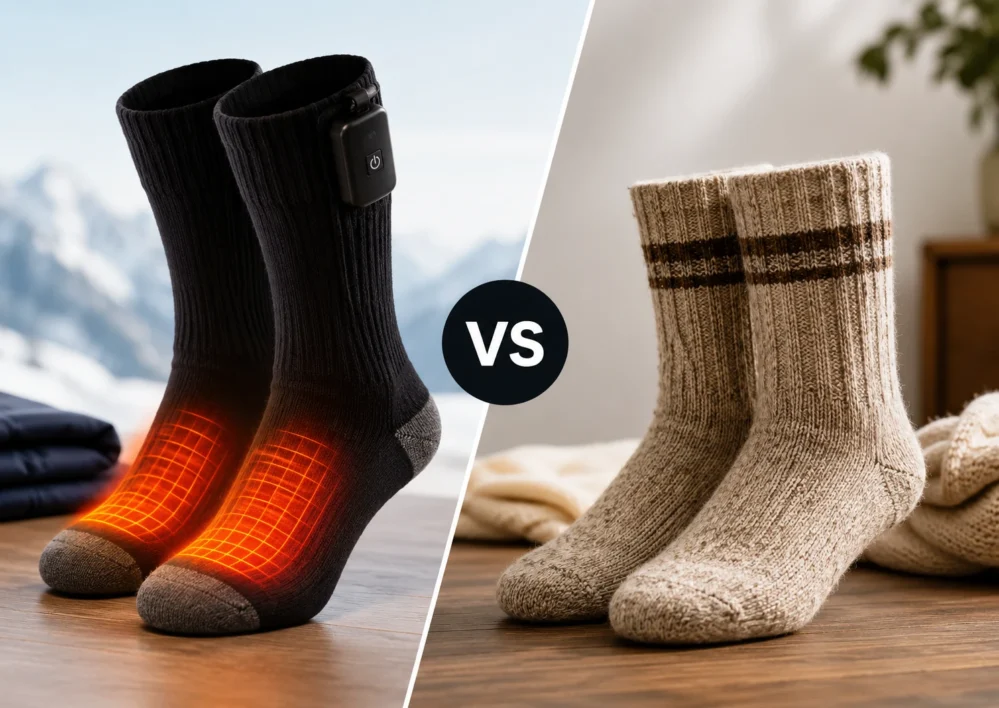
When shopping for the best socks for cold weather, you’ll usually end up choosing between electric socks vs wool socks. One uses rechargeable heating technology, while the other relies on natural insulation from wool fibers. Both keep your feet warm, but they work in very different ways.
So, are heated socks better than wool socks, or is traditional Merino wool still the smarter choice? The answer depends on where you’re going, how cold it is, and how long you’ll be outdoors.
In this guide, we’ll compare heated socks vs wool socks based on warmth, comfort, moisture management, battery life, maintenance, and cost. By the end, you’ll know which option suits your winter adventures best.
Electric Socks vs Wool Socks: Quick Comparison
| Feature | Electric Socks | Wool Socks |
|---|---|---|
| Warmth | Active heating with built-in heating elements | Natural insulation from wool fibers |
| Power Source | Rechargeable battery pack | No battery required |
| Best For | Extreme cold, poor circulation, long periods outdoors | Daily winter wear, hiking, casual outdoor activities |
| Moisture Management | Varies by fabric blend | Excellent, especially Merino wool |
| Battery Life | Usually 4–10 hours depending on heat setting | Unlimited |
| Maintenance | Remove battery before washing | Easy machine wash (follow care instructions) |
| Price | Higher upfront cost | More affordable |
| Durability | Depends on electronics and fabric | Typically lasts longer with proper care |
If you’re looking for a cold feet solution in freezing temperatures, battery heated socks can provide consistent warmth. For everyday winter use, Merino wool socks remain one of the most trusted options.
What Are Electric Socks?
Electric socks, also known as battery heated socks or rechargeable heated socks, contain thin heating elements woven into the fabric. Most premium models use carbon fiber heating elements because they heat evenly while staying lightweight and flexible.
These socks connect to a small rechargeable battery pack, usually attached near the top cuff. Users can adjust the temperature control through multiple heat settings, allowing them to increase or decrease warmth depending on weather conditions.
Unlike ordinary winter socks, electric socks actively produce heat instead of only trapping your body heat.
They’re commonly used by:
- Skiers
- Snowboarders
- Hunters
- Ice fishers
- Outdoor workers
- Winter campers
- People with chronically cold feet or reduced circulation
Many models combine synthetic fabrics with Merino wool or other moisture-wicking materials to improve comfort during extended wear.



What Are Wool Socks?
Wool socks don’t generate heat. Instead, they help your body keep the heat it already produces.
The best cold weather socks usually contain Merino wool, a natural fiber known for its softness, breathability, and excellent insulation.
Unlike traditional wool, Merino wool feels much softer against the skin and causes less irritation for most people. It also regulates temperature well, making it comfortable in both cold and cool weather.
Quality Merino wool socks also offer:
- Natural moisture management
- Breathability
- Odor resistance
- Temperature regulation
- Cushioning for hiking and long walks
Because wool continues to insulate even when damp, it’s widely recommended for hiking, backpacking, mountaineering, and winter camping by outdoor organizations like REI Co-op.
Warmth Comparison: Which Is Warmer, Heated Socks or Wool Socks?
This is where the biggest difference appears.
Electric Heated Socks
Electric heated socks actively create warmth using electricity.
Instead of relying only on insulation, heating elements warm areas that often get cold first, such as the toes and forefoot. Many models let you choose different heat settings based on the weather.
If you’re standing still for hours while hunting, ice fishing, or watching outdoor sports, active heating offers an advantage because your body isn’t generating much heat through movement.
This makes heated socks for winter particularly useful in sub-zero conditions.
Wool Socks
Wool socks work differently.
They don’t produce heat. Instead, they trap warm air close to your skin while reducing heat loss.
If you’re moving regularly—walking, hiking, or climbing—your body naturally produces heat. Merino wool helps keep that warmth inside the sock while allowing excess moisture to escape.
For most winter activities, quality Merino wool provides more than enough insulation without needing batteries.
Which Wins?
For extreme cold gear and long periods of inactivity, electric socks generally provide more warmth.
For active outdoor use, many hikers and backpackers still prefer Merino wool socks vs heated socks because they balance warmth, breathability, and simplicity.
Comfort and Breathability
Warm feet shouldn’t come at the cost of sweaty feet.
Comfort depends on fabric, fit, and moisture control—not just warmth.
Electric Socks
Modern rechargeable heated socks have improved significantly over the past few years.
Many premium options include:
- Stretch fabrics
- Extra cushioning
- Breathable panels
- Moisture-wicking fabric
- Seamless toe construction
Most heating elements are thin enough that you won’t notice them during normal walking.
However, electric socks are usually thicker than standard winter socks because they must house wiring and battery connections.
Some users may also notice the battery pack around the calf, especially during long hikes.
Wool Socks
Merino wool remains one of the most comfortable materials for winter socks.
The fibers naturally regulate temperature while remaining breathable.
Unlike cotton, Merino wool continues insulating even when it absorbs moisture.
That’s one reason experienced hikers often choose warm socks for winter made primarily from Merino wool.

Moisture-Wicking Performance
Sweaty feet lose heat faster.
That’s why moisture management matters almost as much as insulation.
Wool Socks
Merino wool naturally absorbs water vapor before it turns into sweat.
This helps regulate humidity inside your boots while reducing that cold, damp feeling many people experience during winter hikes.
According to outdoor experts, Merino wool also dries relatively quickly compared to cotton and continues insulating when damp.
Electric Socks
Most electric heated socks vs wool socks comparisons show that moisture performance depends largely on the sock’s fabric blend rather than the heating system itself.
Higher-quality models often combine:
- Merino wool
- Polyester
- Nylon
- Spandex
This combination improves durability while helping move sweat away from your skin.
If moisture control is your priority, choose electric socks that specifically mention moisture-wicking fabric rather than focusing only on battery life.
Battery Life and Maintenance
One major difference between these two options is ongoing maintenance.
Electric Socks
Battery performance depends on:
- Heat settings
- Outside temperature
- Battery capacity
- Brand quality
Many rechargeable models offer multiple temperature levels. Higher settings provide more warmth but reduce battery life.
Before washing, always remove the battery pack and follow the manufacturer’s care instructions to protect the electrical components.
If you forget to charge them before an early morning trip, your expensive heated socks become regular socks—a lesson many winter campers learn only once.
Wool Socks
Wool socks require almost no maintenance beyond normal washing.
Most modern Merino wool socks are machine washable, although manufacturers often recommend cold water and air drying to extend their lifespan.
Without batteries, wiring, or electronics, they’re also easier to pack for long outdoor trips.
Cost Comparison
Price often influences the final decision.
Battery heated socks usually cost several times more than premium Merino wool socks because they include rechargeable batteries, heating technology, and electronic controls.
You may also need replacement batteries after several years of use, depending on the manufacturer.
Wool socks have a lower upfront cost and typically last for many seasons when cared for properly.
For occasional winter use, wool offers excellent value.
For people who regularly work or spend long hours outdoors in freezing temperatures, electric socks may justify their higher price by providing consistent warmth when natural insulation alone isn’t enough.

Best for Hiking
When it comes to best socks for snow hiking, the right choice depends on the weather and your hiking style.
If you’re constantly moving, Merino wool socks for winter hiking are often the better option. Walking generates body heat, and Merino wool helps trap that warmth while allowing moisture to escape. This keeps your feet warm without making them feel damp.
Electric socks can also work well for hiking, especially on very cold days. However, they add extra weight because of the battery pack, and you’ll need to keep battery life in mind if you’re spending a full day on the trail.
Choose Wool Socks If:
- You’re hiking for several hours.
- Temperatures are cold but not dangerously low.
- You want lightweight, breathable socks.
- You prefer gear that doesn’t require charging.
Choose Electric Socks If:
- You’re hiking in sub-zero temperatures.
- You stop frequently for breaks or photography.
- You often experience cold feet despite wearing insulated boots.
For most winter hikers, quality Merino wool socks paired with insulated hiking boots provide enough warmth without the need for battery-powered heating.
Best for Skiing
Many skiers ask, “Electric socks or wool socks for skiing?”
The answer depends on how easily your feet get cold.
Ski boots reduce blood circulation more than regular hiking boots because they fit tightly. That makes cold feet a common problem, even for experienced skiers.
If your feet usually stay warm, high-quality ski socks made from Merino wool are an excellent choice. They provide insulation without adding unnecessary bulk.
However, if your toes become numb after a few runs, heated socks for winter can make a noticeable difference. Adjustable heat settings allow you to maintain comfort during long days on the slopes.
Whichever option you choose, avoid wearing multiple thick socks. Extra layers can make ski boots tighter, reducing circulation and making your feet colder.
Best for Hunting
Hunters often spend long periods sitting in one location. That changes everything.
Since you’re not moving much, your body produces less heat. In these situations, heated socks for hunting vs wool socks usually have the advantage.
Battery-powered heating helps keep your toes warm during early morning hunts or long hours in a tree stand.
That said, many hunters use a layered approach:
- Moisture-wicking liner socks
- Merino wool socks
- Insulated boots
For moderately cold conditions, this setup often works well without electric heating.
In extremely cold weather, battery heated socks can provide additional comfort during long periods of inactivity.
Best for Outdoor Work
Construction workers, utility crews, delivery drivers, farmers, and other professionals often spend entire shifts outside.
The best option depends on the type of work.
Electric Socks Work Best If You:
- Stand in one place for extended periods.
- Work in freezing temperatures.
- Need consistent toe warming throughout the day.
Wool Socks Work Best If You:
- Walk frequently.
- Move between indoor and outdoor environments.
- Prefer low-maintenance gear.
Many heated socks for outdoor workers now include durable materials and reinforced heels to handle demanding job sites.
Regardless of your choice, properly insulated boots remain just as important as your socks.
Pros and Cons
Electric Socks
Pros
- Excellent for extreme cold.
- Active heating provides consistent foot warmth.
- Adjustable temperature control.
- Helpful for people with poor circulation.
- Ideal for hunting, skiing, and ice fishing.
Cons
- Higher purchase price.
- Batteries require charging.
- Limited runtime.
- Slightly heavier than regular socks.
- Electronics require extra care during washing.
Wool Socks
Pros
- Naturally breathable.
- Great moisture management.
- Comfortable for all-day wear.
- No batteries to charge.
- Durable and easy to maintain.
- Suitable for everyday winter use.
Cons
- Don’t actively generate heat.
- May not provide enough warmth during extended inactivity in extreme cold.
- Premium Merino wool socks can still be relatively expensive.
Which One Should You Choose?
After comparing electric socks vs wool socks, there isn’t a single winner for everyone.
Instead, choose the option that matches your activity and environment.
Choose Electric Socks If:
- You spend hours outdoors in freezing temperatures.
- You hunt, ice fish, or watch winter sports.
- You frequently suffer from cold feet.
- You have poor circulation and need additional warmth.
- You’re looking for the best socks for sub-zero temperatures.
Choose Wool Socks If:
- You hike regularly.
- You need reliable everyday winter socks.
- You prefer lightweight gear.
- You don’t want to worry about batteries.
- You want a durable, natural solution for cold weather.
For many outdoor enthusiasts, owning both is the smartest approach. Merino wool socks handle everyday winter adventures, while rechargeable heated socks come out when temperatures become truly challenging.
Frequently Asked Questions
Are heated socks better than wool socks?
It depends on your activity. Heated socks perform better in extreme cold and during long periods of inactivity, while Merino wool socks are often better for hiking, walking, and everyday winter wear.
Do heated socks really keep your feet warm?
Yes. Heated socks use built-in heating elements powered by rechargeable batteries to provide warmth, especially around the toes and forefoot.
Are wool socks warm enough for extreme cold?
High-quality Merino wool socks provide excellent insulation for most winter activities. However, heated socks may offer better comfort in sub-zero temperatures or when standing still for long periods.
Are electric socks worth buying?
Electric socks are worth buying if you spend extended time outdoors in freezing weather, enjoy winter sports, hunt, ice fish, or have poor circulation that causes cold feet.
Can heated socks replace wool socks?
Not entirely. Heated socks are designed for extreme cold, while wool socks remain the preferred choice for everyday winter use because they’re breathable, lightweight, and require no batteries.
Are Merino wool socks good for cold weather?
Yes. Merino wool naturally regulates temperature, manages moisture, resists odor, and provides excellent insulation, making it one of the best materials for winter socks.
Can you wear wool socks over heated socks?
Most manufacturers recommend wearing heated socks directly against your skin for the best heat transfer. Wearing thick wool socks over them may reduce comfort and affect circulation inside tight footwear.
Final Verdict
The debate between electric socks vs wool socks isn’t about which product is universally better—it’s about choosing the right tool for the conditions.
If you’re hiking, commuting, or enjoying everyday winter activities, Merino wool socks offer an outstanding combination of warmth, breathability, and comfort without requiring batteries. They’re lightweight, dependable, and suitable for most cold-weather situations.
If you regularly face freezing temperatures, spend hours sitting still while hunting or ice fishing, or struggle with poor circulation, electric heated socks provide active warmth that natural insulation alone can’t match.
Whichever option you choose, remember that socks are only one part of the equation. Properly fitted insulated boots, moisture-wicking base layers, and weather-appropriate clothing all play a role in keeping your feet warm and comfortable throughout winter.