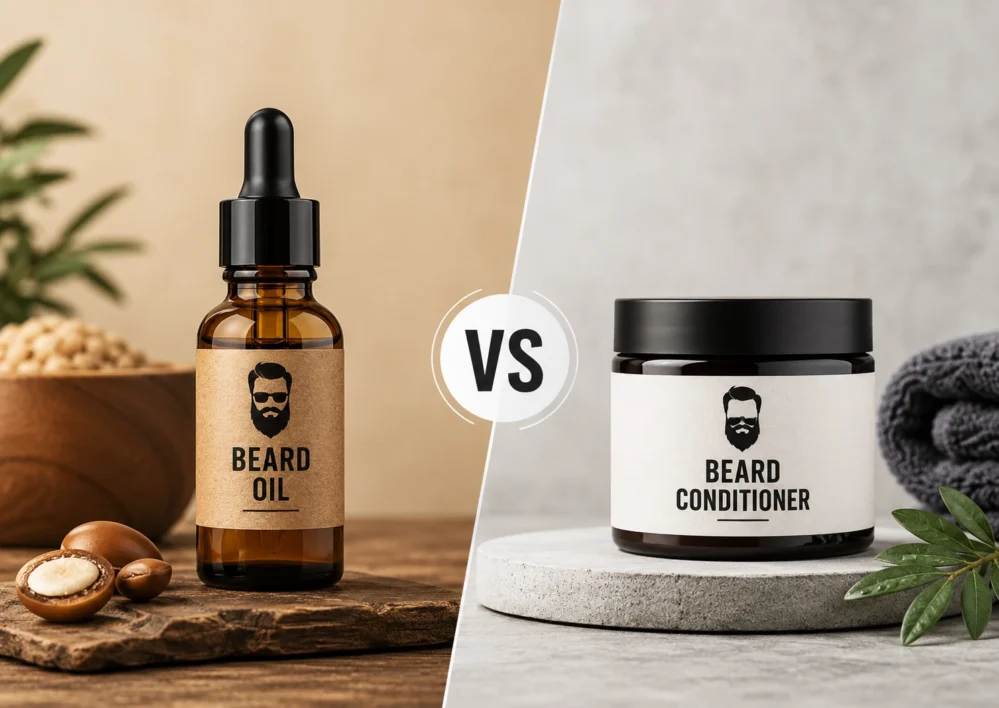
If you are building a beard care routine, you have probably come across two popular grooming products: beard oil and beard conditioner.
At first glance, they may seem like they do the same job. Both can help improve the feel and appearance of facial hair. But they work differently, and choosing between them depends on your beard length, hair texture, skin needs, and grooming routine.
So, when it comes to beard oil vs beard conditioner, which one should you use?
The short answer is simple: neither product is automatically better for everyone. Beard oil focuses on adding moisture and conditioning the beard and the skin underneath, while beard conditioner is designed to soften and improve the manageability of facial hair, often as part of a washing routine.
In this guide, we will explain the difference between beard oil and conditioner, compare their benefits, and help you decide whether you need one or both.
What Is Beard Oil?
Beard oil is a grooming product typically made with a blend of carrier oils and, in some formulas, essential oils or fragrance.
Common carrier oils used in beard oils include jojoba oil, argan oil, grapeseed oil, and coconut oil. The exact ingredients vary from one product to another, so checking the label is always a good idea.
The main purpose of beard oil is to provide conditioning and moisture to facial hair while also helping moisturize the beard skin underneath.
This matters because the skin beneath a beard can become dry, particularly when you wash your face or beard frequently. A dry beard and dry skin can contribute to discomfort, flaking, and an itchy feeling.
Beard oil can also make facial hair feel softer and look more groomed. This can be particularly helpful if you have coarse beard hair that feels rough or unruly.
However, beard oil is not a magic potion for beard growth. There is no good evidence that ordinary beard oil can make your facial hair grow faster or create new hair follicles.
Instead, think of it as a beard maintenance and conditioning product.
Beard Oil Benefits
Depending on the formula and your individual needs, beard oil may help:
- Moisturize the skin underneath your beard
- Reduce the feeling of dryness
- Improve beard softness
- Condition facial hair
- Make coarse hair feel more manageable
- Add a healthy-looking finish
- Make your beard feel less rough
- Support a simple facial hair care routine
If your main concern is a dry or uncomfortable beard, beard oil can be a useful addition to your routine.
That said, more oil is not always better. Applying too much can leave your beard looking greasy rather than groomed. Your beard should look like you take care of it, not like you accidentally dropped a samosa into a bottle of hair oil.
What Is Beard Conditioner?
Beard conditioner is designed specifically to condition and soften facial hair. Depending on the product, it may come as a rinse-out beard conditioner or a leave-in beard conditioner.
A rinse-out conditioner works much like a traditional hair conditioner. You apply it to your beard after washing, allow it to sit for the recommended time, and then rinse it out.
A leave-in beard conditioner stays in the beard and provides ongoing conditioning without rinsing.
The formulation can vary significantly between products. Some beard conditioners contain ingredients that help improve hair softness, reduce friction, and make the beard easier to comb or style.
The goal is generally to improve the feel and manageability of the beard rather than simply adding oil to the hair and skin.
This can be especially useful if your beard has a coarse texture or feels dry after washing.
Beard Conditioner Benefits
A beard conditioner may help:
- Improve beard softness
- Make facial hair easier to manage
- Reduce the rough feeling of coarse hair
- Improve the overall feel of beard hair
- Support beard hydration
- Make combing and grooming easier
- Condition facial hair after cleansing
A conditioner may be particularly useful for people with medium-to-long beards because longer facial hair often needs more attention to keep it soft and manageable.
However, beard conditioner is not necessarily essential for every person. Someone with a short beard may prefer a simple cleanser and beard oil, while someone with a longer, thicker beard may enjoy the extra conditioning a dedicated product provides.



Beard Oil vs Beard Conditioner: Key Differences
The easiest way to understand the beard oil vs conditioner debate is to look at what each product is designed to do.
| Feature | Beard Oil | Beard Conditioner |
|---|---|---|
| Main purpose | Moisturizes and conditions | Softens and conditions facial hair |
| Skin underneath beard | Can moisturize the skin | Usually focuses more on the hair |
| Beard softness | Can improve softness | Specifically designed to soften hair |
| Product format | Usually oil-based | Cream, balm, or liquid formula |
| Rinse required | Usually no | Depends on the product |
| Best for | Dry skin, dry beard, daily conditioning | Softening and managing facial hair |
| Styling | Provides light grooming benefits | Usually not a primary styling product |
| Beard length | Useful for short to long beards | Often useful for medium to long beards |
The difference between beard oil and conditioner comes down to their formulation and intended use.
Beard oil is usually a leave-on product that can moisturize the skin and condition facial hair.
Beard conditioner, on the other hand, is primarily designed to condition the hair itself. Some products require rinsing, while leave-in versions remain in the beard.
Neither one automatically wins.
It is more useful to ask what your beard actually needs.
Beard Oil vs Conditioner: Which Is Better?
When comparing beard oil vs beard conditioner, which is better, the answer depends on your goals.
Choose Beard Oil If Your Beard Feels Dry
If your beard feels dry and the skin underneath feels tight or uncomfortable, beard oil may be the more convenient option.
A few drops can be applied directly to the beard and skin, making it easy to include in a daily beard care routine.
This makes beard oil a practical choice for people who want a simple product that can address both facial hair and the skin underneath.
Choose Beard Conditioner If Your Beard Feels Rough
If your main problem is beard softness and manageability, a conditioner may be a better fit.
A good conditioner can help make facial hair feel softer and easier to handle, particularly if you have a longer or coarse beard.
This does not mean beard oil cannot soften hair. It can. The difference is that a dedicated conditioner is formulated specifically around conditioning the hair.
Choose Both If Your Beard Needs Extra Care
You do not always have to choose between beard oil or conditioner.
In fact, many people can use both as part of a broader grooming routine.
A conditioner can help soften the hair during or after washing, while beard oil can provide additional conditioning and moisture afterward.
The key is moderation.
Using multiple products does not automatically create a better beard. Applying too much of everything can leave your facial hair heavy, greasy, or difficult to manage.
Your beard does not need a 17-step skincare routine with a morning meeting and quarterly performance review.
Start with what your beard needs, then add products only when necessary.
Beard Oil or Conditioner for Dry Beard: Which Should You Choose?
For a dry beard, both products may have a place in your routine.
However, the source of the dryness matters.
If the skin underneath your beard feels dry or tight, beard oil may be useful because you can massage a small amount into the beard and the underlying skin.
If the facial hair itself feels rough, brittle, or difficult to manage, a beard conditioner may provide the softness and conditioning you are looking for.
You can also use both.
For example, you might wash your beard with a suitable cleanser, apply a rinse-out conditioner, and then use a small amount of beard oil once the beard is towel-dried.
However, individual results vary. If you have persistent itching, significant flaking, redness, or irritation, do not assume that adding more grooming products will solve the problem.
Skin conditions can sometimes cause symptoms that look like ordinary beard dryness or dandruff. If symptoms persist, consider speaking with a dermatologist.


Beard Oil or Conditioner for Beard Growth: Which Is Better?
This is where it is important to separate beard care from beard growth claims.
Neither ordinary beard oil nor beard conditioner has been established as a proven treatment for increasing beard growth.
Beard growth depends on factors such as genetics, age, and hormones. Grooming products can improve the appearance and feel of existing facial hair, but that does not mean they can create new follicles or guarantee faster growth.
So, if you are asking beard oil or conditioner for beard growth, the answer is: neither should be considered a proven beard-growth treatment.
Use beard oil and conditioner for what they are designed to do: support beard care, conditioning, softness, and manageability.
Can You Use Beard Oil and Conditioner Together?
Yes, in many cases, you can use beard oil and conditioner together.
Using both can make sense if you want to address different needs.
For example, beard conditioner can help condition the facial hair during your washing routine, while beard oil can provide additional moisture and conditioning after washing.
The exact order depends on the products you use.
A common approach is:
- Wash your beard with a suitable beard cleanser.
- Apply a rinse-out beard conditioner if your routine calls for one.
- Rinse thoroughly.
- Gently towel-dry your beard.
- Apply a small amount of beard oil to the beard and skin underneath.
If you use a leave-in beard conditioner, follow the manufacturer’s instructions. You may not need to use as much beard oil afterward.
The important thing is to avoid overloading your beard with products.
Start with a small amount and adjust based on how your beard feels and looks.
How to Use Beard Oil and Conditioner
A good beard care routine does not have to be complicated.
Here is a practical approach.
Step 1: Clean Your Beard
Use a product designed for cleansing facial hair and follow its instructions.
Avoid assuming that harsher cleansing is better. Overwashing or using unsuitable products can leave hair and skin feeling dry.
Step 2: Condition Your Beard
If you use a rinse-out beard conditioner, apply it according to the product directions.
Focus on the facial hair and allow the conditioner to work for the recommended amount of time before rinsing.
For a leave-in beard conditioner, use the recommended amount and do not rinse unless the instructions say otherwise.
Step 3: Dry Gently
Pat your beard dry with a clean towel instead of aggressively rubbing it.
Your facial hair does not need to be punished for existing.
Step 4: Apply Beard Oil
If beard oil is part of your routine, start with a small amount.
Rub the oil between your palms and work it through the beard. If the product is intended for skin use, gently massage some into the skin underneath the beard as well.
Adjust the amount based on your beard length and thickness.
Step 5: Comb or Brush
Once your beard is conditioned, a beard comb or brush can help distribute products and keep the hair looking neat.
This can also help with everyday beard maintenance and styling.



When to Use Beard Oil and Conditioner
The best time to use these products depends on their type.
Beard oil is commonly used as a leave-in product, often after washing and drying the beard.
A rinse-out beard conditioner usually belongs in the washing part of your routine.
A leave-in beard conditioner can be applied after cleansing and may be used instead of, or alongside, beard oil depending on the product’s formulation and your beard’s needs.
Always follow the instructions on the specific product.
There is no universal rule that says every beard needs oil every morning and conditioner every evening. Your routine should match your beard.
Can Beard Oil Replace Conditioner?
Can beard oil replace conditioner? Sometimes, but not always.
If you have a short beard and your main goal is to reduce dryness and keep your facial hair feeling soft, beard oil may be enough.
However, if you have a longer beard that feels rough or difficult to manage, a dedicated conditioner may provide additional benefits.
The products are not identical, so beard oil should not automatically be viewed as a complete replacement for conditioner.
Think of beard oil as a leave-on conditioning and moisturizing product, while conditioner is primarily focused on conditioning the hair.
Do I Need Beard Oil and Conditioner?
No, you do not necessarily need both.
A simple beard care routine can work perfectly well with fewer products.
If your beard feels comfortable, looks healthy, and is easy to manage, you may not need to add another product just because it is popular online.
However, if you experience a dry beard, rough facial hair, or difficulty managing a longer beard, adding either beard oil or conditioner may help.
Some people may benefit from both, while others may prefer one.
The best beard care routine is the one that meets your needs without making things unnecessarily complicated.
Is Beard Conditioner Necessary?
Is beard conditioner necessary? Not for everyone.
Beard conditioner is a useful grooming product, but it is not an essential requirement for every beard.
Short beards may require less conditioning than long, thick, or coarse facial hair.
Your hair texture and personal preferences also matter.
If your beard feels soft and manageable without conditioner, you may not need one.
On the other hand, if your beard feels rough, dry, or difficult to comb, conditioner may be worth adding to your routine.
Beard Oil vs Beard Conditioner: The Final Verdict
The beard oil vs beard conditioner debate does not have one universal winner.
Beard oil is a convenient option for moisturizing the skin underneath the beard and conditioning facial hair. It works well as a simple leave-on product for everyday beard care.
Beard conditioner focuses more directly on softening and conditioning facial hair. It can be especially useful for people with longer, coarse, or difficult-to-manage beards.
So, should you use beard oil or conditioner?
If your beard and skin feel dry, beard oil may be a good starting point.
If your facial hair feels rough and needs extra softness, consider a beard conditioner.
If you have both concerns, you can use beard oil and conditioner together as long as the products work well for you and you follow their instructions.
Ultimately, the best choice depends on your beard’s length, texture, and individual needs. Start simple, pay attention to how your beard and skin respond, and build your beard care routine from there.
Frequently Asked Questions
Can beard oil replace conditioner?
Beard oil can provide conditioning and moisture, but it does not work exactly like a dedicated beard conditioner. For some people, especially those with shorter beards, beard oil may be enough. Longer or coarse beards may benefit from using a conditioner as well.
Do I need beard oil and conditioner?
No. You do not automatically need both. Your choice depends on your beard and skin needs. If your beard feels dry, beard oil may help. If your facial hair feels rough or difficult to manage, conditioner may be useful. Some people may prefer using both.
Is beard oil or conditioner better for a dry beard?
It depends on where the dryness occurs. Beard oil may be useful when the skin underneath the beard feels dry, while conditioner may help when the facial hair itself feels rough. Some people may benefit from using both in moderation.
Can you use beard oil and conditioner together?
Yes. Many people can use both as part of their beard care routine. A rinse-out conditioner can be used during washing, followed by a small amount of beard oil after the beard has been towel-dried. Always follow the instructions for your specific products.
Does beard oil condition your beard?
Yes. Beard oil can condition facial hair and help moisturize the skin underneath the beard, depending on its ingredients. However, it is not identical to a dedicated beard conditioner, which is formulated specifically to condition hair.
Is beard oil better than conditioner?
Not necessarily. Beard oil and beard conditioner serve different purposes. Beard oil may be more convenient for moisturizing and leave-on conditioning, while beard conditioner may be better suited to softening and managing facial hair. The better option depends on your beard’s needs.
Should I use beard oil or conditioner?
If you want a simple product that can moisturize the skin underneath your beard and condition facial hair, beard oil may be a good choice. If your main concern is softening and managing rough facial hair, consider a beard conditioner. You can also use both if your routine benefits from them.
What is the best conditioner for a beard?
The best conditioner is one that suits your beard’s texture and your personal needs. Look for a product specifically formulated for facial hair and follow its usage instructions. If you have sensitive skin, review the ingredient list carefully and stop using a product if it causes irritation.
What is the best beard oil for a dry beard?
The best beard oil for a dry beard depends on your skin and hair type and how you respond to the formula. Look for a reputable product with ingredients suited to your needs, and use a small amount first. If dryness or irritation persists, consider consulting a dermatologist rather than continually adding more products.