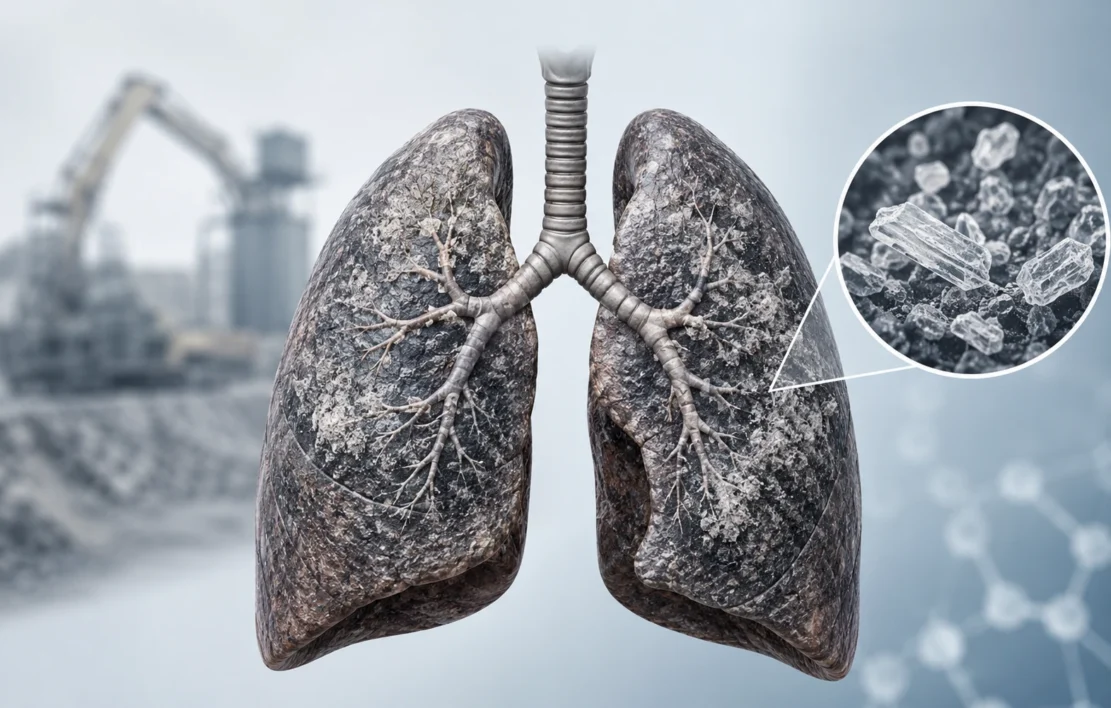
Silicosis remains one of the oldest occupational lung diseases known to medicine. Despite modern safety standards, workers around the world still face exposure to respirable crystalline silica, especially in industries like mining, construction, stone cutting, and sandblasting.
When tiny silica particles enter the lungs, they can cause inflammation and permanent lung damage. Over time, this damage may develop into silicosis, a serious and irreversible lung disease.
Understanding the types of silicosis helps workers, employers, and healthcare professionals recognize symptoms early and reduce long-term health risks.
In this guide, we will explain the different types of silicosis, how doctors classify them, and how the stages of silicosis disease develop over time.
What is Silicosis?
Silicosis is a progressive lung disease caused by inhaling crystalline silica dust. Silica exists naturally in materials such as:
- Sand
- Stone
- Quartz
- Granite
- Concrete
When workers cut, drill, crush, or grind these materials, microscopic dust particles enter the air. Workers who breathe this dust repeatedly may develop lung inflammation and scarring.
This scarring reduces the lungs’ ability to exchange oxygen. As the disease progresses, breathing becomes harder and daily activities feel exhausting.
Common symptoms include:
- Persistent cough
- Shortness of breath
- Chest pain
- Fatigue
- Reduced lung capacity
Silicosis does not develop overnight. The condition often takes years of exposure to appear, although heavy exposure can accelerate the process.
Why Understanding the Types of Silicosis Matters
Doctors classify silicosis based on how quickly the disease develops and the level of exposure to silica dust.
This silicosis classification helps doctors:
- Diagnose the disease more accurately
- Predict disease progression
- Plan treatment and monitoring strategies
- Identify workplace exposure risks
Each form of silicosis behaves differently. Some types develop slowly over decades, while others appear within months after intense exposure.
Think of it like sunburn. A little exposure may cause mild damage over time, while extreme exposure can cause severe injury quickly.



Silicosis Classification: The Main Types
Medical experts generally divide silicosis into three primary forms:
- Chronic Silicosis
- Accelerated Silicosis
- Acute Silicosis
These represent the different types of silicosis based on exposure intensity and the speed of disease progression.
Let’s explore each one in detail.
1. Chronic Silicosis
Chronic silicosis is the most common form of silicosis lung disease. It usually develops after 10 to 30 years of repeated silica exposure.
Workers in long-term industries such as mining or stone processing often face this type of risk.
How It Develops
When silica particles enter the lungs, the immune system tries to remove them. However, silica damages immune cells and triggers inflammation.
Over time, the lungs develop small scar tissue nodules.
These nodules gradually reduce lung flexibility and oxygen exchange.
Symptoms of Chronic Silicosis
Many people do not notice symptoms in the early stages. The disease may remain silent for years.
As lung damage progresses, symptoms appear:
- Persistent dry cough
- Shortness of breath during physical activity
- Chest discomfort
- Fatigue
- Reduced exercise tolerance
Doctors often detect chronic silicosis through chest X-rays or CT scans, sometimes before symptoms become obvious.
Who is Most at Risk?
Workers exposed to silica dust for long periods face the highest risk, including:
- Quarry workers
- Stone cutters
- Construction workers
- Sandblasters
- Glass manufacturing workers
Without proper respiratory protection, the lungs may slowly accumulate damage.
2. Accelerated Silicosis
Accelerated silicosis develops faster than chronic silicosis. This form usually appears after 5 to 10 years of heavy exposure to silica dust.
The disease behaves similarly to chronic silicosis but progresses more quickly.
Why It Happens
Workers exposed to higher concentrations of silica dust inhale more particles in a shorter time. This increased exposure speeds up lung damage.
Industries with intense silica dust production often create higher risks.
Symptoms
Symptoms of accelerated silicosis may include:
- Severe shortness of breath
- Chronic cough
- Fatigue
- Chest tightness
Doctors may detect larger lung nodules compared to chronic silicosis.
Accelerated silicosis often progresses rapidly if exposure continues.
Real-World Risk Factors
Some modern industries have reported higher cases of accelerated silicosis, particularly where workers cut engineered stone countertops.
Engineered stone can contain very high silica concentrations, which increases exposure risk during cutting and polishing.
3. Acute Silicosis
Acute silicosis is the rarest but most severe form of silicosis. It can develop within weeks or months after extremely high exposure to silica dust.
This form causes rapid lung inflammation and fluid buildup.
How Acute Silicosis Develops
Heavy silica exposure damages lung tissue quickly. Instead of slow scarring, the lungs fill with protein-rich fluid that interferes with breathing.
The condition can resemble severe pneumonia.
Symptoms
Symptoms may appear quickly and worsen rapidly:
- Severe breathing difficulty
- Rapid weight loss
- Fatigue
- Fever-like symptoms
- Bluish skin due to oxygen shortage
Because acute silicosis progresses quickly, it can become life-threatening.
High-Risk Situations
Acute silicosis often appears in environments with extremely high dust levels, such as:
- Uncontrolled sandblasting
- Tunnel drilling
- Industrial accidents involving silica dust
Proper safety controls usually prevent such extreme exposures.
Acute Silicosis vs Chronic Silicosis
Many people wonder about the differences between acute silicosis vs chronic silicosis.
Both forms involve silica dust exposure, but they differ in several important ways.
Exposure Time
Chronic silicosis develops slowly after decades of exposure.
Acute silicosis appears quickly after short but intense exposure.
Disease Progression
Chronic silicosis progresses gradually.
Acute silicosis can worsen within months.
Lung Damage
Chronic silicosis causes scar tissue nodules.
Acute silicosis leads to fluid buildup and severe inflammation.
Severity
Acute silicosis often causes more rapid respiratory failure.
Chronic silicosis usually develops slowly but remains irreversible.
Understanding this difference helps doctors diagnose and monitor the disease correctly.
Stages of Silicosis Disease
Doctors also describe the stages of silicosis disease based on lung damage severity.
These stages help medical professionals track disease progression.
Early Stage
At this stage, workers may not notice symptoms.
Doctors might detect small nodules in lung scans.
Early diagnosis offers the best opportunity to prevent further exposure.
Progressive Stage
Lung scarring increases during this stage.
Symptoms become more noticeable:
- Persistent cough
- Breathlessness during physical activity
Workers may struggle with tasks that once felt easy.
Advanced Stage
Advanced silicosis severely affects lung function.
Doctors sometimes refer to this stage as progressive massive fibrosis (PMF).
Symptoms may include:
- Severe breathing difficulty
- Reduced oxygen levels
- Chronic respiratory complications
Advanced stages can significantly impact quality of life.



Forms of Silicosis Lung Disease and Complications
Silicosis does not only damage lung tissue. It can also increase the risk of several other health conditions.
Common complications include:
Tuberculosis Risk
Silicosis weakens lung defenses. This increases susceptibility to tuberculosis infections.
Many countries require regular TB screening for workers with silicosis.
Chronic Obstructive Pulmonary Disease (COPD)
Silica exposure can contribute to airflow obstruction similar to COPD.
Lung Cancer Risk
Research links long-term silica exposure with increased lung cancer risk.
Autoimmune Disorders
Some studies associate silica exposure with autoimmune conditions such as rheumatoid arthritis and systemic sclerosis.
These complications make early prevention and monitoring essential.
Industries with High Silica Exposure
Many industries expose workers to silica dust. Understanding these environments helps prevent disease.
Common high-risk industries include:
- Mining
- Construction
- Stone fabrication
- Sandblasting
- Brick manufacturing
- Foundry work
- Tunnel construction
In these workplaces, dust control measures play a critical role in reducing exposure.
How Doctors Diagnose Silicosis
Doctors diagnose silicosis using a combination of medical history, imaging tests, and lung function assessments.
Exposure History
Doctors first evaluate a worker’s history of silica exposure.
Occupational details often provide the strongest clues.
Imaging Tests
Chest imaging helps detect lung damage.
Common tests include:
- Chest X-rays
- High-resolution CT scans
These scans can reveal nodules, lung scarring, or fluid buildup.
Lung Function Tests
Pulmonary function tests measure how well the lungs move air.
These tests help determine disease severity.
Early detection allows doctors to recommend workplace changes before severe damage occurs.

Can Silicosis Be Treated?
Unfortunately, silicosis cannot be reversed. Once lung scarring develops, the damage remains permanent.
However, medical care can help manage symptoms and slow disease progression.
Treatment Options
Doctors may recommend:
- Oxygen therapy
- Bronchodilator medications
- Pulmonary rehabilitation
- Vaccinations for respiratory infections
In severe cases, lung transplantation may become an option.
Prevention remains the most effective strategy.
Preventing Silicosis in the Workplace
Prevention plays a crucial role in reducing the number of silicosis cases.
Employers and workers can follow several safety practices.
Dust Control Systems
Modern workplaces use water suppression systems and ventilation to reduce airborne silica dust.
Respiratory Protection
Workers should wear approved respirators or masks when dust exposure cannot be controlled.
Monitoring Air Quality
Regular air monitoring helps ensure silica dust levels remain within safety limits.
Worker Education
Training programs teach workers about silica hazards and protective measures.
Awareness often prevents dangerous exposure situations.
Why Silicosis Still Exists Today
Despite improved safety standards, silicosis still occurs worldwide.
Several factors contribute to this issue:
- Lack of workplace safety enforcement
- Limited awareness in small industries
- Informal labor sectors
- High silica content in engineered stone
In many cases, workers simply do not realize the risk until symptoms appear.
Greater awareness can help prevent future cases.
Frequently Asked Questions
What are the main types of silicosis?
The three main types of silicosis are chronic silicosis, accelerated silicosis, and acute silicosis. These types differ based on the level of silica exposure and how quickly lung damage develops.
What is the difference between acute silicosis and chronic silicosis?
Acute silicosis develops within months or a few years after heavy silica exposure, while chronic silicosis usually develops after 10–30 years of long-term exposure to silica dust.
What are the stages of silicosis disease?
Silicosis generally progresses through three stages: early stage, progressive stage, and advanced stage. Advanced cases may lead to severe lung scarring known as progressive massive fibrosis.
Which workers are most at risk of silicosis?
Workers in industries such as mining, construction, stone cutting, sandblasting, quarrying, and engineered stone fabrication face the highest risk of silica dust exposure.
Can silicosis be cured?
No, silicosis cannot be cured because lung scarring is permanent. However, early diagnosis, medical treatment, and avoiding further silica exposure can help manage symptoms and slow disease progression.
How long does it take for silicosis to develop?
Silicosis can take 10–30 years to develop in chronic cases, but accelerated silicosis may appear within 5–10 years, and acute silicosis can develop within months after heavy exposure.
What are the early symptoms of silicosis?
Early symptoms often include persistent cough, shortness of breath during activity, chest discomfort, and fatigue. Some workers may not notice symptoms until the disease progresses.
How can silicosis be prevented?
Silicosis prevention involves controlling silica dust, using ventilation systems, wearing respirators, monitoring air quality, and following workplace safety guidelines.
Final Thoughts
Silicosis remains a serious occupational health issue, but knowledge can reduce its impact.
Understanding the types of silicosis, including chronic, accelerated, and acute silicosis, helps workers recognize the dangers of silica exposure.
The different types of silicosis develop at different speeds, yet they all share the same root cause: inhaling silica dust over time.
By learning about the forms of silicosis lung disease, recognizing the stages of silicosis disease, and understanding the differences between acute silicosis vs chronic silicosis, workers and employers can take proactive steps to protect lung health.
Good safety practices, dust control systems, and protective equipment can dramatically reduce exposure.
After all, lungs do not come with replacement parts. Treat them well, keep dust under control, and they will keep you breathing easier for years to come.