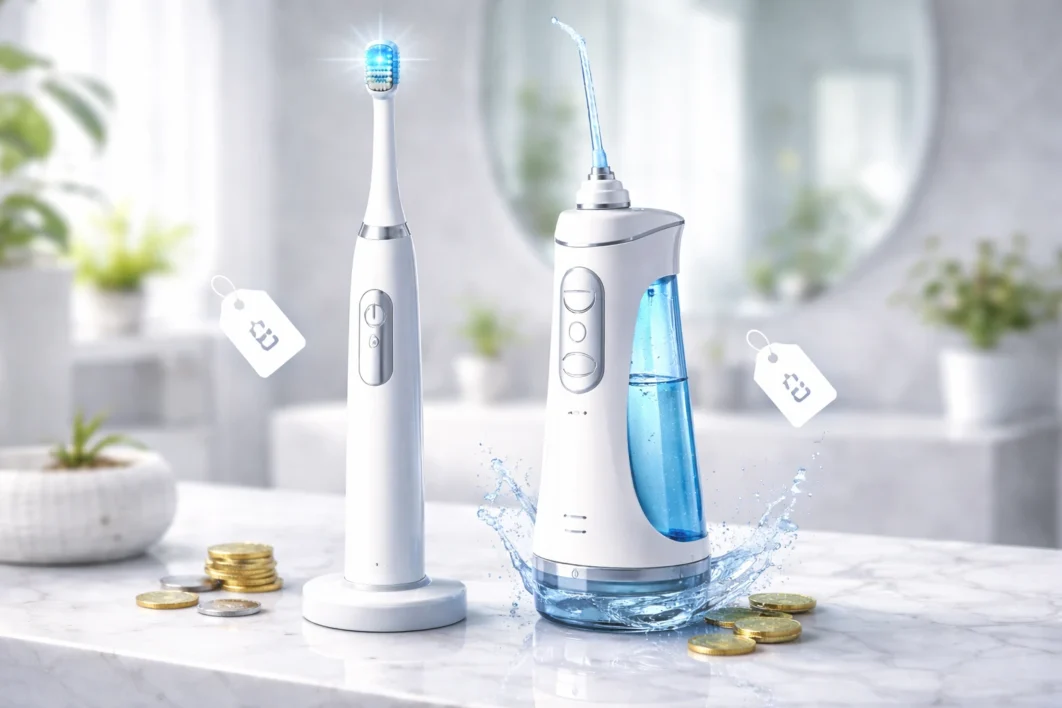
Choosing the right tool for your daily oral care can feel confusing. Should you invest in an electric toothbrush, or is a water flosser (often called a Water Pick) the smarter buy?
Both promise cleaner teeth and healthier gums. But if you’re on a budget, you need more than promises, you need results, value, and long-term benefits.
Let’s break it down in a clear, honest, and practical way so you can decide what actually deserves your money.
Why Oral Hygiene Tools Matter More Than You Think
Good oral health is not just about a bright smile. It directly connects to your overall health.
Plaque buildup leads to cavities. Gum infections can lead to serious issues if ignored. And poor oral hygiene often results in expensive dental treatments later.
That’s why choosing the right teeth cleaning at home tools matters.
Now, the real question:
Electric Toothbrush vs Water Pick – What’s the Difference?
Before comparing, let’s understand what each tool actually does.
Electric Toothbrush
An electric toothbrush uses powered movements (oscillating or vibrating) to clean your teeth more effectively than manual brushing.
It helps remove plaque, improve brushing technique, and reduce gum problems.
Water Pick (Water Flosser)
A water flosser uses a pressurized stream of water to clean between teeth and along the gum line.
It replaces or complements traditional flossing.



Electric Toothbrush vs Water Flosser Comparison – Quick Overview
| Feature | Electric Toothbrush | Water Flosser |
|---|---|---|
| Main Use | Cleans tooth surfaces | Cleans between teeth |
| Plaque Removal | High | Moderate (targets gaps) |
| Gum Health | Good | Excellent |
| Ease of Use | Very easy | Takes practice |
| Best For | Daily brushing | Deep cleaning |
| Budget Impact | Medium | Medium to high |
Both tools serve different purposes. They don’t replace each other completely, but if you must pick one, your needs matter.
Which Is Better for Budget Buyers?
Let’s be real.
You don’t want fancy features. You want something that works and saves money in the long run.
So, here’s the logic:
- If you skip brushing quality → cavities increase
- If you skip cleaning between teeth → gum problems increase
Both matter.
But if you must choose one affordable dental care gadget, the electric toothbrush usually gives more value for beginners.
Why?
Because brushing is non-negotiable. Flossing is often skipped.
Electric Toothbrush Benefits (Especially in India)
Electric toothbrushes have become more accessible and affordable in India. You can find reliable options under budget categories now.
Here’s why they stand out:
1. Better Plaque Removal
Electric brushes remove more plaque than manual ones when used correctly.
The rotating or vibrating motion does most of the work for you.
2. Improves Brushing Habits
Many people brush too hard or too fast.
Electric brushes:
- Maintain consistent motion
- Reduce pressure damage
- Help you brush evenly
3. Built-in Timers
Most models include a 2-minute timer.
That means no more guessing.
4. Ideal for Beginners
If your brushing technique isn’t perfect (most people’s isn’t), an electric brush helps compensate.
5. Cost Efficiency Over Time
You only replace the brush head, not the entire device.
That keeps long-term costs manageable.



Waterpik vs Electric Brush Pros and Cons
Let’s look at both sides clearly.
Electric Toothbrush – Pros
- Easy to use
- Improves brushing quality
- Widely available
- Budget-friendly options exist
- Great for daily routine
Electric Toothbrush – Cons
- Doesn’t clean deeply between teeth
- Requires charging or batteries
- Replacement heads cost extra
Water Flosser – Pros
- Cleans hard-to-reach areas
- Excellent for gum health
- Ideal for braces and dental work
- Less painful than string floss
Water Flosser – Cons
- Higher upfront cost
- Needs water and setup
- Not a replacement for brushing
- Slight learning curve
Water Flosser for Braces Review – Is It Worth It?
If you wear braces, a water flosser becomes extremely useful.
Braces trap food easily. Traditional floss struggles to clean around wires.
A water flosser:
- Reaches tight spaces
- Reduces gum inflammation
- Saves time
For braces users, this tool isn’t optional, it’s practical.
Manual vs Electric Toothbrush Results – What’s the Truth?
Manual brushes can work well.
But here’s the honest reality:
Most people don’t brush properly.
They:
- Rush the process
- Miss areas
- Apply uneven pressure
Electric toothbrushes reduce these errors.
Clinical observations consistently show better plaque control with electric models compared to manual ones when used by average users.
So, while manual brushing works in theory, electric brushing works better in real life.


Best Oral Hygiene Tools Budget – What Should You Choose First?
If you’re building a budget-friendly oral care routine, prioritize like this:
Step 1: Upgrade Your Toothbrush
Switch from manual to electric first.
This gives immediate improvement.
Step 2: Add Flossing (String or Water)
If budget allows:
- Start with string floss (cheapest)
- Upgrade to water flosser later
Step 3: Maintain Consistency
Even the best tool fails if you don’t use it daily.
Oral Hygiene Routine Tips (Budget-Friendly)
You don’t need expensive tools for good oral health.
You need consistency and the right approach.
Morning Routine
- Brush with electric toothbrush (2 minutes)
- Clean tongue
Night Routine
- Brush again
- Use floss or water flosser
Weekly Habit
- Check gums for bleeding
- Replace brush head when worn
Simple routine. Big impact.
Electric Toothbrush vs Water Pick – Who Should Choose What?
Let’s make this simple.
Choose Electric Toothbrush If:
- You want better brushing results
- You are upgrading from manual brush
- You want a budget-friendly start
- You prefer ease of use
Choose Water Flosser If:
- You already brush well
- You have braces or dental work
- You struggle with flossing
- You want better gum care
Can You Use Both Together?
Yes, and that’s actually the best combination.
Think of it like this:
- Electric toothbrush = cleans surfaces
- Water flosser = cleans gaps
Together, they create a complete cleaning system.
But if budget is tight, start with one.
Common Mistakes People Make
Avoid these if you want real results:
1. Brushing Too Hard
Hard brushing damages enamel and gums.
Electric brushes help control this.
2. Skipping Night Routine
Night cleaning matters more than morning.
Food and bacteria sit overnight.
3. Ignoring Gum Health
Healthy gums hold your teeth.
A water flosser helps here.
4. Buying Expensive Tools Without Use
Consistency beats price.
A simple tool used daily beats an expensive one used occasionally.
Are Expensive Models Worth It?
Not always.
Budget models often provide the core benefits:
- Proper cleaning motion
- Basic timer
- Reliable performance
Extra features like apps or multiple modes don’t always improve results.
Focus on function, not hype.
Electric Toothbrush vs Water Pick – Final Verdict
If you’re choosing just one tool on a budget:
👉 Go with an electric toothbrush.
It improves your daily brushing instantly. It’s easier to use. And it gives the best return on investment for most people.
But if your budget allows a second upgrade later:
👉 Add a water flosser.
That’s when your oral care routine becomes truly complete.
Frequently Asked Questions
Which is better: electric toothbrush or water flosser?
An electric toothbrush is better for daily cleaning because it removes plaque from tooth surfaces effectively. A water flosser works best for cleaning between teeth and improving gum health. For most people on a budget, an electric toothbrush is the better first choice.
Can a water flosser replace brushing?
No, a water flosser cannot replace brushing. It cleans between teeth but does not remove plaque from tooth surfaces. You still need a toothbrush for complete oral hygiene.
Is an electric toothbrush worth it compared to manual?
Yes, an electric toothbrush often provides better cleaning than a manual brush. It improves brushing technique, removes more plaque, and helps maintain consistent pressure and timing.
Are water flossers good for gums?
Yes, water flossers are effective for gum health. They help reduce inflammation, remove food particles, and clean areas that traditional floss may miss.
What is the best budget oral hygiene tool?
For most people, an electric toothbrush offers the best value. It improves daily brushing and provides noticeable results without a high cost.
Should I use both electric toothbrush and water flosser?
Yes, using both gives the best results. The toothbrush cleans tooth surfaces, while the water flosser cleans between teeth and along the gums.
Is a water flosser useful for braces?
Yes, a water flosser is very useful for braces. It helps clean around wires and brackets where food and plaque can easily build up.
How often should I use a water flosser?
You can use a water flosser once daily, ideally at night, to remove debris and improve gum health.
Does an electric toothbrush reduce cavities?
An electric toothbrush can help reduce cavities by removing plaque more effectively than manual brushing when used correctly and consistently.
Which is more affordable: electric toothbrush or water flosser?
Electric toothbrushes are generally more affordable upfront and easier to maintain. Water flossers usually cost more initially but offer additional cleaning benefits.
Final Thoughts
You don’t need fancy gadgets to maintain good oral hygiene.
You need:
- The right tools
- Smart choices
- Daily consistency
An electric toothbrush gives you a strong foundation.
A water flosser builds on that.
Start simple. Stay consistent. Upgrade when it makes sense.
Your teeth, and your future dental bills, will thank you.