For electric fence testing, a wireless fence voltage tester is the clear winner. It’s safer, faster, and designed specifically for high-voltage fence applications. Multimeters work for general electrical testing but lack the range and safety features needed for livestock fences. If you maintain electric fences regularly, invest in a dedicated tester. Check the latest wireless fence testers on Amazon.
What This Guide Covers
Testing electric fence voltage isn’t just about checking if power flows. It’s about animal safety, fence effectiveness, and troubleshooting weak spots before they become escape routes.
You’ve probably wondered whether you need a specialized wireless fence voltage tester or if your trusty multimeter can handle the job. The short answer? They’re designed for different purposes, and using the wrong tool can give you inaccurate readings or even put you at risk.
In this guide, I’ll walk you through both tools, compare their real-world performance, and help you choose the right one for your setup. Whether you’re managing a cattle ranch or a backyard chicken fence, you’ll know exactly which tool deserves a spot in your toolkit.
Ready to find the right tester? Browse top-rated wireless fence testers here.
Wireless Fence Voltage Tester
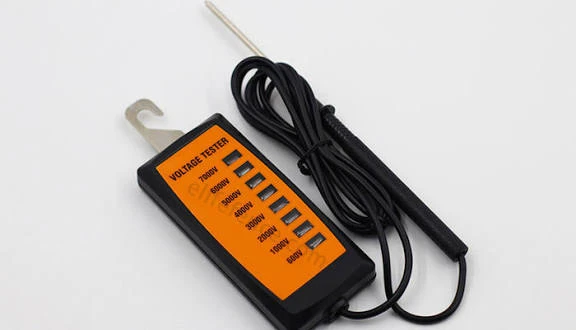
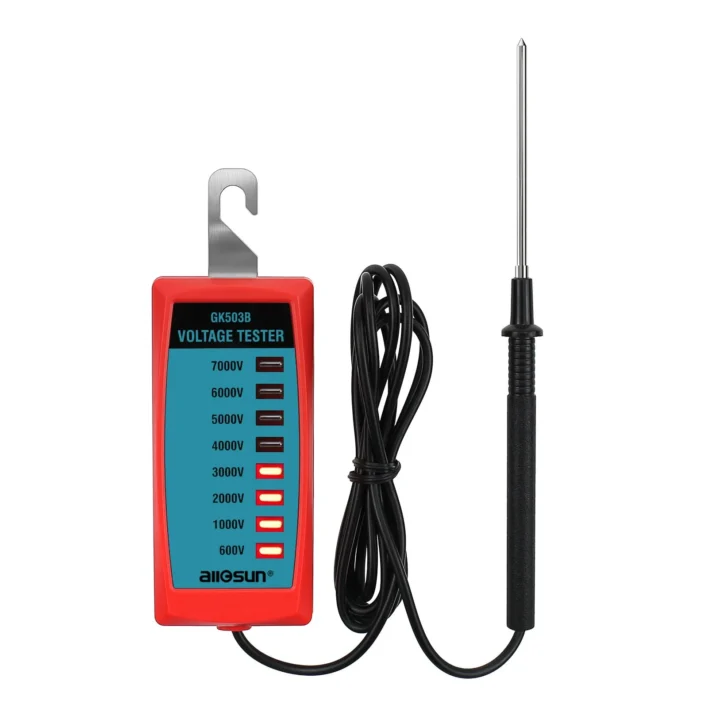
A wireless fence voltage tester is a handheld device built specifically to measure the voltage output of electric fences. Unlike general-purpose tools, these testers are designed to handle the pulsed, high-voltage nature of fence chargers.
How It Works
Most wireless fence testers work by detecting the electromagnetic field around the fence wire. You don’t need to touch the wire directly—just hold the tester near it, and it displays the voltage reading.
This contactless design makes testing safer and faster, especially when you’re walking a long fence line looking for weak spots.
Key Features
- High voltage range: Measures from 1,000V to 10,000V or higher
- Contactless testing: No direct wire contact needed
- Portable design: Fits in your pocket, works in the field
- Visual indicators: LED lights or digital displays show voltage levels instantly
- Weatherproof construction: Built to handle outdoor ranch conditions
When It’s Useful
If you maintain electric fences for livestock, horses, or predator control, this is your go-to tool. It’s perfect for:
- Daily fence checks before turning animals out
- Troubleshooting weak sections along fence lines
- Verifying proper grounding and charger output
- Testing after installation or repairs
Want to see the best options? Compare wireless fence testers on Amazon.


Multimeter
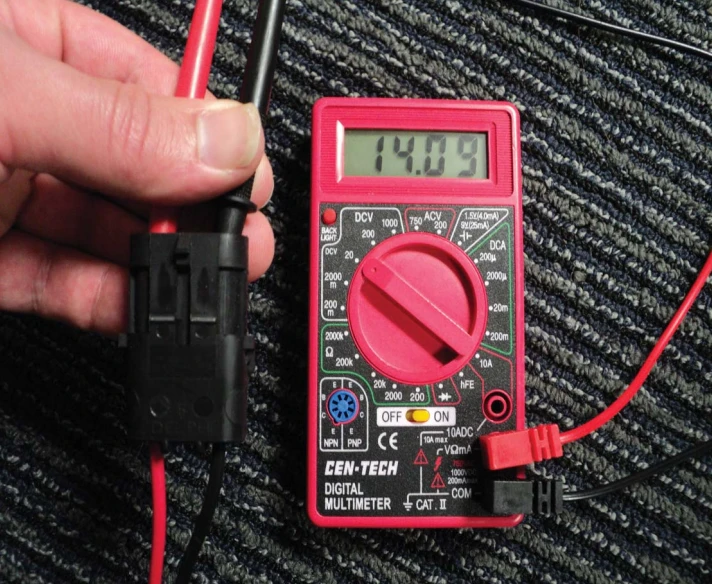
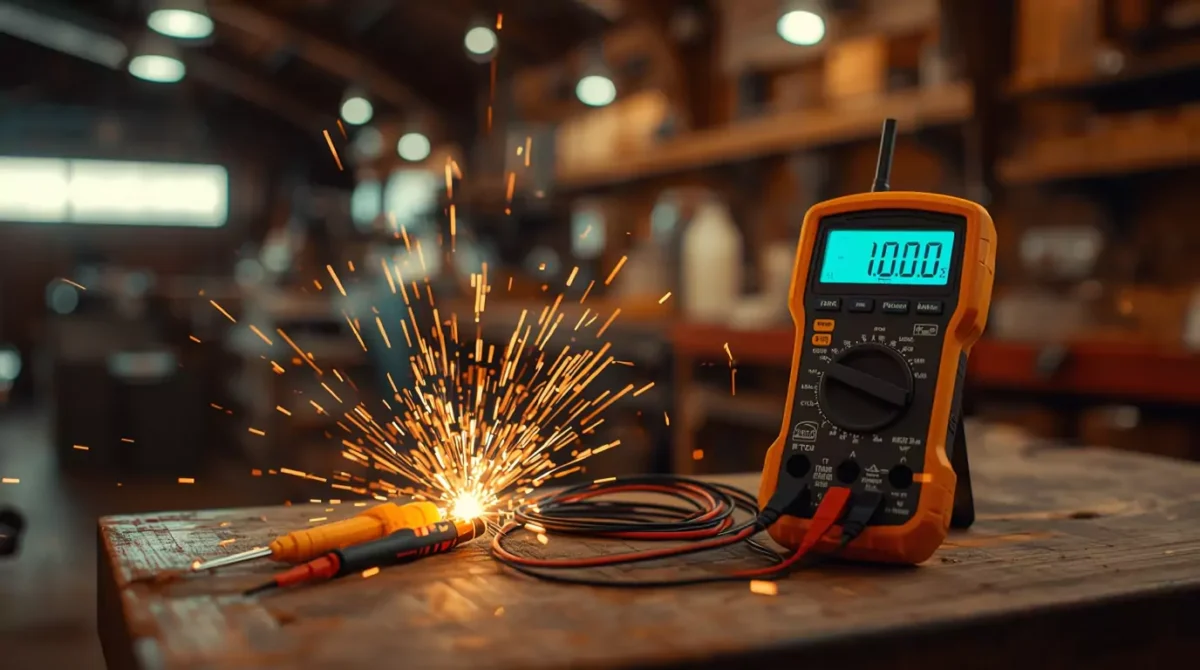
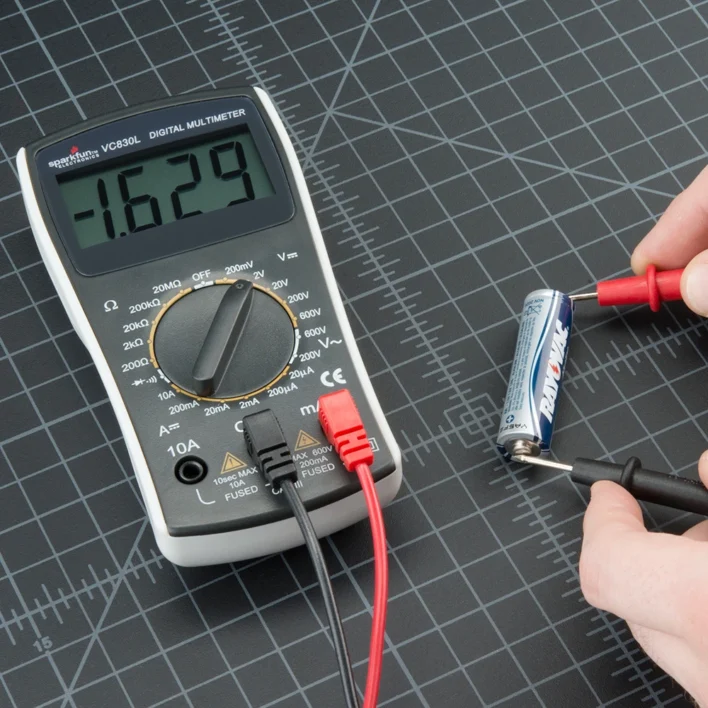
A multimeter is a versatile electrical testing tool that measures voltage, current, and resistance across various circuits. It’s the Swiss Army knife of electrical work—useful for everything from checking batteries to diagnosing car electrical problems.
Basic Purpose
Multimeters excel at low-voltage DC and AC measurements in household, automotive, and electronics applications. Most models measure:
- DC voltage (batteries, solar panels)
- AC voltage (household outlets)
- Resistance (continuity testing)
- Current (circuit load testing)
Limitations in Electric Fence Testing
Here’s where things get tricky. Standard multimeters typically max out around 600-1000V. Electric fences operate at 2,000V to 10,000V with pulsed output.
Using a standard multimeter on an electric fence can:
- Give you wildly inaccurate readings
- Damage the meter’s internal components
- Miss the pulsed nature of fence current
- Require direct contact with the wire (safety risk)
Some high-voltage multimeters exist, but they’re expensive and still not optimized for fence testing.
General Use Cases
Multimeters shine in these situations:
- Testing car batteries and alternators
- Checking household electrical outlets
- Diagnosing appliance problems
- Electronics repair and hobby projects
- Solar system troubleshooting
Need a quality multimeter for general use? Browse multimeters on Amazon.
Wireless Fence Tester vs Multimeter: Quick Comparison Table
| Feature | Wireless Fence Tester | Standard Multimeter |
|---|---|---|
| Voltage Range | 1,000V – 10,000V+ | Up to 600V-1000V |
| Accuracy for Fences | Excellent (designed for pulsed voltage) | Poor (not designed for fence pulses) |
| Safety | Very safe (contactless) | Requires direct contact with wire |
| Ease of Use | Extremely easy | More complex setup required |
| Speed | Instant readings | Slower, requires connection |
| Beginner Friendly | Yes | Requires electrical knowledge |
| Field Testing | Perfect for walking fence lines | Impractical for field use |
| Price Range | $25-$80 | $20-$200+ |
| Durability | Weather-resistant | Varies by model |
| Best For | Electric fence maintenance only | General electrical testing |
Bottom line: For electric fences, the specialized tester wins every time. Check current prices on fence testers.
Which One Works Best for Electric Fences?
A wireless fence voltage tester is the only practical choice for electric fence testing. It’s designed specifically for the high-voltage, pulsed output that fence chargers produce, providing accurate readings without safety risks.
Here’s why this matters in real-world use: When you’re walking a half-mile fence line looking for a weak spot, you need instant feedback. A wireless tester lets you check voltage every few feet without stopping to connect test leads.
I’ve seen ranchers try using multimeters, and the process is frustratingly slow. You have to stop, attach leads to the fence and ground rod, wait for a reading, then disconnect and move on. Plus, standard multimeters can’t accurately measure the pulsed DC that fence chargers produce.
Real-Life Example
Imagine your cattle keep breaking through a back section of fence. With a wireless tester, you walk the line, hold the device near the wire, and immediately see where voltage drops. Takes maybe 10 minutes.
With a multimeter? You’d spend 30-45 minutes setting up at multiple test points, and the readings might not even be accurate because the meter isn’t designed for pulsed voltage.
Expert Insight
Professional fence installers and agricultural extension offices universally recommend dedicated fence testers. They’re not expensive compared to the cost of escaped livestock or predator losses.
Ready to upgrade your testing game? View top-rated fence testers or browse general multimeters for other electrical work.


Pros & Cons: Wireless Fence Voltage Tester vs Multimeter
Wireless Fence Voltage Tester
Pros:
- Designed for the job: Handles high-voltage pulsed current perfectly
- Contactless operation: Safer testing without touching live wires
- Fast field testing: Check dozens of points in minutes
- Simple to use: No electrical knowledge required
- Portable and rugged: Pocket-sized, weatherproof designs
- Affordable: Most quality models cost $30-$60
- Clear indicators: LED lights or displays show voltage at a glance
Cons:
- Single-purpose tool: Only useful for electric fences
- Battery dependent: Needs occasional battery replacement
- Range limitations: Some cheaper models lack accuracy at very high or low voltages
- Calibration: May need periodic recalibration for accuracy
See today’s best deals on fence testers.
Standard Multimeter
Pros:
- Versatile: Handles hundreds of electrical testing tasks
- Precise: Accurate for low-voltage applications
- Professional grade options: High-end models for serious electrical work
- Additional functions: Measures resistance, current, continuity
- Long-term investment: One tool for many jobs
Cons:
- Wrong voltage range: Most can’t safely measure fence voltages
- Inaccurate for fences: Not designed for pulsed high-voltage DC
- Requires direct contact: Must touch the wire (safety risk)
- Complicated setup: Requires test leads and proper connection
- Impractical in the field: Too slow for fence line troubleshooting
- Potential damage: Using it on high-voltage fences can destroy the meter
Find quality multimeters for general electrical work.
Step-by-Step: How to Test an Electric Fence Safely
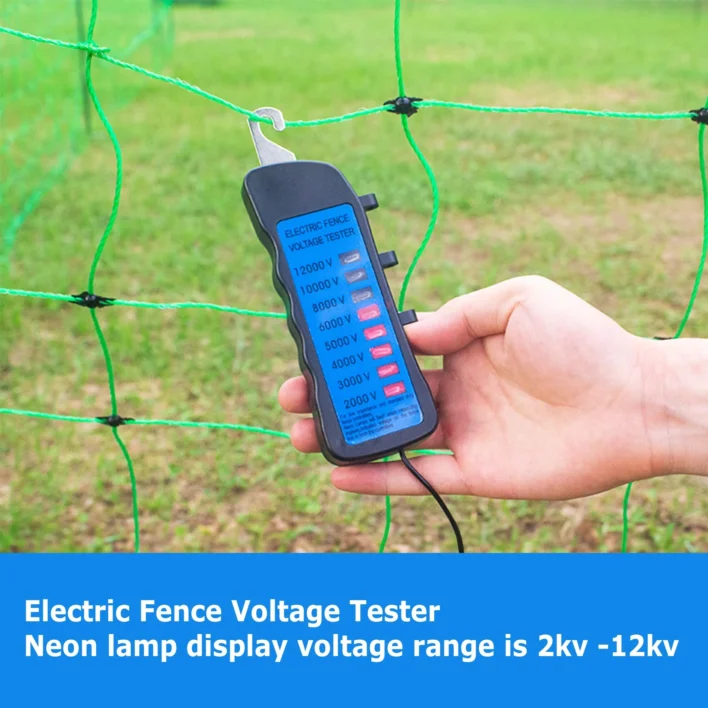
Testing your electric fence correctly ensures both accuracy and safety. Follow these steps using a wireless fence voltage tester:
Tools Required
- Wireless fence voltage tester
- Leather gloves (optional but recommended)
- Notepad to record readings
- Ground rod or earth contact point
Safety Tips Before You Start
- Never test during thunderstorms or rain
- Keep one hand in your pocket while testing (prevents current path through your chest)
- Don’t touch the fence wire and tester simultaneously
- Wear rubber-soled boots
- Tell someone you’re testing fences in case of emergency
- Turn off the charger if you need to make repairs
Step-by-Step Testing Process
- Turn on your wireless tester and verify the battery is good (most have a self-test function)
- Test the charger output first by holding the tester near the fence wire right at the charger connection point. This establishes your baseline voltage.
- Record the reading (should be close to your charger’s rated output, typically 5,000V-8,000V for livestock)
- Walk the fence line holding the tester 1-2 inches from the wire every 50-100 feet, checking for voltage drops
- Mark weak spots where voltage drops significantly (more than 20-30% from baseline)
- Test the ground system by checking voltage between fence and ground rod—should read full voltage
- Investigate problem areas by looking for vegetation touching wire, broken insulators, or corroded connections
- Retest after repairs to verify voltage has returned to normal levels
Pro tip: Test monthly during growing season when vegetation grows fast, and after any major weather events.
Get the right tester for safe, accurate results: Shop wireless fence testers on Amazon.
Frequently Ask Questions (FAQs)
Can a multimeter measure electric fence voltage?
Standard multimeters cannot accurately measure electric fence voltage because they’re designed for continuous current, not the pulsed high-voltage DC that fence chargers produce. Most multimeters also max out at 600-1000V, while fences operate at 2,000-10,000V, risking damage to the meter and providing unreliable readings.
How accurate is a wireless fence tester?
Quality wireless fence testers are highly accurate for their intended purpose, typically within ±5-10% of actual voltage. They’re specifically calibrated for pulsed high-voltage systems and provide consistent, reliable readings. Premium models offer even better accuracy, while budget options may vary more but still outperform multimeters for fence testing.
What is the safest way to test an electric fence?
The safest method is using a contactless wireless fence voltage tester, which detects voltage without touching the wire. Keep one hand in your pocket, wear rubber-soled boots, and never test during storms. Always test from the fence side, not between the fence and animals, and avoid testing in wet conditions.
What voltage should an electric fence read?
A properly functioning electric fence should read 5,000-8,000 volts for cattle and horses, 4,000-5,000 volts for sheep and goats, and 3,000-4,000 volts for poultry and small animals. Voltage below 3,000V is generally ineffective. Check your fence charger’s specifications for the recommended output for your livestock type.
Why is my electric fence reading low voltage?
Low voltage typically results from poor grounding, vegetation touching the wire, corroded connections, damaged insulators, or a failing charger. Walk the fence line with a tester to locate voltage drops. The most common culprit is inadequate grounding—you may need additional ground rods in dry soil conditions.
Do I need a special tester for electric fences?
Yes, electric fences require a specialized high-voltage tester. Standard electrical testing tools can’t accurately measure the pulsed DC current fence chargers produce, and most lack the voltage range to handle 5,000-10,000V safely. Wireless fence testers are affordable, purpose-built tools that provide accurate readings specifically for fence systems.
Compare top fence testers here.
Can electric fence voltage hurt you?
Electric fence voltage is high enough to deliver a painful shock but is designed to be non-lethal. The current is very low and pulsed (typically only 1-3 joules), so while unpleasant, it won’t cause serious injury to healthy individuals. However, people with pacemakers or heart conditions should avoid contact.
How often should I test my electric fence?
Test your fence at least monthly during active seasons, weekly during rapid vegetation growth, and immediately after severe weather. Daily checks are ideal for high-value livestock or predator protection. Regular testing prevents escapes and ensures consistent animal training, saving you time and money in the long run.



Best Products to Buy Today
Best Wireless Fence Voltage Tester
When shopping for a fence tester, look for models with:
- Voltage range of 1,000V-10,000V minimum (covers all fence types)
- Clear LED or digital display for easy reading in bright sunlight
- Weatherproof construction with rubberized grip
- Replaceable battery (typically AAA or 9V)
- Audible alerts for weak voltage warnings on premium models
Popular brands include Zareba, Gallagher, and Speedrite. Mid-range models ($35-$55) offer the best value for most users, while premium testers ($60-$80) add features like voltage memory and fault distance calculations.
Find the perfect model for your needs: Browse wireless fence testers on Amazon.
Best Multimeter for General Outdoor Testing
If you need a multimeter for non-fence electrical work around your property (solar panels, RV systems, tractor batteries), choose one with:
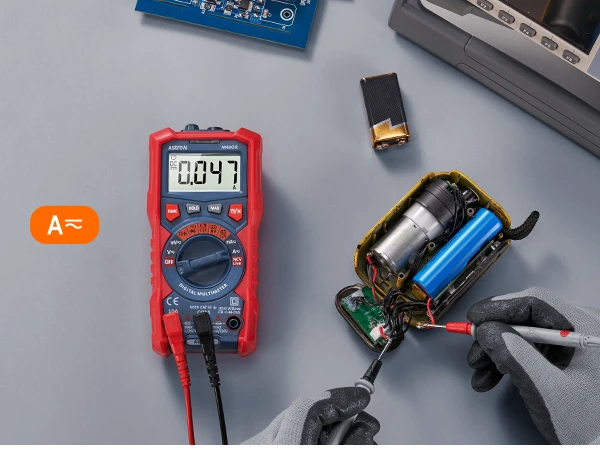
- Auto-ranging function for ease of use
- True RMS capability for accurate AC measurements
- Rugged, drop-resistant case
- Large backlit display
- CAT III or CAT IV safety rating
Quality brands include Fluke (premium), Klein Tools (pro-grade), and AstroAI (budget-friendly). A good multimeter for general farm/ranch use typically costs $40-$100.
Shop quality multimeters for other electrical tasks: View multimeters on Amazon.
Final Verdict: Which Tool Should You Choose?
For electric fence testing, choose a wireless fence voltage tester every single time. It’s safer, more accurate, faster, and designed specifically for the job.
Here’s my recommendation based on your situation:
You need a wireless fence tester if:
- You maintain electric fences for livestock or predator control
- You troubleshoot fence problems regularly
- You want fast, accurate readings while walking fence lines
- You’re a beginner without electrical testing experience
- You need a dedicated, reliable tool for one specific job
You need a multimeter if:
- You do general electrical work (home, auto, RV, solar)
- You troubleshoot household electrical problems
- You work on electronics or DIY projects
- You need one versatile tool for many applications
- You already own a fence tester and need a second tool
The bottom line? If you have electric fences, a $40 wireless tester will serve you better than a $200 multimeter. It’s the right tool for the job.
Ready to make the smart choice? Check latest prices on fence testers here or see multimeter options for other electrical work.
Final Recommendation: For anyone maintaining electric fences, a wireless voltage tester is an essential investment that pays for itself the first time it helps you quickly locate a fence problem. See today’s best options on Amazon.