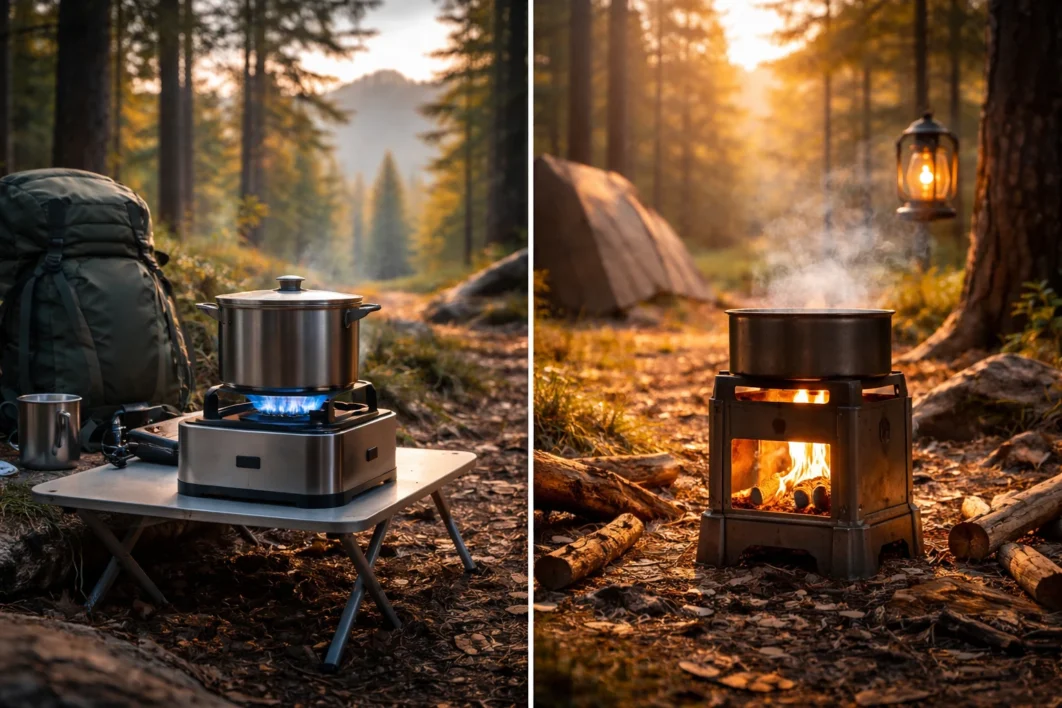
Choosing the right camping stove can make or break your outdoor trip. You don’t want to wrestle with fire when you’re hungry, cold, and slightly dramatic after a long hike.
So, what should you pick – a portable camping stove or a wood burning stove?
Let’s break it down in a clean, practical, and honest way so you can decide what actually works for your style of camping.
Why Choosing the Right Camping Stove Matters
A camping stove is not just gear. It’s your kitchen, your coffee machine, and sometimes your emotional support system at sunrise.
Pick the wrong one and you deal with:
- Slow cooking
- Fuel issues
- Smoke struggles
- Extra weight
Pick the right one and you get:
- Fast meals
- Better fuel efficiency
- Less stress
- More time enjoying nature
This is why a solid portable camping stove vs wood stove comparison matters before you buy.
What Is a Portable Camping Stove?
A portable camping stove usually runs on fuel like:
- Butane
- Propane
- Isobutane mix
These stoves focus on convenience and control.
Key Features of Portable Camping Stoves
- Lightweight and compact
- Easy ignition (often push-button)
- Adjustable flame control
- Works in most weather conditions
If you want quick cooking without effort, this stove delivers.



What Is a Wood Burning Camping Stove?
A wood burning camping stove uses natural fuel like:
- Twigs
- Leaves
- Small branches
You don’t carry fuel. You collect it from your surroundings.
Key Features of Wood Burning Stoves
- No need to carry fuel canisters
- Works using natural resources
- Often foldable and simple
- Produces a traditional campfire feel
It’s a favorite for people who enjoy a raw outdoor experience.
Portable Camping Stove vs Wood Stove Comparison
Let’s get straight to what matters.
1. Ease of Use
Portable Stove:
You press a button, turn a knob, and start cooking. It’s that simple.
Wood Stove:
You build and maintain a fire. That takes time and patience.
Winner: Portable stove
2. Cooking Speed
Portable Stove:
Heats fast and gives consistent flame control.
Wood Stove:
Depends on wood quality and airflow. Flame can fluctuate.
Winner: Portable stove
3. Fuel Availability
Portable Stove:
You must carry fuel canisters.
Wood Stove:
Fuel is usually available in nature—unless you camp in restricted or wet areas.
Winner: Wood stove
4. Weight and Packability
This is important if you’re searching for the best camping stove for backpacking lightweight.
Portable Stove:
Light, but fuel adds weight.
Wood Stove:
Ultra-light models exist. No fuel weight.
Winner: Tie (depends on trip length)
5. Weather Performance
Portable Stove:
Works well in most conditions, though extreme cold can affect gas pressure.
Wood Stove:
Struggles in rain, snow, or wet environments.
Winner: Portable stove
6. Environmental Impact
This is key when looking for eco friendly camping stove options.
Portable Stove:
Uses fossil fuel canisters.
Wood Stove:
Uses natural materials but can impact local ecosystems if overused.
Winner: Depends on usage habits
Gas vs Wood Camping Stove Efficiency
Efficiency depends on how well your stove converts fuel into heat.
Portable Gas Stove Efficiency:
- High heat output
- Minimal heat loss
- Controlled cooking
Wood Stove Efficiency:
- Less predictable
- Heat varies with wood type and airflow
- Modern designs improve combustion
If you want consistent cooking, gas wins.
If you value sustainability and independence, wood still holds strong.


Wood Burning Stove Pros and Cons Camping
Let’s keep it honest.
Pros
- Unlimited fuel in most outdoor areas
- No need to carry fuel canisters
- Works well for long trips
- Gives authentic camping experience
Cons
- Takes time to start
- Produces smoke
- Not allowed in some parks
- Hard to use in wet weather
Portable Camping Stove Pros and Cons
Pros
- Fast and easy to use
- Clean burning
- Reliable in most conditions
- Great for beginners
Cons
- Fuel canisters cost money
- Limited fuel supply
- Less eco-friendly
- Can fail in extreme cold
Portable Stove Fuel Types Guide
Understanding fuel helps you choose better.
1. Butane
- Cheap and easy to use
- Best for warm weather
2. Propane
- Performs well in cold weather
- Heavier canisters
3. Isobutane Mix
- Balanced option
- Works in various temperatures
Each type affects your cooking performance, especially in different climates.



Which Is the Best Stove for Hiking Trips Cooking?
If you love hiking, your stove choice should match your pace.
For Fast & Light Hikers
Choose a portable stove.
It saves time and energy.
For Adventure Purists
Choose a wood stove.
You carry less and rely on nature.
For Beginners
Portable stoves feel easier and safer.
Foldable Camping Stove Review Insights
Foldable stoves – especially wood-burning ones are gaining popularity.
Why?
- Compact design
- Easy to pack
- Lightweight
However, they still require effort to operate compared to gas stoves.
So while they look cool (and they are), they’re not always the easiest choice.
Camping Stove Safety Tips Outdoor
No matter what you choose, safety matters.
Always Follow These:
- Use stoves in well-ventilated areas
- Keep flammable items away
- Never leave a burning stove unattended
- Check fuel connections before use
- Follow local fire regulations
Safety mistakes can ruin more than just your trip.
Camping Gear Stove Buying Guide
Before buying, ask yourself a few simple questions.
1. How Long Is Your Trip?
Short trips → Portable stove
Long trips → Wood stove can work
2. Where Are You Camping?
Restricted areas → Portable stove
Forest areas → Wood stove possible
3. How Much Weight Can You Carry?
Minimalist → Wood stove
Comfort-focused → Portable stove
4. Do You Value Convenience or Experience?
Convenience → Portable
Experience → Wood
When Should You Choose a Portable Camping Stove?
Pick this if you:
- Want quick cooking
- Prefer easy setup
- Camp in different weather conditions
- Travel with family or groups
It’s the safest and most practical option for most people.
When Should You Choose a Wood Burning Stove?
Pick this if you:
- Enjoy traditional camping
- Want to reduce fuel costs
- Camp in forested areas
- Like minimalist packing
It’s perfect for experienced campers who enjoy the process.
Frequently Asked Questions
Which is better: portable camping stove or wood burning stove?
A portable camping stove works better for convenience, fast cooking, and reliability in all weather conditions. A wood burning stove suits campers who prefer a natural fuel source and don’t want to carry fuel canisters.
Are wood burning camping stoves efficient?
Wood burning camping stoves can be efficient when dry wood and proper airflow are available. However, they usually provide less consistent heat compared to gas-powered portable stoves.
What is the best camping stove for backpacking?
The best camping stove for backpacking is a lightweight portable gas stove because it offers quick setup, controlled flame, and reliable performance with minimal effort.
Is a wood stove more eco-friendly than a gas camping stove?
A wood stove can be eco-friendly since it uses natural fuel, but it may harm local ecosystems if wood is overused. Gas stoves produce less smoke and have a controlled environmental impact.
Can you use a wood burning stove in all camping areas?
No, many campsites and national parks restrict wood burning stoves due to fire risk. Always check local regulations before using one.
Which camping stove works best in cold weather?
Portable propane or isobutane stoves perform better in cold weather. Wood burning stoves can struggle if wood is wet or difficult to ignite.
Are portable camping stoves safe to use?
Portable camping stoves are safe when used properly. Always operate them in ventilated areas, check fuel connections, and follow manufacturer guidelines.
Do wood burning stoves produce a lot of smoke?
Yes, wood burning stoves can produce noticeable smoke, especially when using damp wood or during ignition. Modern designs reduce smoke but do not eliminate it.
What fuel is used in portable camping stoves?
Portable camping stoves typically use butane, propane, or isobutane fuel canisters. Each fuel type performs differently depending on temperature and altitude.
Which stove is better for long camping trips?
Wood burning stoves are better for long trips where carrying fuel is difficult. Portable stoves are better if you prioritize speed and ease of cooking.
Final Verdict: Which One Should You Choose?
There’s no universal winner here.
Choose a portable camping stove if you want:
- Speed
- Convenience
- Reliability
Choose a wood burning stove if you want:
- Independence
- Eco-conscious camping
- A raw outdoor experience
If you’re still unsure, start with a portable stove. It’s easier to handle and gives you consistent results. Later, you can experiment with wood stoves once you feel more confident outdoors.
Conclusion
The debate between portable camping stove vs wood stove comparison isn’t about which one is better. It’s about what suits your style.
Some campers want quick noodles in five minutes. Others enjoy building a fire like it’s a survival documentary.
Both are valid.
Just don’t pick the wrong stove and end up eating half-cooked pasta while questioning your life choices.
Choose smart, cook better, and enjoy the outdoors the way you want.