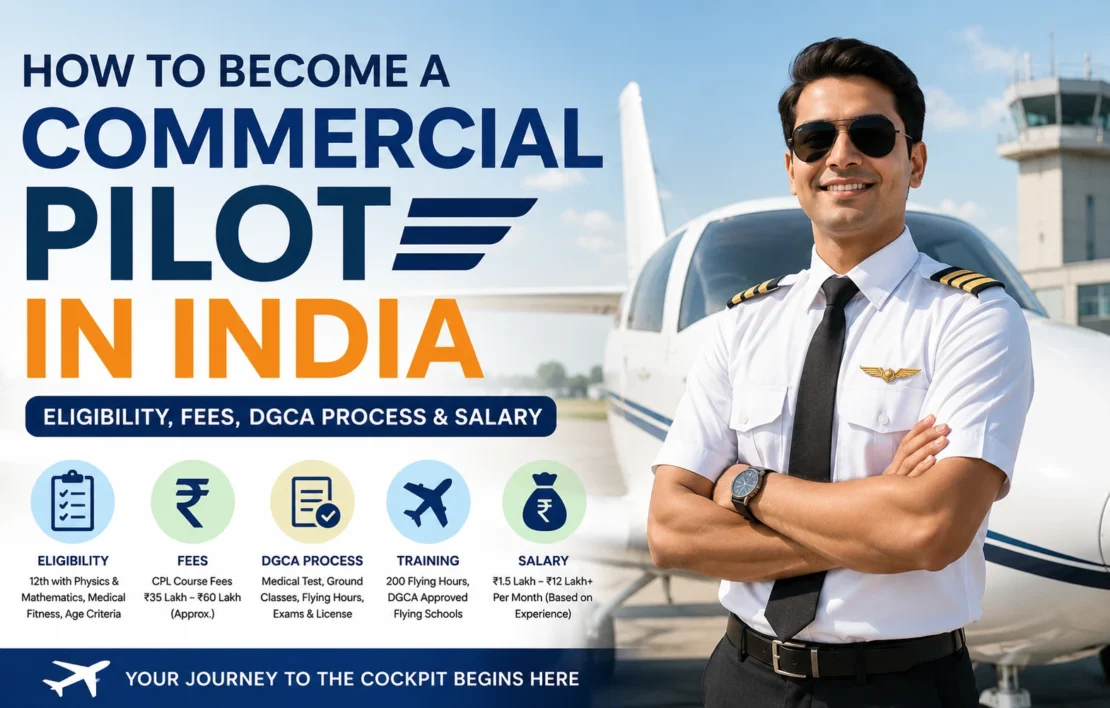
Flying a passenger aircraft sounds exciting because it is. You sit in a cockpit, handle complex systems, speak with air traffic control, and carry hundreds of passengers safely across cities and countries. Many students search for how to become a commercial pilot in India after Class 12 because aviation gives strong career growth, global opportunities, and a respected profession.
India’s aviation sector continues to grow every year. Airlines such as IndiGo, Air India, Akasa Air, and SpiceJet keep adding new aircraft to their fleets. That growth creates demand for trained pilots. If you want a serious career in aviation, this guide explains the complete process in simple language. You will learn about commercial pilot training in India, the DGCA pilot license process, eligibility, fees, medical tests, and career options.
A pilot’s life also comes with responsibility. One wrong decision in the cockpit can affect hundreds of lives. That’s why training takes time, discipline, and money. Still, for students who enjoy aviation and can stay calm under pressure, this career feels rewarding every single day.
Why do many students choose aviation as a career in India?
India has become one of the fastest growing aviation markets in the world. More airports are opening across Tier 2 and Tier 3 cities. Airlines now connect smaller towns that once had limited air service.
This growth increases demand for pilots, cabin crew, engineers, and ground staff. Among these roles, commercial pilots earn some of the highest salaries in the aviation industry.
Pilots also get structured career growth. A fresher starts as a First Officer and can later become a Senior First Officer, Captain, Training Captain, or Examiner.
The job includes travel benefits, international exposure, and strong technical training. You also avoid the typical office routine. Your workplace changes every day. One morning may start in Delhi and end in Dubai.
And yes, you get to say “ready for departure” without sounding dramatic.
What does a commercial pilot do?
A commercial pilot flies aircraft for airlines, charter companies, cargo services, and private operators. Their job includes much more than flying the aircraft.
Pilots check weather conditions, review flight plans, inspect aircraft systems, calculate fuel requirements, and coordinate with air traffic control.
Commercial pilots also handle emergencies, diversions, and technical situations during flights. Airlines train pilots continuously because aviation safety standards remain strict worldwide.
A pilot must stay physically fit, mentally alert, and technically updated throughout their career.


What is the minimum qualification to become a commercial pilot in India?
Students must complete Class 12 with Physics and Mathematics from a recognized board.
If you did not study Physics or Maths in school, you can still become a pilot through NIOS or equivalent approved subjects.
Commercial pilot eligibility in India
You must meet these conditions before starting CPL training:
- Minimum age: 17 years for Student Pilot License
- Minimum age: 18 years for Commercial Pilot License
- Passed Class 12 with Physics and Mathematics
- Valid DGCA Class 2 Medical Certificate
- Good English communication skills
English matters because aviation communication worldwide uses English. Pilots speak with air traffic controllers using standard aviation phraseology.
What is the DGCA?
The Directorate General of Civil Aviation, known as DGCA, regulates civil aviation in India.
DGCA approves flying schools, conducts pilot examinations, issues licenses, and monitors aviation safety standards.
Every pilot in India must follow DGCA rules and complete approved training programs.
How to become a commercial pilot in India step by step
Step 1: Complete Class 12 with Physics and Mathematics
This is the first academic requirement for pilot training after 12th in India.
Students from Science stream already meet this requirement. Commerce and Arts students can complete Physics and Maths separately through approved boards.
Good marks help during airline interviews, though airlines usually focus more on flying skills, medical fitness, and communication ability.
Step 2: Get a DGCA Class 2 Medical Certificate
The DGCA medical test for pilots checks whether you are medically fit to fly aircraft.
DGCA approved doctors conduct this medical examination. Tests usually include:
- Eyesight check
- Hearing test
- Blood tests
- ECG
- Chest X ray
- General physical fitness
Pilots do not need perfect eyesight in every case. Many candidates qualify with corrected vision through glasses or contact lenses.
You should complete the medical test before spending money on training. Medical rejection after admission creates unnecessary financial loss.
Step 3: Apply for a Student Pilot License
A Student Pilot License, or SPL, allows you to begin basic flying training.
Most flying schools help students complete this process during admission.
You also need security clearance and required documentation.
Step 4: Join a DGCA approved flying school
This step starts your actual commercial pilot training in India.
Training includes:
- Ground school classes
- Flight simulator sessions
- Aircraft flying practice
- Navigation exercises
- Radio communication training
Choosing the right flying school matters because training quality affects your skills, confidence, and airline readiness.


Which are the best flying schools in India?
Several DGCA approved academies operate across India. Training quality, fleet condition, instructor experience, weather conditions, and placement support vary between schools.
Popular flying schools include:
- Indira Gandhi Institute of Aeronautics
- CAE Gondia
- Bombay Flying Club
- Madhya Pradesh Flying Club
- NFTI Gondia
- Redbird Aviation
- Chimes Aviation Academy
Students should compare:
- Aircraft availability
- Instructor ratio
- Training completion time
- Safety record
- Simulator facilities
- Hostel facilities
- Hidden charges
Some schools advertise low fees but delay flight hours due to aircraft shortages. A delayed CPL increases overall cost.
Visit the campus personally before paying admission fees.
What subjects do students study during CPL training?
Ground school training includes technical aviation subjects approved by DGCA.
Main CPL subjects
- Air Navigation
- Aviation Meteorology
- Air Regulations
- Technical General
- Technical Specific
- Radio Telephony
Students must pass DGCA exams before receiving their Commercial Pilot License.
Meteorology becomes important because weather changes affect flight safety. Navigation teaches route planning and fuel calculation. Technical subjects explain aircraft systems and engines.
Aviation training feels intense during exams. Students often memorize weather codes while drinking cold coffee at 2 AM.
How many flying hours are required for CPL in India?
DGCA requires a minimum of 200 flying hours for a Commercial Pilot License.
These hours include:
- Solo flying
- Cross country flights
- Instrument flying
- Night flying
- Pilot in command time
Training duration usually ranges from 18 months to 3 years depending on weather, aircraft availability, and exam schedules.
Bad weather delays flying in many regions during monsoon months.


What is the DGCA pilot license process?
The DGCA pilot license process includes multiple stages:
- Complete Class 12 qualification
- Pass DGCA medical tests
- Join DGCA approved flying school
- Clear DGCA theory exams
- Complete required flying hours
- Pass RTR examination
- Submit documentation to DGCA
- Receive Commercial Pilot License
Students must maintain proper records throughout training because DGCA checks documentation carefully.
What is the RTR exam for pilots?
RTR stands for Radio Telephony Restricted.
The Wireless Planning and Coordination Wing conducts this examination in India.
Pilots need RTR certification to communicate legally with air traffic control during flights.
The exam includes aviation communication procedures and practical voice testing.
Many students find RTR stressful because the viva format creates pressure. Regular practice improves confidence quickly.
How much does CPL training cost in India?
One of the biggest questions students ask is about CPL course fees in India.
Commercial pilot training is expensive. In 2026, total training cost in India usually ranges between ₹35 lakh and ₹60 lakh depending on the academy and aircraft type.
Main expenses during pilot training
| Expense | Estimated Cost |
|---|---|
| Flying training | ₹25 lakh to ₹45 lakh |
| Ground school | ₹2 lakh to ₹5 lakh |
| Medical tests | ₹10,000 to ₹40,000 |
| DGCA exams | ₹20,000+ |
| Hostel and living | ₹3 lakh to ₹8 lakh |
| Type rating | ₹20 lakh to ₹35 lakh |
Type rating training often comes after CPL completion. Airlines require pilots to train on specific aircraft such as Airbus A320 or Boeing 737.
Can students find low cost pilot training in India?
Yes, some academies provide relatively affordable programs compared to premium schools.
Students also reduce costs by:
- Completing ground school separately
- Comparing flying hour charges
- Choosing states with better flying weather
- Avoiding training delays
- Applying for scholarships
Still, aviation training remains financially demanding. Families should plan funding carefully before admission.
Are education loans available for pilot training?
Many Indian banks and financial institutions provide loans for aviation courses.
Loan approval depends on:
- Family income
- Co applicant profile
- Flying school reputation
- Course structure
Some lenders finance only DGCA approved institutes.
Interest rates vary across banks. Students should compare repayment conditions carefully before signing loan agreements.
How long does it take to become a commercial pilot in India?
Most students complete training within 18 to 36 months.
Training speed depends on:
- Weather conditions
- Aircraft availability
- DGCA exam schedules
- Student performance
- Medical clearance
- Financial continuity
Students who clear DGCA exams early often complete training faster.
Can girls become commercial pilots in India?
Absolutely.
India already has one of the highest percentages of female commercial pilots globally. Airlines actively recruit skilled women pilots across domestic and international operations.
The eligibility, salary, and training process remain the same for everyone.
Many Indian female captains now fly wide body international aircraft for major airlines.
What skills make someone a good pilot?
Flying requires technical knowledge and emotional control.
Good pilots usually have:
- Strong concentration
- Fast decision making
- Discipline
- Communication skills
- Situational awareness
- Calm behavior during pressure
Pilots also follow checklists strictly. Aviation depends heavily on procedures and consistency.
Confidence matters. Overconfidence creates problems quickly in aviation.
What happens after getting a Commercial Pilot License?
After receiving CPL, pilots usually complete type rating training.
What is type rating?
Type rating trains pilots to operate a specific aircraft model.
Example:
- Airbus A320
- Boeing 737
- ATR 72
Airlines hire pilots based on operational requirements and aircraft fleet.
Fresh CPL holders often apply for:
- Airline cadet programs
- First Officer jobs
- Charter operations
- Cargo airlines
Competition remains high, especially for airline openings.
What salary does a commercial pilot earn in India?
Pilot salaries vary based on experience, aircraft type, airline, and flying hours.
Approximate salary range in India:
| Pilot Position | Monthly Salary |
|---|---|
| Junior First Officer | ₹1.5 lakh to ₹3 lakh |
| First Officer | ₹3 lakh to ₹6 lakh |
| Captain | ₹6 lakh to ₹12 lakh+ |
International airlines may pay significantly higher salaries.
Pilots also receive travel allowances, hotel accommodation during layovers, and additional operational benefits.
Is becoming a pilot difficult?
Pilot training demands discipline, patience, and money.
Students study technical subjects, clear medical tests, pass DGCA exams, and complete hundreds of flight hours.
The pressure increases during check rides and simulator evaluations.
Still, students who stay consistent usually adapt well to training.
Aviation rewards preparation. Pilots repeat procedures many times because consistency improves safety.
What mistakes should aspiring pilots avoid?
Ignoring medical fitness
Always complete DGCA medical tests before joining a flying academy.
Choosing a school only because of low fees
Cheap training may lead to delayed flying hours and poor instructor support.
Delaying DGCA exams
Students who postpone theory exams often extend training duration unnecessarily.
Poor communication skills
Airline interviews include technical and communication assessment. English fluency matters.
Unrealistic salary expectations
Fresh CPL holders may need time before joining major airlines.
Is aviation a stable career in India?
India’s aviation sector continues expanding with increasing passenger demand and fleet orders.
Airlines regularly announce aircraft purchases. More aircraft create demand for pilots, engineers, maintenance staff, and airport workers.
Economic slowdowns can affect hiring temporarily. Aviation also depends heavily on fuel prices and global travel demand.
Still, long term growth in Indian aviation remains positive according to industry trends.
Can students become pilots after graduation?
Yes.
Many students start pilot training after engineering, BCom, BBA, or other degrees.
Graduation is not mandatory for CPL training in India. Some airlines may prefer graduates during recruitment, though flying skills and license validity matter more.
What medical conditions can affect pilot eligibility?
Certain conditions may affect pilot certification:
- Serious heart disease
- Uncontrolled diabetes
- Severe hearing problems
- Neurological disorders
- Certain psychiatric conditions
DGCA medical standards follow aviation safety guidelines.
Candidates should consult DGCA approved doctors for accurate evaluation instead of relying on internet rumors.
What documents are required for CPL admission?
Students usually submit:
- Class 10 and 12 mark sheets
- Passport
- Aadhaar card
- Passport size photographs
- Medical certificate
- Police verification documents
Some academies may ask for additional records.
Should students choose India or foreign countries for pilot training?
Both options have advantages.
Training in India
- DGCA focused curriculum
- Lower living expenses
- Easier license conversion
- Familiar environment
Training abroad
- Faster flying hours in some countries
- Better weather conditions
- Different aircraft exposure
Foreign training still requires DGCA conversion procedures for Indian licensing.
Students should calculate complete expenses before choosing overseas academies.
What is the future of aviation careers in India?
The future looks strong because India continues adding airports, regional routes, and airline fleets.
Government initiatives such as UDAN improved regional air connectivity significantly.
Cargo aviation, charter operations, corporate flying, and international routes also create opportunities for trained pilots.
New technology changes cockpit systems regularly, so pilots continue learning throughout their careers.
That learning never fully stops in aviation. Even senior captains attend simulator checks and recurrent training every year.
Frequently Asked Questions
What qualifications do you need to become a commercial pilot in India?
Students must complete Class 12 with Physics and Mathematics from a recognized board. They also need DGCA medical clearance and must complete pilot training from a DGCA approved flying school.
How much does it cost to become a commercial pilot in India?
Commercial pilot training in India usually costs between ₹35 lakh and ₹60 lakh. The total amount depends on the flying school, aircraft type, hostel expenses, and type rating costs.
Can I become a pilot after 12th in India?
Yes. Students can start pilot training after completing Class 12 with Physics and Mathematics. Most students begin CPL training between the ages of 17 and 20.
How many years does it take to become a commercial pilot in India?
Most students complete commercial pilot training within 18 months to 3 years. Training duration depends on flying hours, weather conditions, DGCA exams, and aircraft availability.
What is the salary of a commercial pilot in India?
Fresh commercial pilots in India may earn between ₹1.5 lakh and ₹3 lakh per month. Experienced captains at major airlines can earn ₹6 lakh to ₹12 lakh or more monthly.
Which is the best flying school in India for CPL training?
Popular DGCA approved flying schools include CAE Gondia, Bombay Flying Club, NFTI Gondia, Redbird Aviation, and Chimes Aviation Academy. Students should compare training quality, aircraft availability, and instructor support before admission.
Is the DGCA medical test difficult?
The DGCA medical test checks eyesight, hearing, heart health, and overall physical fitness. Most medically fit students clear the examination without major issues.
Can girls become commercial pilots in India?
Yes. India has one of the highest percentages of female commercial pilots globally. Airlines recruit female pilots for domestic and international operations.
How many flying hours are required for CPL in India?
DGCA requires a minimum of 200 flying hours for a Commercial Pilot License in India. These include solo flying, cross country flights, and instrument training.
What subjects are required for pilot training after 12th?
Students need Physics and Mathematics in Class 12. During CPL training, students study Air Navigation, Meteorology, Air Regulations, and aircraft technical subjects.
Is becoming a commercial pilot worth it in India?
Commercial aviation gives strong salary growth, international career opportunities, and long term demand. Students should still understand the training cost and career competition before starting.
Can commerce students become pilots in India?
Yes. Commerce students can become pilots by completing Physics and Mathematics separately through NIOS or another recognized board before CPL training.
What is the minimum age for a Commercial Pilot License in India?
Students must be at least 18 years old to receive a Commercial Pilot License from DGCA.
Do pilots need perfect eyesight in India?
No. Many pilots fly with corrected vision using glasses or contact lenses if they meet DGCA medical standards.
What is the DGCA pilot license process?
The DGCA process includes medical tests, ground school training, DGCA theory exams, flying hours, RTR certification, and license approval after documentation review.
Can I get an education loan for pilot training in India?
Yes. Several Indian banks and financial institutions provide education loans for DGCA approved pilot training programs. Approval depends on financial background and institute reputation.
Final thoughts
Students searching for how to get CPL in India should prepare for a long training process that demands focus, discipline, and financial planning. The journey includes medical tests, DGCA exams, flying hours, simulator practice, and continuous learning.
Commercial aviation gives strong career growth for candidates who stay committed through training. India’s aviation industry continues expanding, and trained pilots remain an important part of that growth.
If flying genuinely interests you, start with medical clearance, research DGCA approved academies carefully, compare training quality, and understand the total cost before admission. A well planned start saves time, money, and stress later in your aviation career.