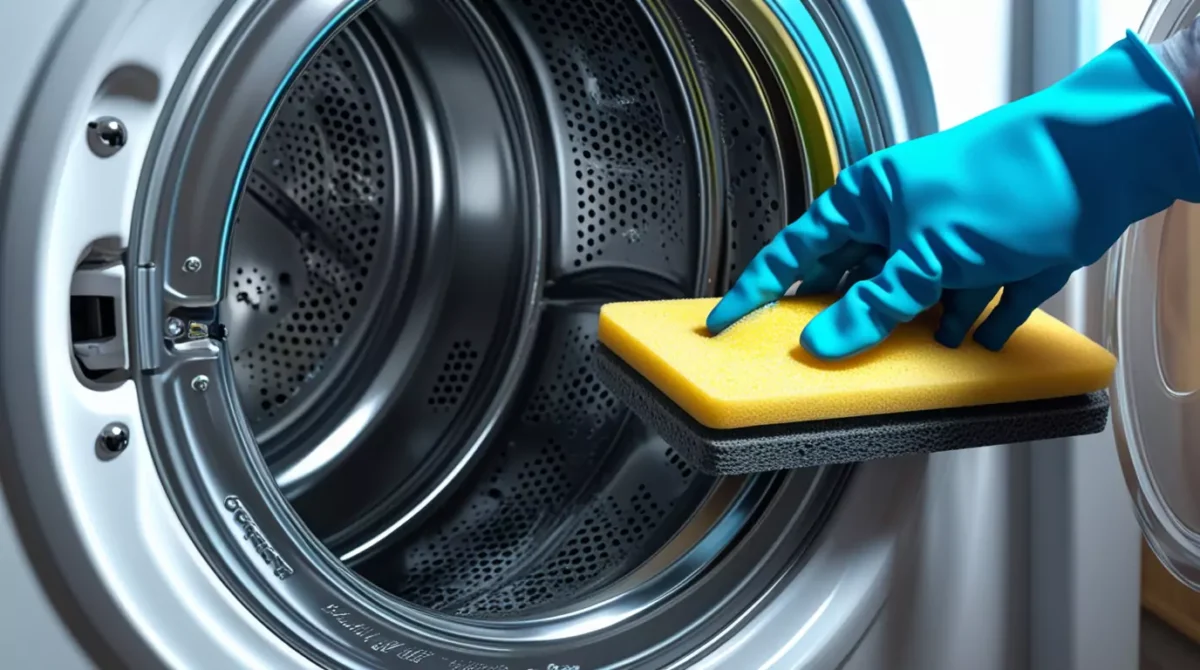
You open your washing machine and BAM. Black, gross mold staring back at you. Your clothes smell funky. Your family’s asking what that weird smell is.
I get it. Mold growth from washing machine rubber door seal happens to everyone. Even the cleanest people deal with this nasty problem.
Here’s the thing most people don’t tell you: That rubber seal is a mold magnet. It traps water. It stays damp. It’s basically a five-star hotel for mold.
Why Does Mold Love Your Washing Machine Door Seal?
Let me break this down for you.
Moisture + Heat + Soap Residue = Mold Paradise
Your washing machine creates the perfect storm:
- Water gets trapped in the rubber folds
- Warm, humid air stays inside
- Detergent buildup feeds the mold
- Poor ventilation keeps everything damp
I learned this the hard way when my brand-new washer started smelling like a swamp after just 6 months.
What You’ll Need to Kill That Mold
Don’t overthink this. You probably have most of this stuff already:
Basic Supplies:
- White vinegar
- Baking soda
- Bleach (chlorine-free works too)
- Old toothbrush
- Microfiber cloths
- Rubber gloves
- Spray bottle
Optional Power Tools:
- Hydrogen peroxide
- Tea tree oil
- Commercial mold remover



Step-by-Step: How to Remove Mold from Washing Machine Door Seal
Step 1: Safety First
Put on those rubber gloves. Open windows or turn on a fan. Mold spores are nasty little things. Don’t breathe them in.
Step 2: Pull Back the Rubber Seal
This is where most people mess up. You need to actually pull the rubber seal back. Get into all those hidden folds. That’s where the worst mold lives.
Step 3: The Vinegar Attack
Fill your spray bottle with white vinegar. Spray everything. I mean EVERYTHING. Let it sit for 10 minutes.
Why vinegar works:
- Kills 82% of mold species
- Safe for rubber
- Breaks down soap scum
- Removes odors
Step 4: Scrub Time
Grab that old toothbrush. Start scrubbing gently. Work in small circles. Don’t go crazy – you don’t want to damage the rubber.
Step 5: Baking Soda Power
Make a paste with baking soda and water. Smear it on the stubborn spots. Let it sit for 15 minutes. Scrub again.
Step 6: The Bleach Finish (Optional)
If you’re dealing with black mold, bring out the big guns. Mix 1 part bleach with 10 parts water. Spray it on. Wait 5 minutes. Wipe clean.
Warning: Never mix bleach with vinegar or ammonia. That creates toxic gas. Use bleach ONLY after you’ve rinsed away all the vinegar.
Step 7: Deep Clean
Wipe everything down with clean, damp cloths. Remove all cleaning residue. Dry thoroughly with a clean towel.
Pro Tips That Actually Work
The Coffee Filter Trick
Use coffee filters to dry the seal. They don’t leave lint. They absorb water like crazy. I learned this from my neighbor who used to work in a laundromat.
The Hair Dryer Method
After cleaning, hit the seal with a hair dryer. Get it completely dry. Mold can’t grow without moisture. This step separates the pros from the amateurs.
The Toothpick Game
Use a toothpick to clean out tiny crevices. Wrap it with a cloth if needed. Get into every single fold. This is tedious but necessary.
How to Keep Mold from Coming Back
Here’s what nobody tells you: Cleaning mold once isn’t enough. You need a system to keep it gone.
Daily Habits:
- Wipe the seal after every load
- Leave the door cracked open
- Remove wet clothes immediately
Weekly Maintenance:
- Run an empty hot cycle with vinegar
- Check for trapped water
- Clean the detergent drawer
Monthly Deep Clean:
- Inspect the entire seal
- Clean with your chosen method
- Check the drain filter


When to Call in the Pros
Look, I’m all about DIY. But sometimes you need backup.
Call a professional if:
- Mold keeps coming back after multiple cleanings
- The rubber seal is cracked or damaged
- You have health issues that make mold exposure dangerous
- The smell won’t go away no matter what you try
Common Mistakes That Make Things Worse
Using the Wrong Cleaners
Fabric softener makes mold worse. It leaves a film that traps moisture. Stick to simple cleaners.
Not Drying Properly
Half the people skip the drying step. Then they wonder why mold comes back in a week. Moisture is the enemy.
Ignoring the Problem
That little black spot will turn into a mold colony. Deal with it when it’s small. Don’t wait until your laundry room smells like a basement.
Alternative Methods That Work
The Hydrogen Peroxide Method
3% hydrogen peroxide in a spray bottle. Spray and wait 10 minutes. Wipe clean. Great for people who can’t handle bleach smells.
Tea Tree Oil Solution
10-20 drops in a cup of water. Natural antifungal properties. Smells better than chemicals. More expensive but worth it for sensitive people.
Commercial Mold Removers
Sometimes store-bought is easier. Look for products specifically made for washing machines. Follow the directions exactly.


FAQs About Washing Machine Mold Removal
Can I use regular household bleach?
Yes, but dilute it properly. 1 part bleach to 10 parts water. Never use it full strength on rubber.
How often should I clean the door seal?
Weekly wipe-downs. Monthly deep cleans. Daily if you live in a humid climate.
Is mold in my washing machine dangerous?
It can trigger allergies and respiratory issues. Black mold is especially problematic. Don’t mess around with your health.
Can I prevent mold completely?
You can minimize it significantly. Complete prevention is tough in humid environments. Consistent maintenance is key.
What if the rubber seal is damaged?
Replace it. Cracked rubber harbors mold that you can’t reach. It’s not worth risking your family’s health.
Does using hot water prevent mold?
Hot water helps but isn’t enough alone. You still need to dry the seal properly. Heat plus moisture still equals mold growth.
The Bottom Line
Removing mold growth from washing machine rubber door seal isn’t rocket science. It’s about consistency and the right techniques.
Most people overcomplicate this. They buy expensive products they don’t need. They skip the basic steps that actually work.
Here’s what matters:
- Clean regularly, not just when it’s gross
- Dry everything thoroughly
- Keep air flowing
- Don’t ignore small problems
Your washing machine should make your clothes cleaner, not dirtier. Follow this system and you’ll never have to deal with moldy, smelly laundry again.
Remember: the key to removing mold growth from washing machine rubber door seal is prevention, not just reaction.