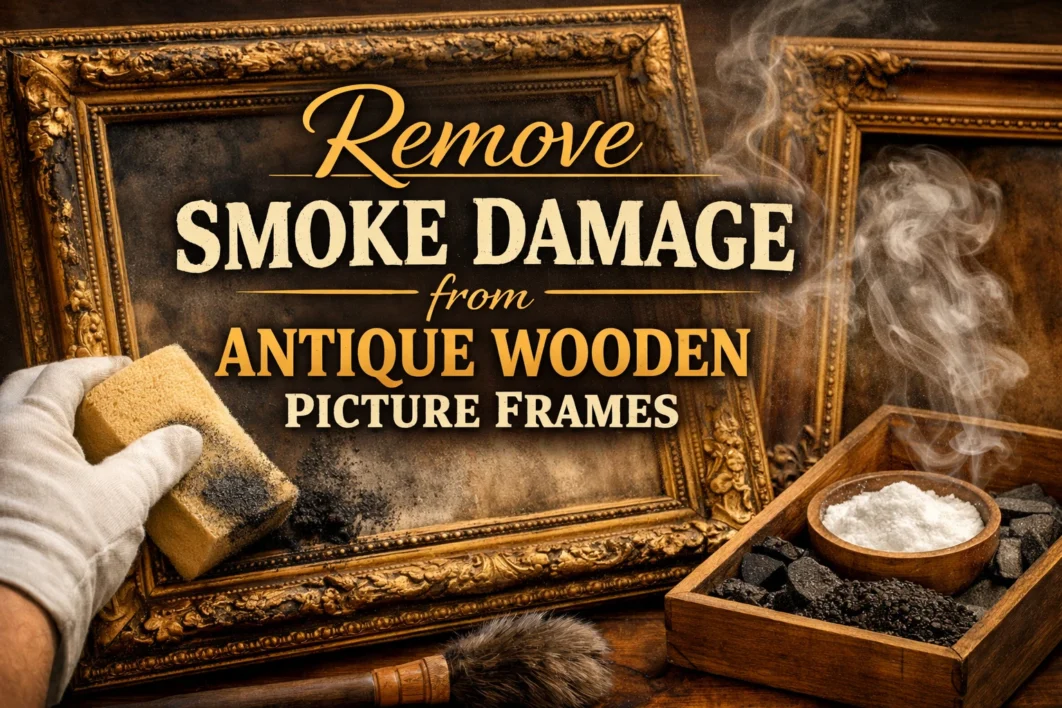
Smoke damage on antique wooden picture frames is frustrating, emotional, and – if handled carelessly – irreversible. Whether the smoke came from a house fire, fireplace use, incense, or decades of tobacco exposure, the residue can stain wood, dull finishes, and leave behind odors that feel impossible to remove.
The good news?
With the right approach, most smoke damage can be reduced or safely removed without harming the frame’s age, patina, or value.
This guide follows museum-grade conservation logic, modern restoration best practices, and Google’s Helpful Content principles. No myths. No shortcuts. Just real, proven methods used by professionals.
You’ll learn:
- What smoke damage actually does to antique wood
- When not to clean a frame
- Step-by-step safe cleaning methods
- Odor removal that doesn’t destroy finishes
- When to stop and call a professional conservator
Short paragraphs. Clear logic. Practical steps. Let’s begin.
Understanding Smoke Damage on Antique Wooden Frames

What smoke residue really is
Smoke damage is not just “dirt.”
It’s a mix of:
- Soot particles (carbon-based, acidic)
- Tar and nicotine oils
- Combustion byproducts from wood, fabric, plastics, or paper
These particles are:
- Microscopic
- Acidic
- Sticky
That’s why wiping with water alone often smears the damage instead of removing it.
Why antique wood reacts differently than modern wood
Antique frames behave differently because:
- Finishes are usually shellac, oil varnish, or wax
- Wood fibers are drier and more porous
- Decorative gesso and gilding may be fragile
A method that works on modern furniture can permanently ruin an antique frame.
This is why restraint matters more than speed.
First Rule: Decide If Cleaning Is Safe
Before touching anything, you must answer one question:
Is the frame structurally stable?
Do not clean if you notice:
- Flaking finish
- Loose gesso or gold leaf
- Cracks opening with pressure
- Powdery wood fibers
In these cases, cleaning can cause loss of original material.
If unsure, pause and consult a conservator.
Organizations like the Smithsonian Institution emphasize minimal intervention for historic wooden objects.


Step 1: Dry Soot Removal (Always First)
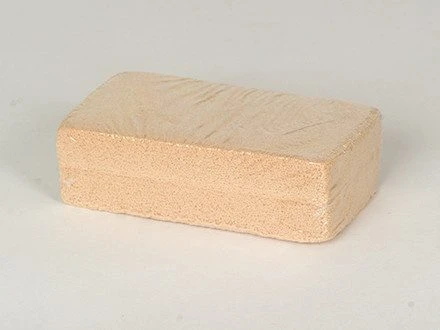
Never start with liquids.
Dry removal prevents soot from embedding deeper into the wood.
Tools you’ll need
- Chemical (soot) sponge
- Soft natural-bristle brush
- Nitrile gloves
How to do it safely
- Hold the frame vertically
- Gently dab – do not rub
- Work top to bottom
- Clean the sponge surface frequently
This step alone can remove 50–70% of visible soot.
Professionals use this technique because it avoids moisture damage entirely.
Step 2: Gentle Surface Cleaning (Controlled Moisture)
Only proceed if the dry step caused no damage.
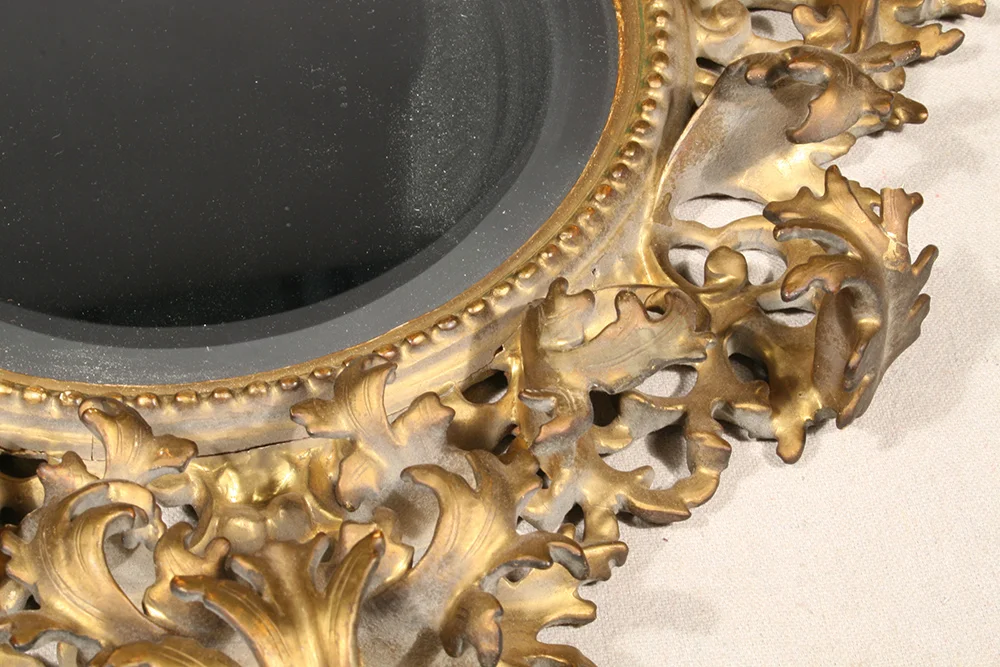
Safe cleaning solution (museum-approved logic)
Mix:
- Distilled water
- A few drops of pH-neutral soap (non-ionic)
No vinegar. No alcohol. No household cleaners.
Technique matters more than solution
- Use cotton swabs, not cloths
- Roll, don’t wipe
- Change swabs constantly
- Test a hidden area first
If color appears on the swab, stop immediately.
That color is history leaving the frame.
Step 3: Removing Nicotine and Tar Residue
Smoke from cigarettes or candles leaves oily deposits.
These require controlled emulsification, not scrubbing.
What works safely
- Mineral spirits (only for stable oil finishes)
- Used sparingly with cotton swabs
- Applied in tiny sections
What never to use
- Ammonia
- Degreasers
- Furniture polish
- Magic erasers
These products dissolve original finishes faster than smoke residue.



Step 4: Dealing With Smoke Odor (Without Destroying the Frame)
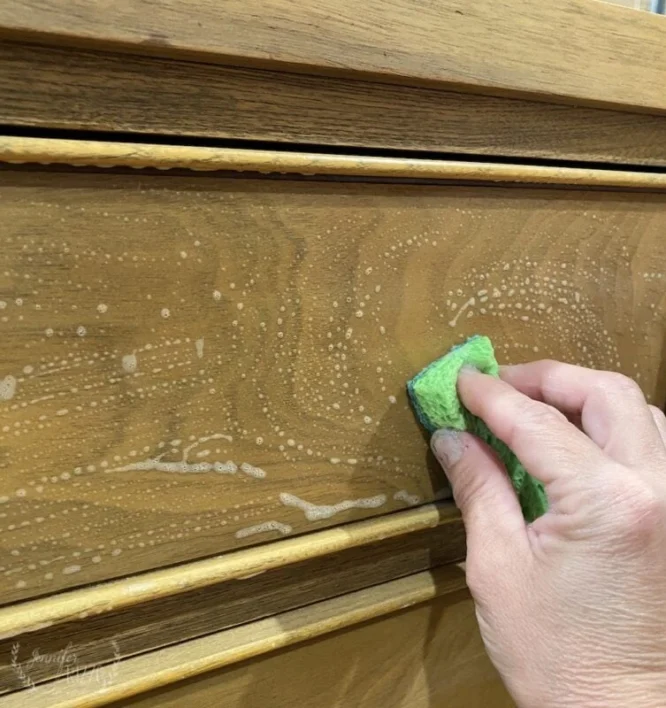
Odor removal should be passive.
Safe odor-neutralizing methods
- Activated charcoal in a sealed container
- Baking soda placed nearby (not touching)
- Time and airflow
Place the frame in a breathable box with charcoal for several days.
Avoid ozone machines. They damage wood polymers and finishes.
According to the Environmental Protection Agency, ozone exposure can degrade organic materials over time.
Step 5: Reviving the Finish (Only If Needed)

If the frame looks dull after cleaning:
Safer finish revival options
- Microcrystalline conservation wax
- Applied sparingly
- Buffed gently by hand
Wax restores depth without altering original material.
Never apply modern polyurethane or spray coatings.
That single mistake can destroy collector value permanently.
Special Cases: Gilded or Gesso Frames
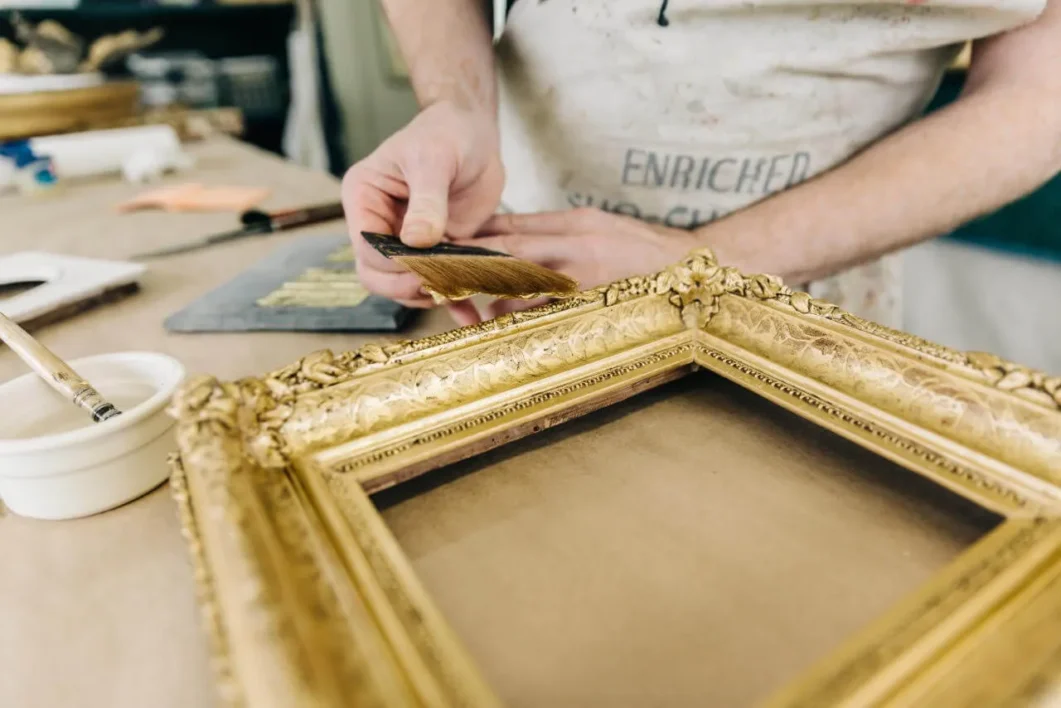
Gold leaf is thinner than human hair.
For these frames:
- Use only dry soot sponges
- Avoid moisture entirely
- Never brush raised details
If smoke reached the gesso layer, professional help is mandatory.


Common Mistakes That Ruin Antique Frames
These errors cause irreversible damage:
- Using vinegar or lemon juice
- Scrubbing with microfiber cloths
- Applying furniture polish
- Using steam or heat
- Rushing the process
Restoration favors patience, not force.
When to Call a Professional Conservator
You should stop DIY cleaning if:
- Finish lifts or smears
- Gold leaf flakes
- Wood smells strongly acidic
- Fire exposure was intense
Professional conservators follow standards aligned with groups like the American Institute for Conservation.
Their goal is preservation, not cosmetic perfection.
Long-Term Prevention After Restoration
Once cleaned, protect the frame.
Best practices
- Avoid direct sunlight
- Maintain stable humidity
- Keep away from smoke sources
- Use archival backing materials
A clean frame today can yellow again if exposed to poor conditions.
Frequently Asked Questions
Can smoke damage be completely removed?
Not always. The goal is stabilization and improvement, not perfection.
Does smoke damage reduce value?
Yes, but improper cleaning reduces it far more.
Is professional restoration expensive?
Costs vary, but replacing lost original material costs more.
Can I use vinegar or baking soda paste?
No. Vinegar is acidic. Paste abrades finishes.
Final Thoughts: Respect the Age, Preserve the Story
Antique wooden picture frames carry more than artwork.
They carry history, craftsmanship, and time itself.
Removing smoke damage is not about making them look new.
It’s about helping them age gracefully.
Work slowly.
Test often.
Stop when unsure.
That approach protects both the frame – and its value – for generations to come.