You open your spice cupboard and it looks like a tornado hit it.
Half the jars have no labels.
The other half are buried behind expired oregano from 2019.
And somehow, every time you need paprika, it’s playing hide and seek.
I’ve been there.
Standing in my kitchen at 7 PM, dinner half-cooked, frantically digging through a mountain of spice jars like I’m archaeological excavating.
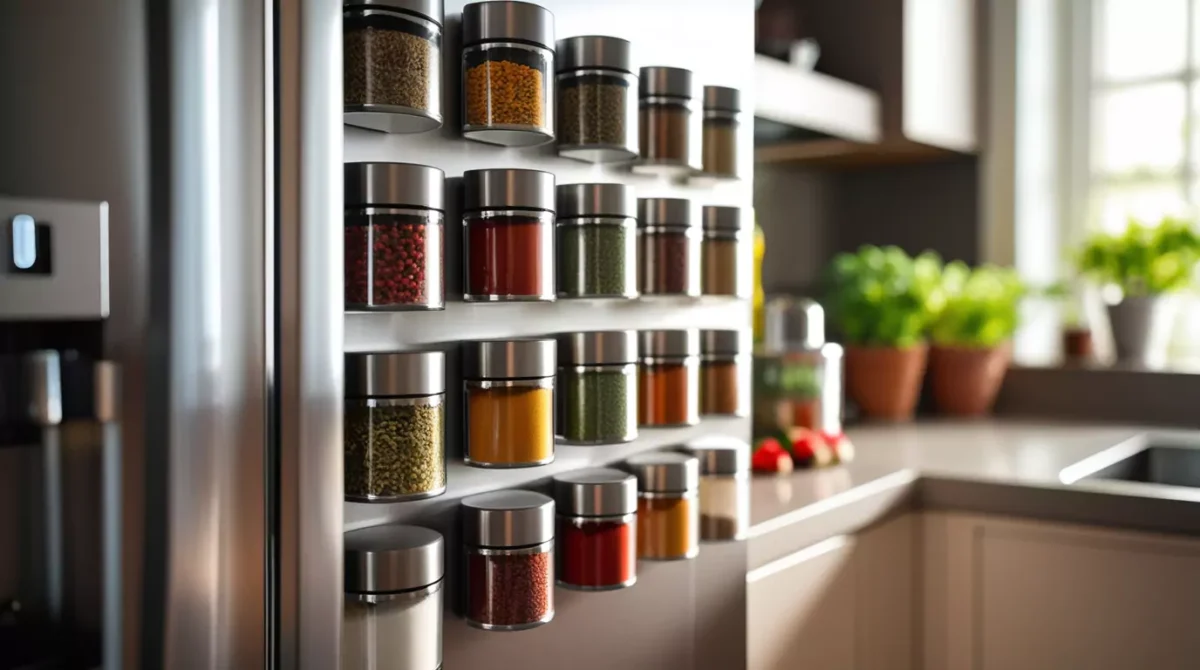
That’s when I discovered magnetic spice containers on the fridge.
Game changer doesn’t even begin to cover it.
Why Your Current Spice Storage System Isn’t Working
Here’s the brutal truth about traditional spice storage:
Cupboard chaos is expensive.
When you can’t find cumin, you buy another jar.
When that new jar gets lost behind the old one, you buy a third.
Before you know it, you’ve got £50 worth of duplicate spices expiring simultaneously.
Accessibility kills cooking flow.
Nothing murders your culinary momentum like hunting for spices mid-recipe.
One minute you’re channelling Gordon Ramsay, the next you’re on your hands and knees, checking behind the baking soda for that elusive jar of smoked paprika.
Traditional spice racks don’t scale.
Those cute wooden spice racks?
Great for six herbs.
Useless when you’re serious about cooking and own 40+ spices.
The Magnetic Container Revolution: Why It Actually Works
Magnetic spice storage isn’t just trendy Instagram nonsense.
It’s physics working in your favour.
Gravity becomes your friend.
Instead of fighting gravity by stacking jars vertically (where they inevitably topple), magnetic containers stick horizontally to your fridge.
No avalanche potential.
No precarious balancing acts.
Maximum visibility = minimum waste.
When all your spices are visible at eye level, you use them.
You see that sumac you bought for one recipe and remember to use it again.
Visibility drives utilisation.
Instant access during cooking.
Your fridge is probably 2-3 steps from your hob.
That’s 2-3 steps to any spice you need.
Compare that to opening cupboards, moving jars, reading labels, closing cupboards.
The time savings add up.



Choosing the Right Magnetic Spice Containers
Not all magnetic containers are created equal.
I learned this the hard way when my first batch couldn’t hold more than a paperclip to the fridge.
Magnet Strength: The Non-Negotiable
Your containers need serious magnetic pull.
Look for neodymium magnets or rare earth magnets.
Test before you invest: a good magnetic container should stick to your fridge so well you need genuine effort to remove it.
If it slides down under its own weight, it’s garbage.
Size Matters (But Not How You Think)
Here’s what I wish someone told me: uniform size beats variety.
Different sized containers look chaotic.
They create visual noise.
They’re harder to arrange efficiently.
Pick one size and stick with it.
I recommend 4-6oz capacity – perfect for most whole spices and ground seasonings.
Clear Visibility is Everything
Glass or clear plastic only.
No guessing games.
No opening containers to check contents.
You should identify any spice from across the kitchen.
Airtight Seals Preserve Freshness
Your expensive saffron shouldn’t taste like cardboard after three months.
Look for containers with proper rubber gaskets or silicone seals.
Test the seal: fill with water, shake vigorously, check for leaks.
If water escapes, flavour escapes too.
Step-by-Step Setup: From Chaos to Organised
Step 1: The Great Spice Audit
Empty everything.
I mean everything.
Dump all spices on your counter.
Check expiration dates ruthlessly.
Ground spices: 2-3 years maximum
Whole spices: 3-4 years maximum
Dried herbs: 1-2 years maximum
That oregano from your university days?
Bin it.
It tastes like sawdust anyway.
Step 2: Clean and Prep Your Fridge Surface
Your magnetic containers need a clean, smooth surface.
Remove any magnets, photos, or shopping lists from your chosen fridge area.
Clean with degreasing spray.
Any residue affects magnetic grip.
Step 3: Transfer and Label Like a Pro
Use a funnel for ground spices.
Pour slowly for whole spices.
Leave about 1/4 inch headspace in each container.
Labelling secrets:
- Write both common name and expiration date
- Use a label maker for consistency
- Include purchase date if you’re really organised
- Consider colour-coded labels by cuisine type
Step 4: Strategic Placement on Your Fridge
This isn’t random.
There’s a system.
Eye level: Daily essentials (salt, pepper, garlic powder, paprika)
Upper area: Baking spices (cinnamon, vanilla powder, nutmeg)
Lower area: Specialty spices (sumac, za’atar, berbere)
Left to right: Alphabetical within categories
Group by frequency of use, not alphabetical chaos.
Your most-used spices should be in your natural reach zone.
Advanced Organisation Strategies
The Cuisine Clustering Method
Group spices by cooking style:
Indian section: Turmeric, cumin, coriander, garam masala, cardamom
Mediterranean section: Oregano, basil, thyme, rosemary
Mexican section: Chili powder, cumin, Mexican oregano, smoked paprika
Baking section: Cinnamon, nutmeg, allspice, vanilla powder
This way, when you’re cooking Thai curry, all your required spices are clustered together.
No hunting across the entire fridge surface.
The Frequency-Based System
Separate your spices into three zones:
Daily drivers: The spices you use 3+ times per week
Regular rotation: Spices you use monthly
Special occasion: Those exotic spices for specific recipes
Place daily drivers at eye level in your dominant hand’s reach.
The Colour Coordination Hack
This sounds superficial but works psychologically.
Arrange by colour gradient where possible.
Your brain processes visual patterns faster than reading labels.
Red spices (paprika, chili powder) flow into orange (turmeric) flow into green (dried herbs).



Maintenance: Keeping Your System Running
Organisation without maintenance is just temporary tidiness.
The Monthly Freshness Check
First Sunday of every month: spice audit.
Check for:
- Containers losing magnetic grip (clean the magnets)
- Fading labels (replace immediately)
- Low levels (add to shopping list)
- Expired contents (ruthless disposal)
The Refill Strategy
Don’t wait until containers are empty.
When a container hits 1/4 full, add it to your shopping list.
Running out of cumin mid-recipe is not the time to remember you need cumin.
Cleaning Protocol
Monthly deep clean:
- Remove all containers from fridge
- Clean fridge surface thoroughly
- Wash container exteriors
- Check all seals for integrity
- Reorganise if your usage patterns have changed
Common Mistakes That Kill Your System
Mistake #1: Buying Cheap Magnets
I see people trying to save £20 on magnetic containers.
Then spending hours re-sticking fallen spices.
Cheap magnets fail.
Your spices end up on the floor.
Your system falls apart.
Pay for quality magnets once, or pay for replacements forever.
Mistake #2: Overfilling Containers
More spice doesn’t mean better value when it compromises functionality.
Overfilled containers:
- Don’t seal properly
- Are harder to pour from
- Put extra stress on magnets
- Look messy and unprofessional
Leave headspace.
Mistake #3: Ignoring Your Cooking Patterns
Don’t organise based on what looks good on Instagram.
Organise based on how you actually cook.
If you make Indian food twice a week, those spices deserve prime real estate.
If you bake once a month, cinnamon doesn’t need eye-level placement.
Mistake #4: No Backup System
What happens when you buy spices in bulk?
What about that giant bag of cumin from the Indian grocery store?
You need overflow storage.
Keep bulk spices in airtight containers in your pantry.
Refill your magnetic containers from bulk storage.
Troubleshooting Common Issues
“My Containers Keep Sliding Down”
Your magnets are too weak or your fridge surface is dirty.
Clean the fridge surface with degreasing spray.
If that doesn’t work, upgrade to stronger magnetic containers.
“I Can’t See All My Spices”
You’ve got too many containers in one area.
Spread them across more fridge surface.
Consider using the side of your fridge if it’s magnetic.
Some people use the dishwasher front panel too.
“My Labels Keep Peeling Off”
You’re using poor quality labels or your fridge surface gets too much moisture.
Invest in waterproof labels or a good label maker.
Clean and dry the container surface before labeling.
“I Don’t Have Enough Magnetic Surface Space”
Install a magnetic board on your wall near the stove.
Many people use magnetic knife strips for additional spice storage.
Or consider magnetic containers that stick to the inside of your oven door (if it’s magnetic).

The Economics: Does This Actually Save Money?
Let me break down the real costs:
Initial investment: £60-100 for quality magnetic containers for 30-40 spices
Time savings: 2-3 minutes per cooking session (adds up to 10+ hours annually)
Waste reduction: Stop buying duplicate spices (saves £30-50 annually)
Freshness preservation: Proper sealing extends spice life by 30-50%
Improved cooking: Visible spices = more experimental cooking = less takeaway
The system pays for itself within 6 months through reduced waste alone.
Plus, you’ll actually enjoy cooking more when you’re not playing spice hide-and-seek.
Frequently Asked Questions
Will magnetic containers affect my fridge’s performance?
No. The magnetic field from spice containers is too weak to interfere with your fridge’s operation. Modern refrigerators are designed to handle external magnets.
Can I use any type of spice in magnetic containers?
Most spices work perfectly. Very oily spices (like some curry pastes) might not store as well long-term. Stick to dried spices and herbs for best results.
How many containers fit on a standard fridge door?
A typical fridge door can accommodate 25-35 containers, depending on size. The side panels can usually hold another 15-20 containers.
Do magnetic containers work on stainless steel fridges?
Most stainless steel fridges are magnetic, but some high-end models use non-magnetic stainless steel. Test with a regular magnet first.
How often should I replace the spices in magnetic containers?
Follow the same guidelines as traditional storage: ground spices every 2-3 years, whole spices every 3-4 years, dried herbs every 1-2 years.
Can I put magnetic containers in the dishwasher?
Check manufacturer instructions. Many glass magnetic containers are dishwasher safe, but remove rubber seals first and avoid the heated dry cycle which can damage magnets.
Final Thoughts: Your Spice Collection Transformation
Here’s what happens after you set up magnetic spice containers on your fridge:
Week 1: Novelty. You’ll admire your organised spices like art.
Week 2: Efficiency kicks in. Cooking becomes faster and more enjoyable.
Month 1: You start experimenting with spices you forgot you owned.
Month 3: Friends comment on your organised kitchen.
Month 6: You wonder how you ever cooked without this system.
The magnetic container method for organising your spice collection isn’t just about storage.
It’s about removing friction from cooking.
It’s about turning your kitchen into a space where creativity flows instead of frustration builds.
It’s about respecting your ingredients enough to store them properly.
Most importantly, it’s about making cooking enjoyable enough that you actually want to do it.
And when you’re consistently cooking at home with fresh, organised spices, everything else follows.
Better meals.
Less waste.
More experimentation.
Lower food costs.
The decision isn’t whether you can afford magnetic containers for your spice collection.
It’s whether you can afford to keep wasting time, money, and ingredients with your current chaotic system.
Your organised spice collection using magnetic containers on the fridge is waiting.
The only question is: how much longer will you let spice storage chaos hold back your cooking potential?