March 28, 2007. Providence, Guyana. A cricket match that South Africa had already won at least on paper.
Sri Lanka had put up 209 runs. South Africa were sailing comfortably at 206 for 5 with five wickets in hand and only four runs needed from 32 balls. Commentators were practically wrapping up the show. Fans were probably already heading to the exits.
And then Mahela Jayawardene threw the ball to a curly-haired, round-arm slinger from Galle.
What happened in the next eight deliveries is still one of the most jaw-dropping passages of play in the history of ODI cricket. Lasith Malinga took four wickets in four consecutive balls a feat no bowler in international cricket had ever achieved before him. It remains one of the rarest cricket records to this day.
Who Is Lasith Malinga? A Quick Introduction for the Uninitiated
Before we get into the drama ball by ball, let’s talk about the man himself.
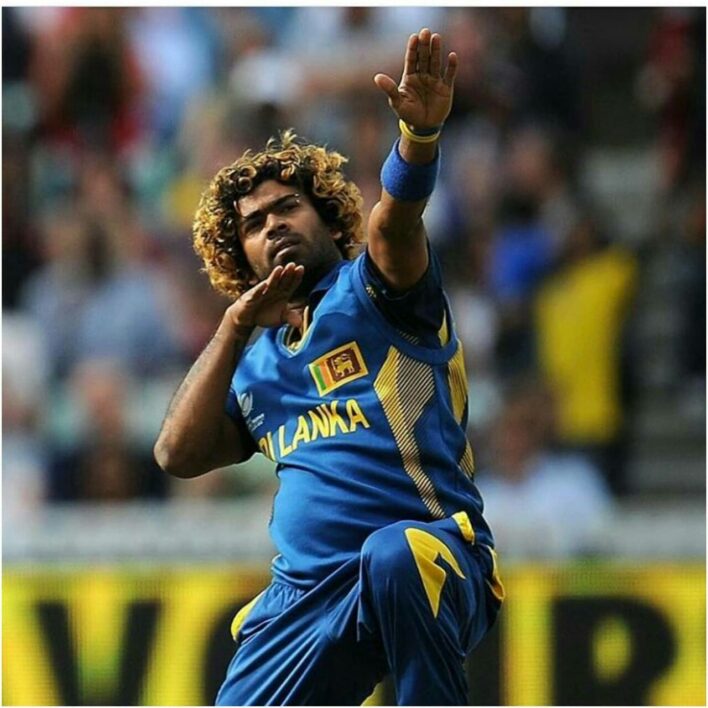
Born on August 28, 1983, in Galle, Sri Lanka, Separamadu Lasith Malinga is widely regarded as one of the greatest limited-overs bowlers in cricket history. He bowled right-arm fast with an action that looked nothing like a textbook fast bowler. His arm came around so low — almost horizontally that Wisden nicknamed him “Slinga Malinga.”
That sling action wasn’t coached. It developed naturally because Malinga grew up playing with a tennis ball on uneven grounds. Nobody told him to bowl with his arm near vertical. So he didn’t. And it turned out to be a superpower.
His round-arm, near-horizontal delivery created a release angle that made his yorkers nearly unplayable. Unlike standard fast bowlers, his ball arrived from a low trajectory, which meant even an imperfect yorker was incredibly hard to hit cleanly. Scientists literally studied his action in a wind tunnel a 2024 paper published in Physics of Fluids analyzed the aerodynamics of his near-horizontal arm style and confirmed it created an unusual and deceptive movement profile.
He went on to become the first bowler to take 100 wickets in all three formats of international cricket (Tests, ODIs, and T20Is). He retired in September 2021 as the leading wicket-taker in T20 internationals, with 107 wickets. He is also the only bowler in the world to take two four-wickets-in-four-balls yes, he did it twice in his career.
But we’re getting ahead of ourselves. Let’s go back to 2007.
The Match Context: Sri Lanka vs South Africa, ICC World Cup 2007
The 2007 ICC Cricket World Cup Super Eights match between Sri Lanka and South Africa took place on March 28, 2007, at Providence Stadium in Guyana. It was ODI number 2556 officially.

Sri Lanka batted first. They posted 209 all out, with Tillakaratne Dilshan scoring 58 and Russel Arnold contributing 50. After a top-order wobble at 90 for 5, those two stitched together a 97-run partnership. South Africa’s pace spearhead Charl Langeveldt claimed 5 for 39 — impressive figures that almost overshadowed what was to come.
South Africa’s chase started well. Graeme Smith top-scored with 59, and Jacques Kallis — one of the greatest all-rounders the game has ever seen was anchoring the innings beautifully on 86. AB de Villiers was dismissed for a duck by Chaminda Vaas, but Muttiah Muralitharan had come back to remove both Herschelle Gibbs and Mark Boucher in successive deliveries. Still, South Africa were comfortable. Very comfortable.
When Malinga came in to bowl the 45th over, the match looked dead and buried.
South Africa: 206 for 5. Target: 210. Needed: 4 runs. Balls remaining: 32.
There was no reason to panic. Kallis was still in. Shaun Pollock, a seasoned campaigner, was at the other end. Five wickets in hand. Four runs to win.

Ball by Ball: The Over That Shook Cricket
Here is exactly how the Lasith Malinga hat-trick and the four-wicket haul unfolded.
The First Ball of the 45th Over
Malinga ran in to bowl to Shaun Pollock. The first few deliveries of the over went normally. Pollock hit a four off the second ball. South Africa got closer. The game was essentially over.
Then came the fifth ball of the 45th over.
Malinga slipped in a slower ball clocked at just 135.9 kph, slower than his usual pace. He targeted leg stump. Pollock played inside the line, wafted at it, and the ball sneaked past the bat to clip the leg stump. Pollock bowled for 13.
206 for 6. South Africa still needed just four runs. Three wickets down.
The Final Ball of the 45th Over
Andrew Hall came to the crease. Malinga loaded up a yorker. Hall attempted a scooped response and hit it straight up looping comfortably to a fielder at cover.
206 for 7. Two wickets off the last two deliveries.
The crowd sensed something. But two wickets in the 45th over still left South Africa in a strong position, right?
First Ball of the 47th Over – The Hat-Trick
Chaminda Vaas bowled a tight 46th over, conceding just one run. South Africa now needed three runs from four overs. Jacques Kallis was still at the wicket on 86. The crowd was tense but South Africa remained clear favourites.
Malinga came back to bowl the 47th over. The first ball was aimed at the off stump. Kallis — the same Kallis who had scored 86 solid, match-defining runs — attempted a square drive. The ball kissed the edge and flew to the wicketkeeper.
Kallis out. Caught behind. 207 for 8.
Hat-trick. The fifth hat-trick in World Cup history. The 24th ODI hat-trick overall.
But Malinga wasn’t done.
The Fourth Consecutive Delivery – Into the History Books
Makhaya Ntini walked in. What followed was an absolute screamer of a yorker — clocked at 144.7 kph — that crashed straight into the middle stump. Ntini had no answer to it.
207 for 9. Four wickets in four consecutive deliveries.
No bowler in ODI cricket had ever done this before. Not ever. The only comparable feat before Malinga was Saqlain Mushtaq taking four wickets in five balls — and that record had stood for years.
The crowd erupted. Sri Lanka bench erupted. Malinga stood there, eyes wide, hair bouncing, with that unforgettable celebration. He had, in eight deliveries across two overs, turned a dead match completely on its head.
So… Did Sri Lanka Win?
No. And that is the fascinating, somewhat heartbreaking part of this story.
Malinga tried for a fifth consecutive wicket. The next delivery beat Charl Langeveldt’s outside edge by a whisker. Then Robin Peterson managed to nick a four past slip in the 49th over, taking South Africa across the line.
South Africa won by one wicket — with 10 balls to spare. Final score: 212 for 9.
It was technically a comfortable win. But nobody remembers it that way. What they remember is Malinga.
South Africa, for all their reputation of buckling in big moments (yes, the “chokers” tag), held their nerve just enough. But they had gone from 206 for 5 chasing 210 to 207 for 9 in the space of eight balls. That does not happen in professional cricket. Yet it did.
Sri Lanka eventually reached the final of that 2007 World Cup, where they faced Australia and were beaten by Adam Gilchrist’s brutal knock. South Africa, ironically, fell in the semi-finals.
Why This Performance Is So Technically Special
Let’s talk cricket science for a minute, because the achievement deserves more than just celebration.
Taking four wickets in four balls requires that each delivery be both unplayable AND result in a dismissal. One brilliant ball is luck. Two in a row is skill. Three is elite. Four? That’s a different category of human performance.
Each of the four dismissals came in a different way:
- Pollock — bowled by a clever slower ball through the gate
- Hall — caught at cover off a yorker
- Kallis — caught behind driving at an outswinger
- Ntini — clean bowled by a searing full yorker
Four different batsmen. Four different dismissal types. Two over a single over boundary (the hat-trick and the fourth wicket came from consecutive overs, not consecutive balls in one over). This is important because it means Malinga had to reset mentally between overs, hold his nerve while Vaas bowled the intervening 46th over, and then come back and bowl two more unplayable deliveries.
That mental discipline, on top of the skill? Remarkable.
His round-arm action played a huge role. Because his delivery point was so low, batsmen found it genuinely difficult to pick the line and length of yorkers. The ball arrived from an unusual angle, making it harder to judge whether to play or leave, to push or block. Against the yorker, that confusion is fatal.


Where Does This Rank Among Famous Bowling Spells in Cricket?
The Lasith Malinga four-in-four stands alone in ODI cricket history. No one else has ever taken four consecutive wickets in one-day internationals — not before, not since.
In List A cricket (domestic), a few others achieved it: Alan Ward, Shaun Pollock (yes, the same Pollock Malinga dismissed that day), and Vasbert Drakes had done it before Malinga. David Payne, Graham Napier, Shrikant Mundhe, and Mashrafe Mortaza have done it after him. But Malinga remains the only bowler to have achieved it in international cricket — and he did it twice.
The second time came in a T20I against New Zealand in September 2019. He dismissed Colin Munro, Hamish Rutherford, Colin de Grandhomme, and Ross Taylor in four consecutive deliveries. He was 35 years old. Twelve years after the first one. His hair still had the highlights. His yorkers were still unplayable.
In terms of consecutive wickets in cricket, Malinga’s achievement is up there with the most extraordinary individual bowling performances in the sport’s history — alongside Jim Laker’s 19 wickets in a Test, Curtly Ambrose’s 7 for 1, and Waqar Younis’s sustained reverse-swing brilliance.
The Legacy of Slinga Malinga
Malinga did not just create a record on March 28, 2007. He shifted how the world thought about death bowling.
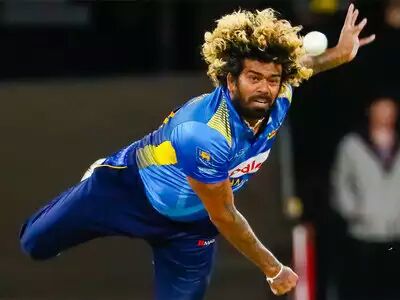
Before Malinga, the yorker was considered a weapon. After Malinga, the yorker became an art form. His consistency — bowling yorker after yorker at death, under pressure, in finals, in World Cups — showed that what others treated as a high-risk delivery could be bowled repeatedly if you had the right technique.
He inspired a generation of slingers. Jasprit Bumrah, who became the best bowler in the world, was trained partly by Malinga during their time together at Mumbai Indians. Matheesha Pathirana and Nuwan Thushara from Sri Lanka both bowl in Malinga’s image. Zaman Khan from Pakistan is another acolyte of the same style.
Malinga is also the only bowler to take three hat-tricks in ODI cricket. He won the ICC’s T20 World Cup in 2014 as captain of Sri Lanka. He finished as the highest wicket-taker in T20 internationals of all time when he retired.
And Viv Richards, watching in the Caribbean during the 2007 World Cup, said Malinga was the best thing to happen to Sri Lankan cricket since Aravinda de Silva.
Malinga’s 4 Wickets in 4 Balls: The Numbers at a Glance
| Detail | Fact |
|---|---|
| Date | March 28, 2007 |
| Venue | Providence Stadium, Guyana |
| Match | ICC World Cup Super Eights — SL vs SA |
| Wickets | Pollock (b), Hall (c cover), Kallis (c wk), Ntini (b) |
| Sri Lanka’s total | 209 all out |
| South Africa’s total | 212 for 9 (won by 1 wicket) |
| Malinga’s figures | 4 for 54 |
| ODI record? | Yes — first ever 4-in-4 in ODI history |



What Made This Moment Unforgettable Beyond Just the Record
Records get broken. Moments stay forever.
What makes Malinga’s spell genuinely unforgettable is the context. South Africa didn’t need 40 runs off 5 overs. They needed 4 runs off 32 balls with five wickets standing. The match was gone. Malinga dragged it back from the dead and very nearly pulled off what the ESPNcricinfo match report called “the greatest one-day heist.”
He was 24 years old.
He was bowling in a World Cup Super Eights match.
He was taking on Pollock, Hall, Kallis, and Ntini — experienced international cricketers — at their most dangerous stage of the game.
And he nearly pulled it off.
The fact that South Africa eventually won actually adds to the legend, in a strange way. If Sri Lanka had won, it would have been remembered as a miraculous chase. Instead, Malinga’s spell is remembered on its own, as a standalone masterpiece in a lost cause — which is far more romantic.
Final Thoughts
Cricket is a sport that lives by its moments. Shane Warne’s Ball of the Century. Brian Lara’s 400. Kapil Dev’s 175. MS Dhoni’s six off the last ball. These are the frames that stay with you.
Lasith Malinga’s 4 balls, 4 wickets on March 28, 2007, belongs on that list. It was not just a record. It was a reminder of why we watch sport — because the impossible does happen, and when it does, it doesn’t announce itself. It just arrives, in the form of a wild-haired slinger from Galle, bowling a searing yorker into middle stump.
No bowler in ODI history had ever done it before him.
No bowler has done it since.
That says everything.
Data and match details sourced from ESPNcricinfo official scorecards, Wisden, and Wikipedia’s verified records on Lasith Malinga’s international cricket career.