You walk into your mate’s house and it smells like a bloody spa.
Meanwhile, your place smells like last night’s takeaway mixed with wet dog (even though you don’t have a dog).
Here’s the thing – those plug-in air fresheners from the shops are proper chemical bombs. They’re expensive. They run out fast. And half the ingredients sound like they belong in a science lab, not your living room.
I used to spend $15 a month on those little plastic devils. Then I discovered something mental – you can make natural air fresheners that actually work for pennies.
Why your current air freshener is rubbish
Let me be straight with you. Those commercial air fresheners don’t eliminate odours. They mask them. It’s like putting cologne on without showering – you’re just creating a worse smell cocktail.
The real problems with shop-bought fresheners:
- Packed with synthetic fragrances that trigger headaches
- Contain phthalates (hormone disruptors – lovely)
- Cost you a fortune over time
- Stop working after your nose gets used to the smell
- Leave residue on your furniture
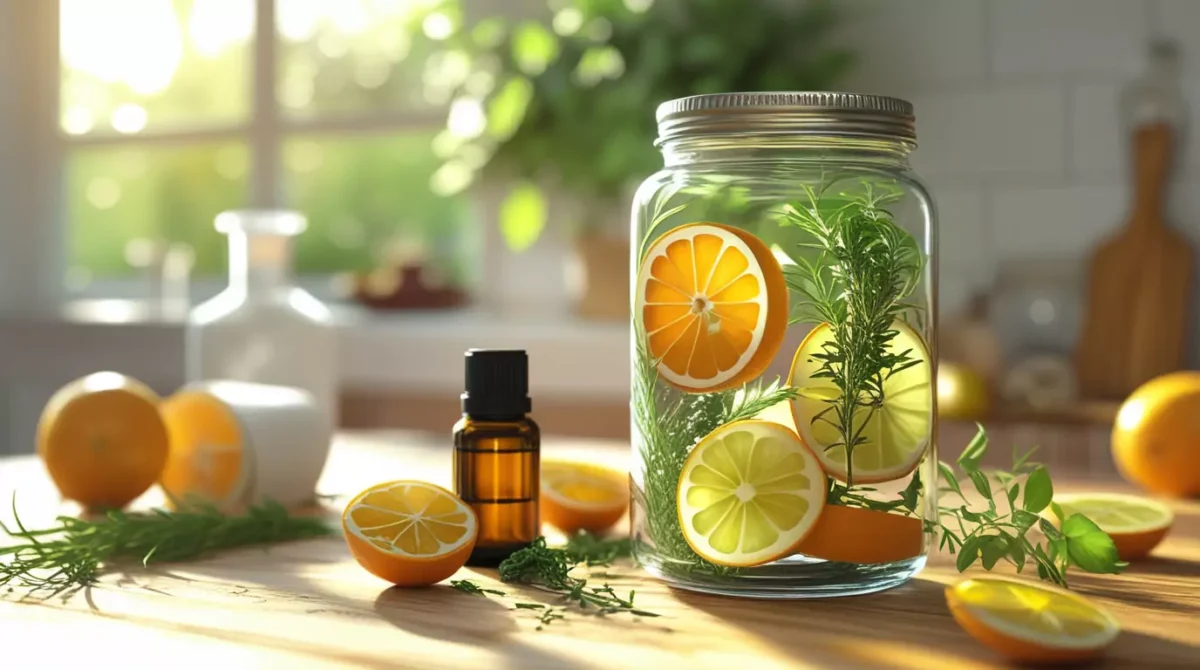
Essential oils: Your secret weapon for fresh air
Essential oils are concentrated plant extracts. They don’t just cover up bad smells – they neutralise them. Plus, many have antibacterial properties. It’s like having a bouncer for your nostrils that actually kicks out the trouble.
Best essential oils for air freshening:
- Lavender – calming and fresh
- Lemon – cuts through grease and grime smells
- Tea tree – antimicrobial powerhouse
- Peppermint – instant freshness
- Eucalyptus – clears stuffy air
- Orange – cheerful and clean


Simple spray recipe that actually works
This is the recipe I’ve used for two years. My mates always ask what I use because my flat smells mint.
You’ll need:
- 200ml distilled water
- 2 tablespoons witch hazel or vodka (cheap stuff works)
- 15-20 drops essential oil
- Glass spray bottle
- Funnel (or steady hands)
Method:
- Pour water into your bottle
- Add witch hazel (this helps oils mix properly)
- Drop in your essential oils
- Shake like your life depends on it
- Spray and enjoy not living in a stink pit
Pro tip: Always shake before using – oil and water are like that couple who never get along.
Reed diffuser: Set it and forget it freshness
Want something that works without you having to remember to spray? Reed diffusers are your answer.
What you need:
- Small glass jar or vase
- 100ml carrier oil (sweet almond or safflower work best)
- 20-25 drops essential oil
- 6-8 bamboo skewers or proper reed sticks
How to make it:
- Mix oils in your jar
- Stick the reeds in
- Flip them after 10 minutes
- Flip weekly to keep the scent strong
This lasts 2-3 months and costs about $3 to make. Compare that to a $20 shop-bought diffuser that lasts 6 weeks.
Car air freshener that doesn’t smell like a taxi
Your car probably smells like a mixture of old coffee and regret. Here’s how to fix it without those hanging trees that smell like chemical warfare.
DIY car freshener:
- Small glass vial with a tight lid
- Poke holes in the lid
- Fill with baking soda
- Add 10 drops essential oil
- Shake and place under seat
Refreshes monthly with new oil drops. Your passengers will thank you.

Room-specific scent combinations that work
Different rooms need different vibes. Here’s what I use where:
Kitchen (fights food smells):
- Lemon + rosemary
- Orange + clove
- Peppermint + lime
Bathroom (because obvious reasons):
- Tea tree + eucalyptus
- Lavender + lemon
- Peppermint + orange
Bedroom (relaxation zone):
- Lavender + vanilla
- Chamomile + bergamot
- Sandalwood + orange
Living room (where life happens):
- Lemon + lavender
- Orange + cinnamon
- Eucalyptus + peppermint
Common mistakes that make your freshener rubbish
I’ve made every mistake in the book. Learn from my failures:
Using tap water instead of distilled Tap water has minerals that make your spray cloudy and reduce effectiveness. Distilled water costs 50p and lasts ages.
Going mental with the oils More isn’t better. Too much oil makes everything sticky and overwhelming. Start with less – you can always add more.
Buying cheap essential oils That $2 “lavender” oil from the pound shop isn’t lavender. It’s synthetic fragrance in disguise. Invest in proper oils – they last longer and work better.
Not cleaning your bottles Old oil residue makes new blends smell rank. Clean with white vinegar between batches.
Storage and safety tips
Essential oils are concentrated. Respect them or they’ll make your life difficult.
Storage rules:
- Keep in dark glass bottles
- Store away from heat and light
- Label everything (trust me on this)
- Keep away from kids and pets
Safety basics:
- Never apply undiluted oils to skin
- Some oils are toxic to pets (tea tree and cats don’t mix)
- Pregnant women should research oils first
- If you have allergies, test small amounts first


Troubleshooting your homemade fresheners
Spray isn’t mixing properly? Add more witch hazel or vodka. These help oil and water play nicely together.
Scent fading too quickly? You need more oil or better quality oils. Cheap oils are mostly carrier oil with a hint of the real stuff.
Reed diffuser not working? Flip the reeds more often. If that doesn’t work, your reeds might be saturated – time for new ones.
Spray leaving residue? You’re using too much oil. Cut the amount in half and test.
Money-saving tips for essential oil fresheners
Buy oils in bulk Popular oils like lemon and lavender are cheaper in larger bottles. Split costs with mates if you’re not using much.
Make your own carrier oil blends Mix expensive oils with cheaper ones. A drop of rose oil goes further when mixed with sweet almond oil.
Reuse containers Old jam jars work perfectly for diffusers. Clean spray bottles can be refilled indefinitely.
Shop around Health food shops often have better prices than fancy aromatherapy stores. Online retailers can be gold mines for bulk buying.
Frequently Asked Questions (FAQs)
How long do homemade air fresheners last?
Sprays last 3-6 months if stored properly. Reed diffusers work for 2-3 months. The oils themselves last years if kept in dark, cool places.
Can I use any essential oil for air freshening?
Most are fine, but some are too strong for regular use. Avoid oils like wintergreen or birch in large quantities. Stick to common ones until you know what you’re doing.
Why does my spray separate?
Oil and water don’t mix naturally. That’s why you need witch hazel or alcohol as an emulsifier. Always shake before using.
Are homemade air fresheners safe around pets?
Some oils are toxic to animals. Tea tree, eucalyptus, and citrus oils can be harmful to cats. Research before using if you have pets.
Can I make air fresheners without essential oils?
You can use vanilla extract, coffee grounds, or dried herbs. But essential oils work best for actual air purifying properties.
How much money will I save?
A homemade spray costs about $2 to make and lasts 3 months. Shop-bought equivalents cost $5-8 monthly. You’ll save $20-30 per year easily.
What’s the strongest natural air freshener combination?
Lemon + tea tree + peppermint. This combo eliminates odours and leaves a proper fresh scent. Use sparingly – it’s potent.
Can I sell homemade air fresheners?
Check local regulations first. Some areas require permits for selling cosmetic products. But yes, people love buying natural alternatives.
Look, making natural air fresheners with essential oils isn’t rocket science. It’s cheaper than shop-bought alternatives. Better for your health. And your house will smell like a proper home, not a chemical factory.
Start with one recipe. Get comfortable with it. Then experiment with different combinations.
Your nose (and your wallet) will thank you.